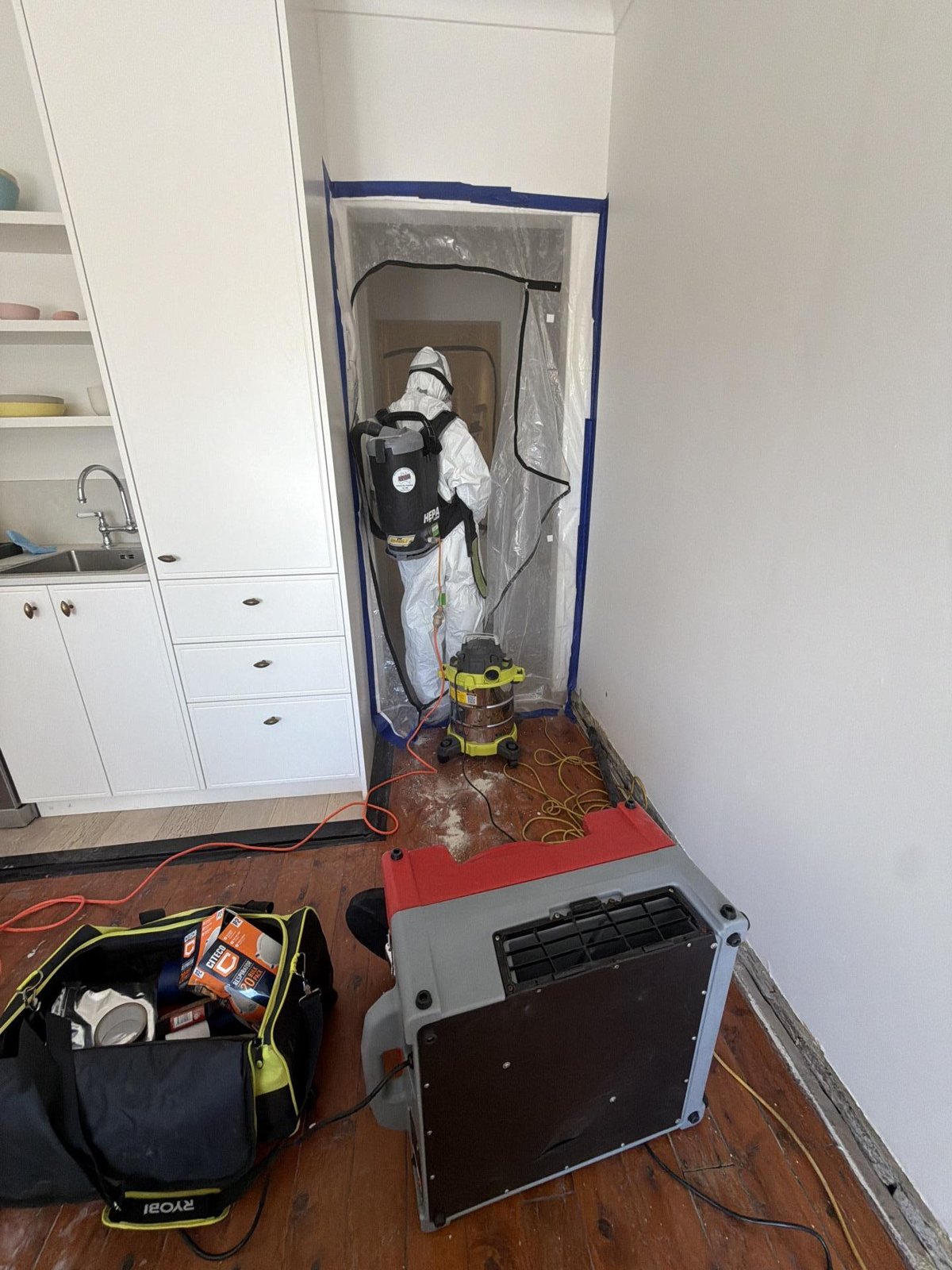
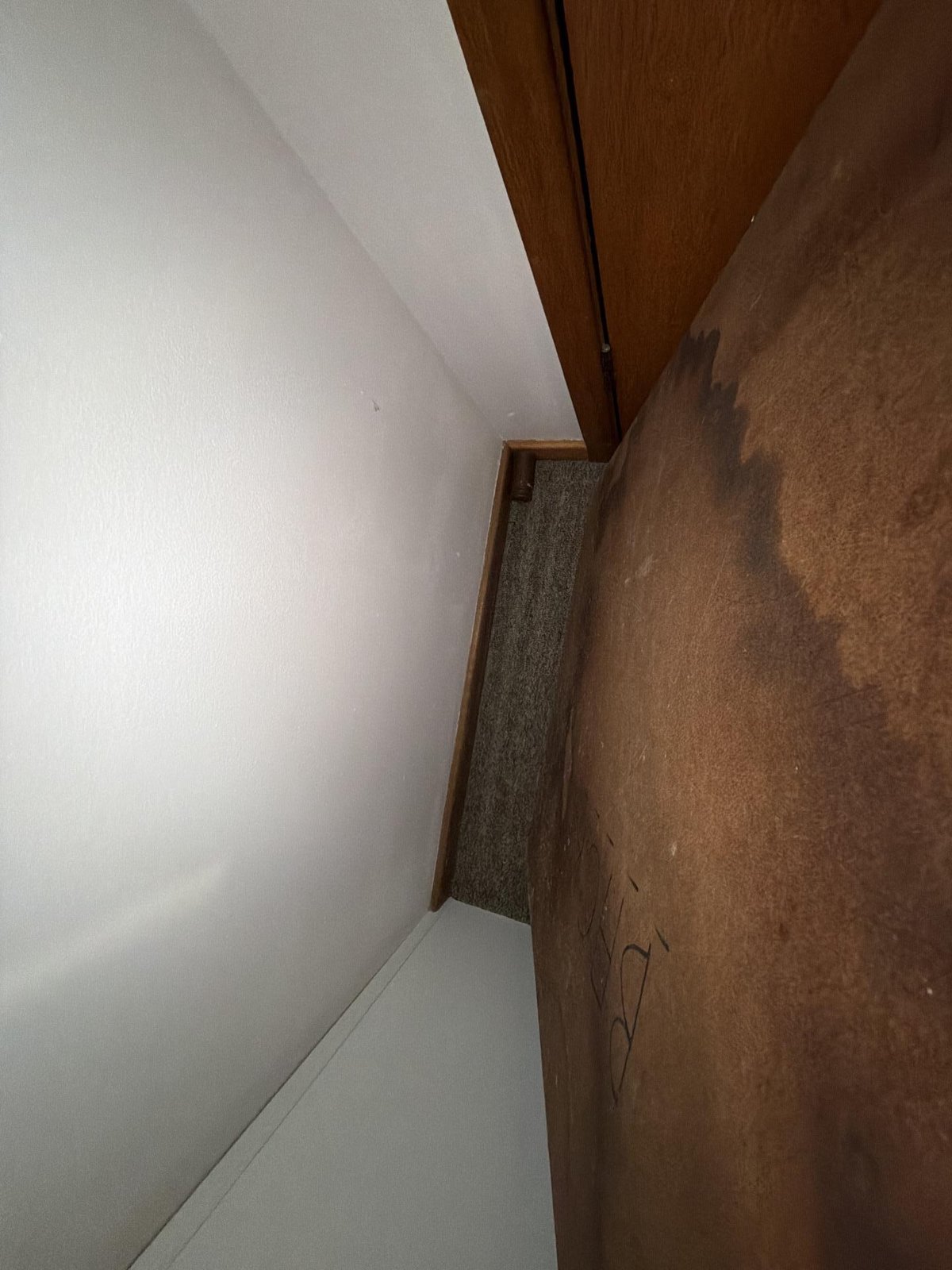
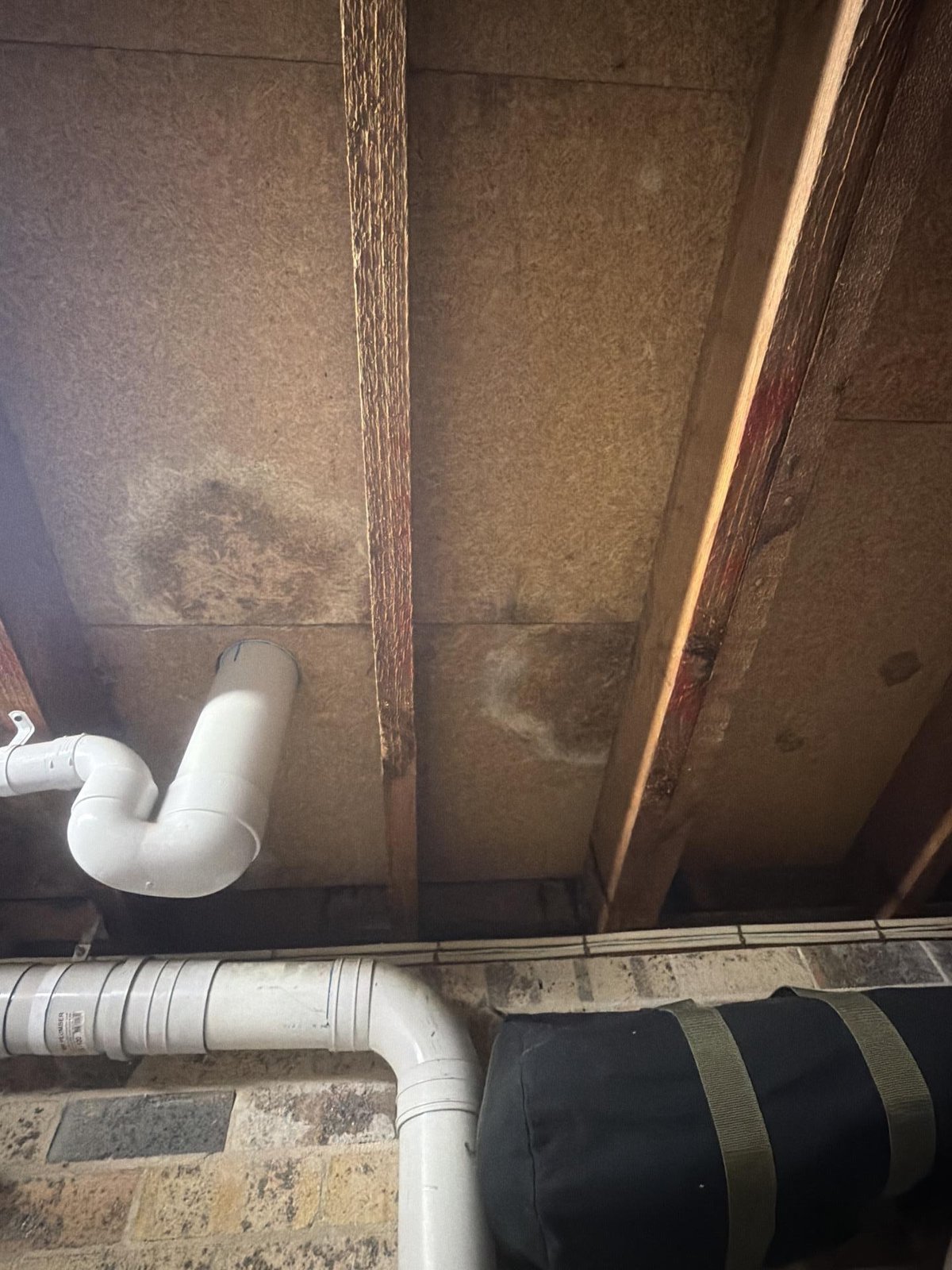
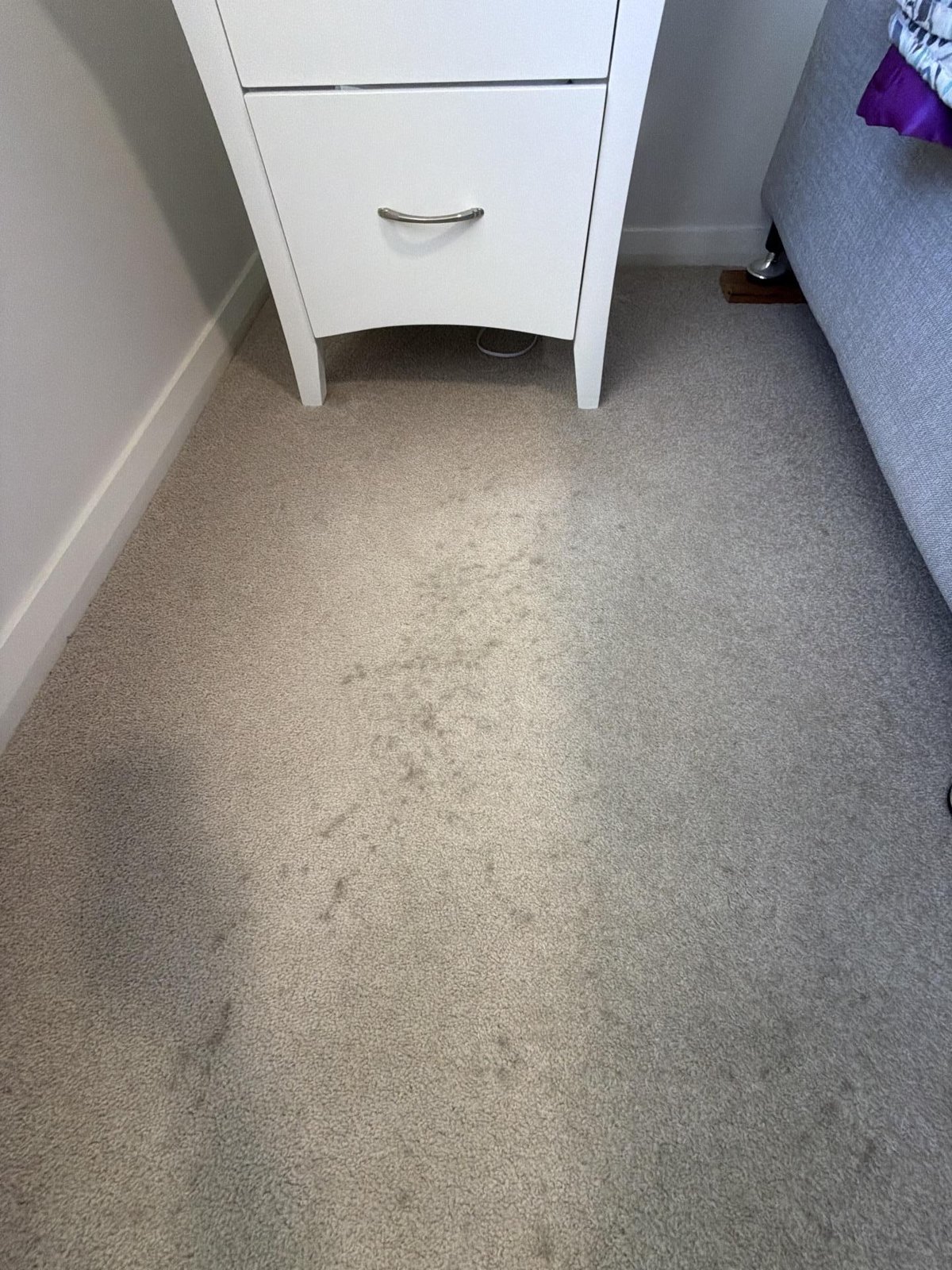
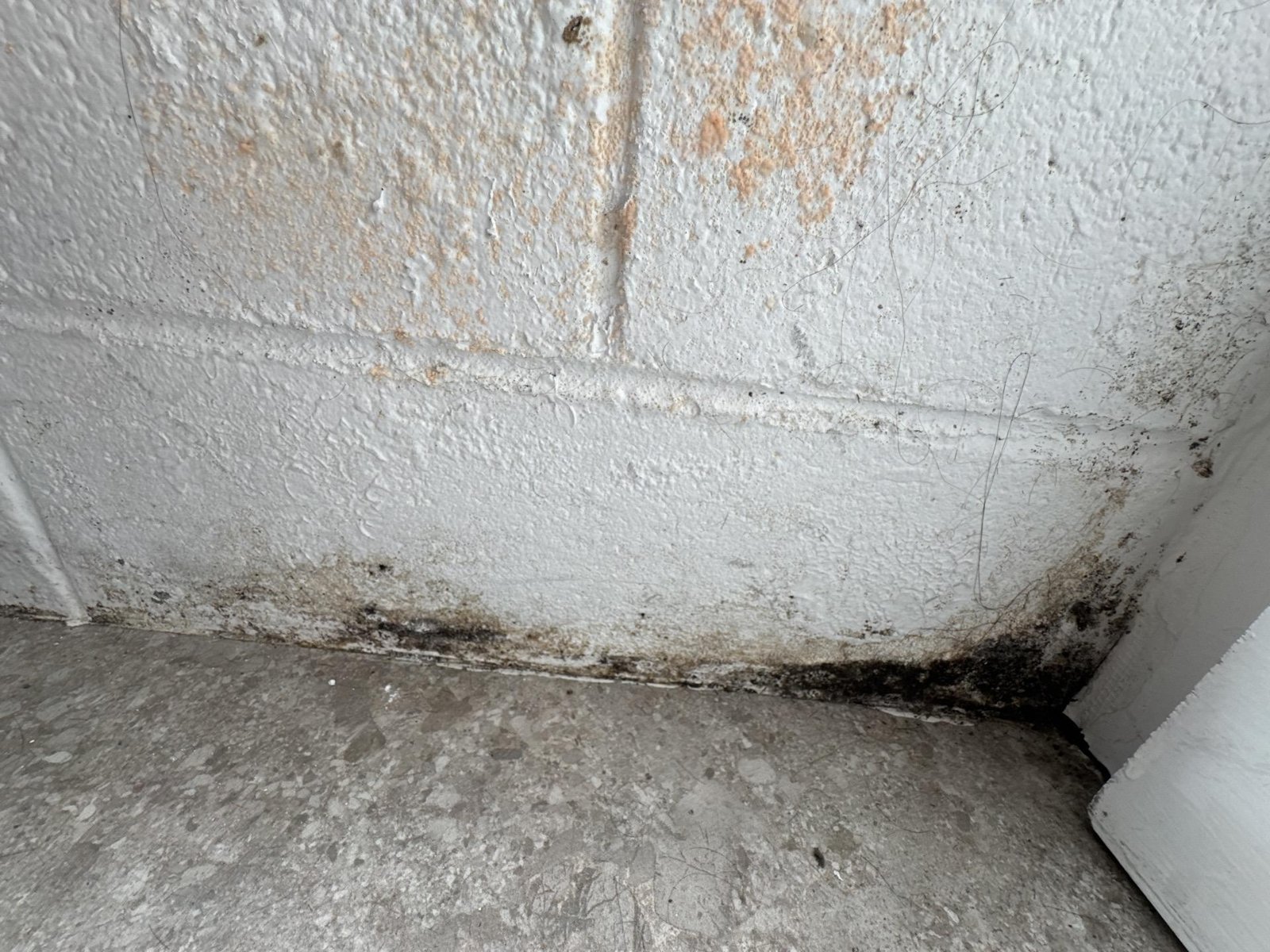
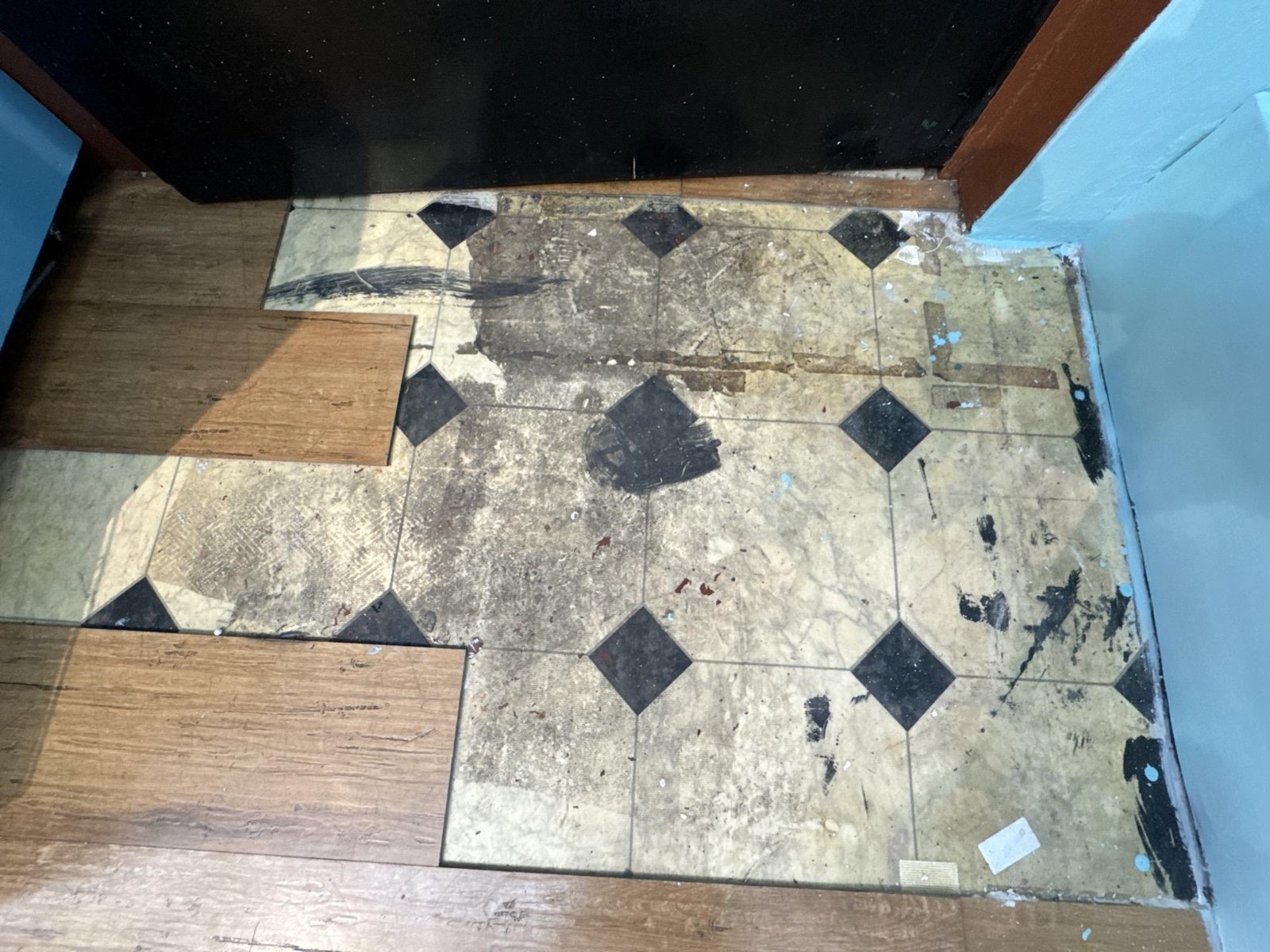
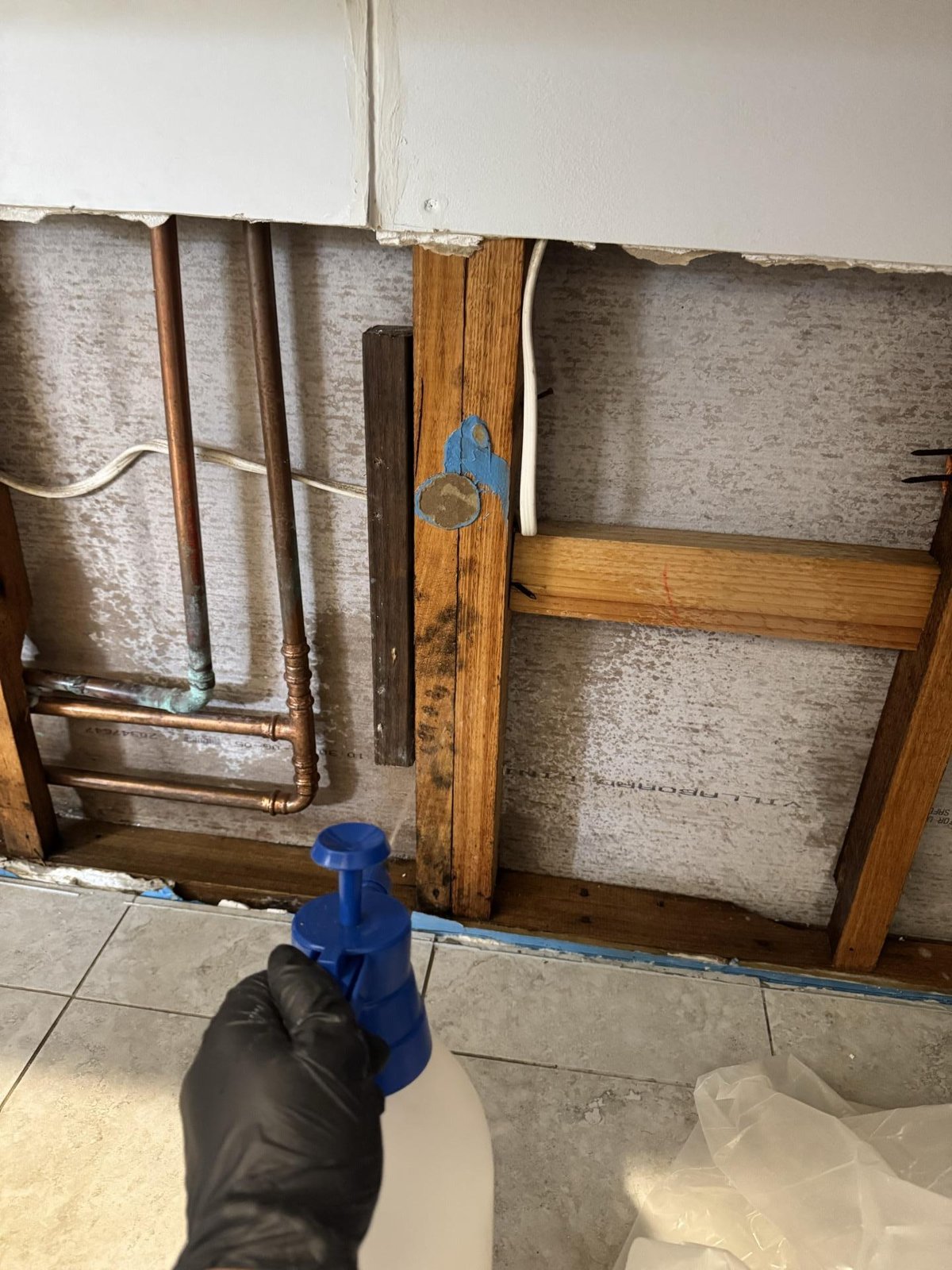
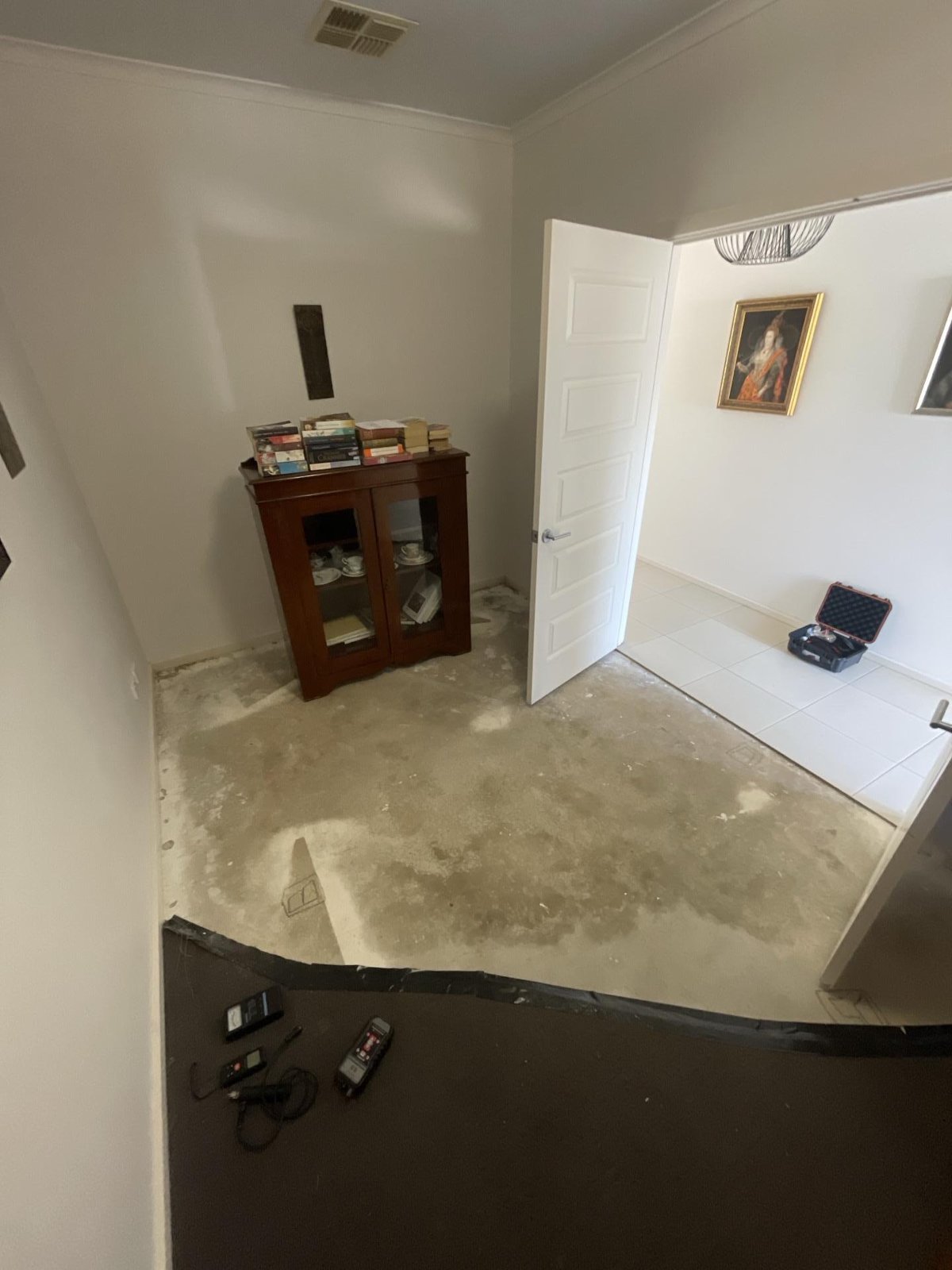
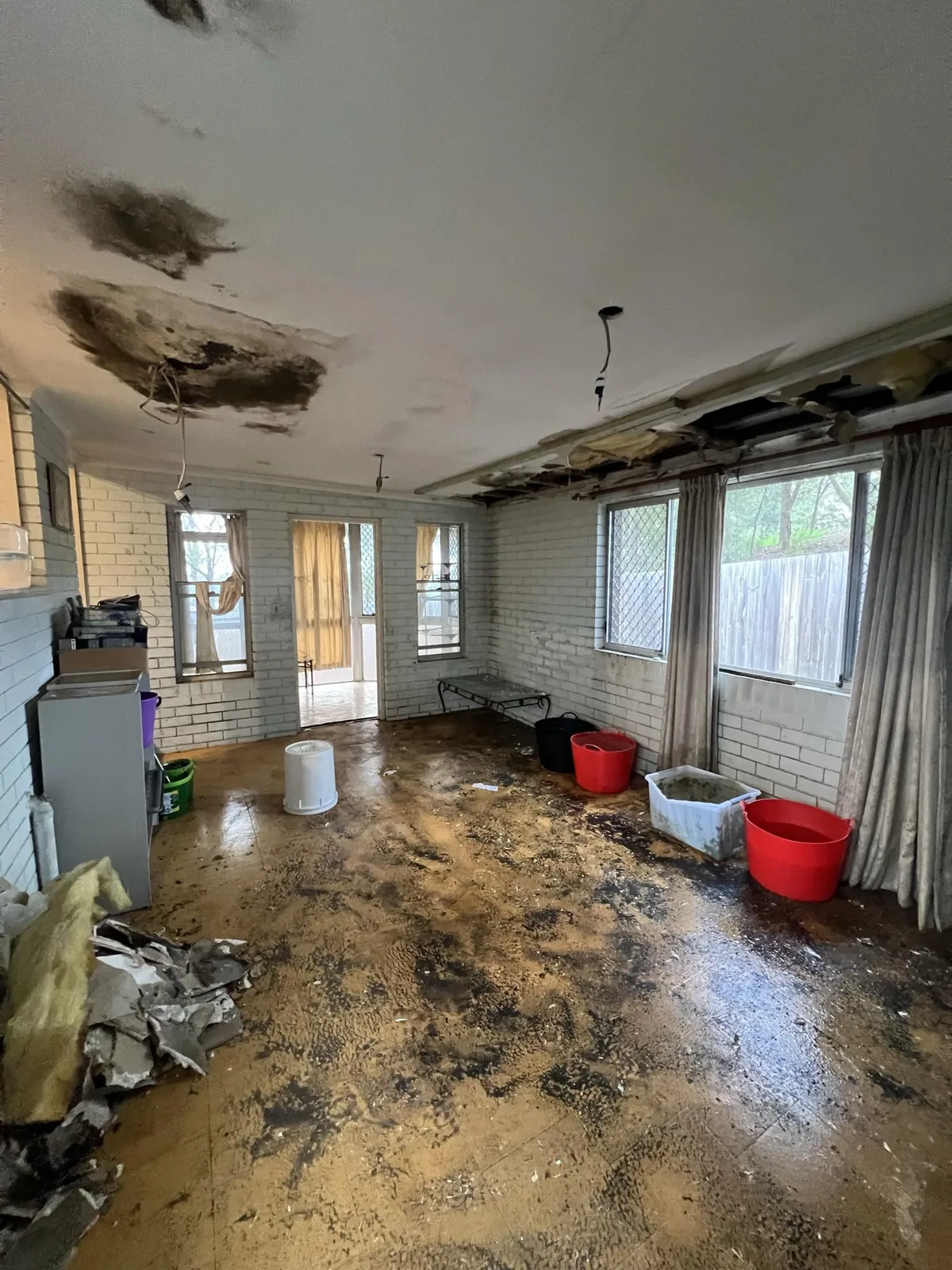
Water damage work in St Marys in October 2026 covered 10 rooms, each recorded as the job progressed. The crew’s first task was to remove the wet floor coverings, which left bare, stained concrete in at least one room. Carpet that has been soaked rarely dries properly in place, so pulling it up early is part of stopping the damage from spreading.
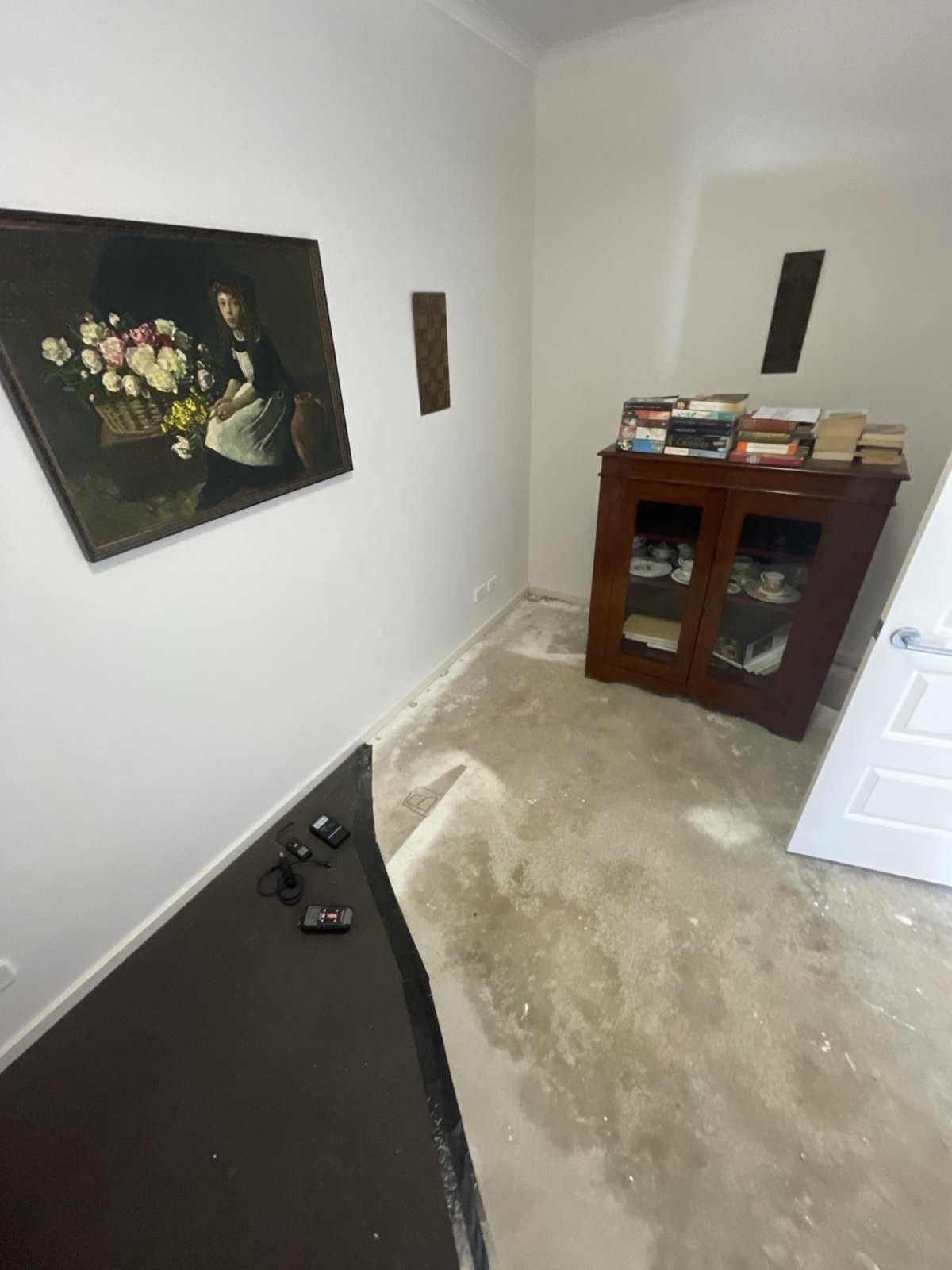
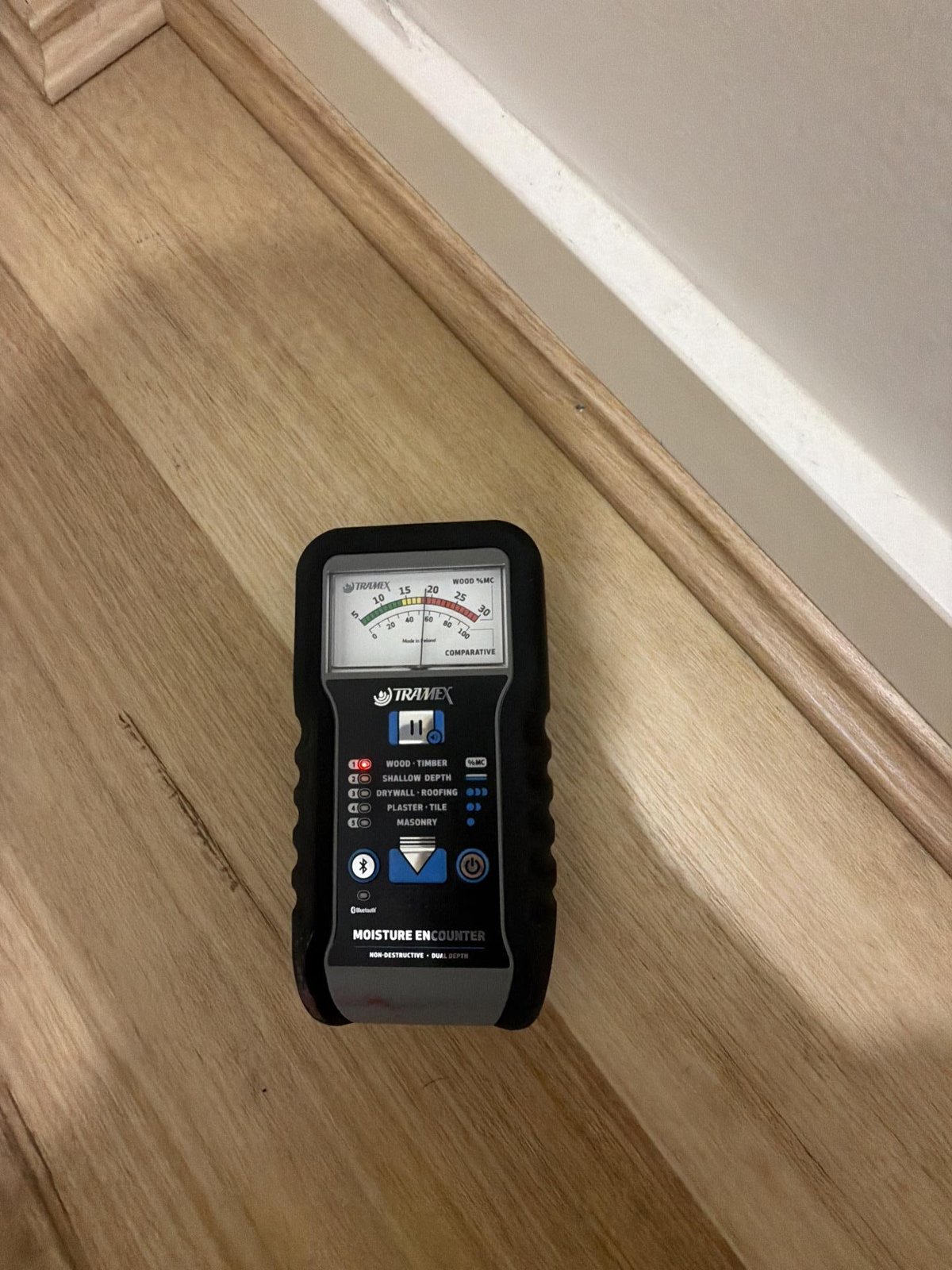
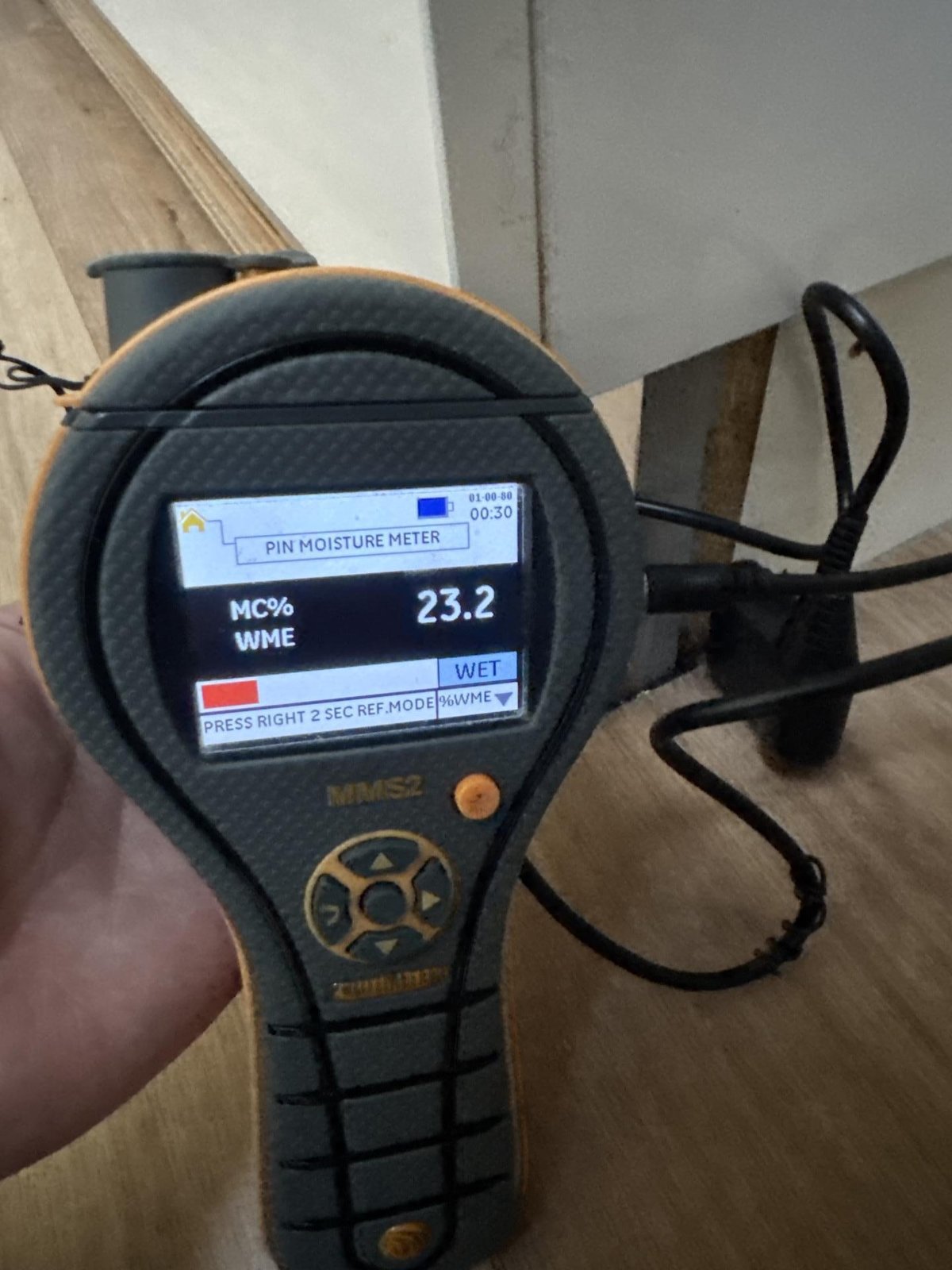
Once the floors were open, moisture meters were placed on the surfaces and the sheeting to measure how much water remained. The readings show where moisture is still held and tell the technicians where to focus their drying equipment. Drying a building is a matter of measurement rather than guesswork: the aim is to bring materials back to a dry, stable level before anything is rebuilt.
The work was carried out in line with IICRC S500, the industry standard for water damage restoration. That standard sets out how the assessment, drying and monitoring should be done, and how the results are recorded. Live onsite reporting kept the documentation current as each room was assessed.
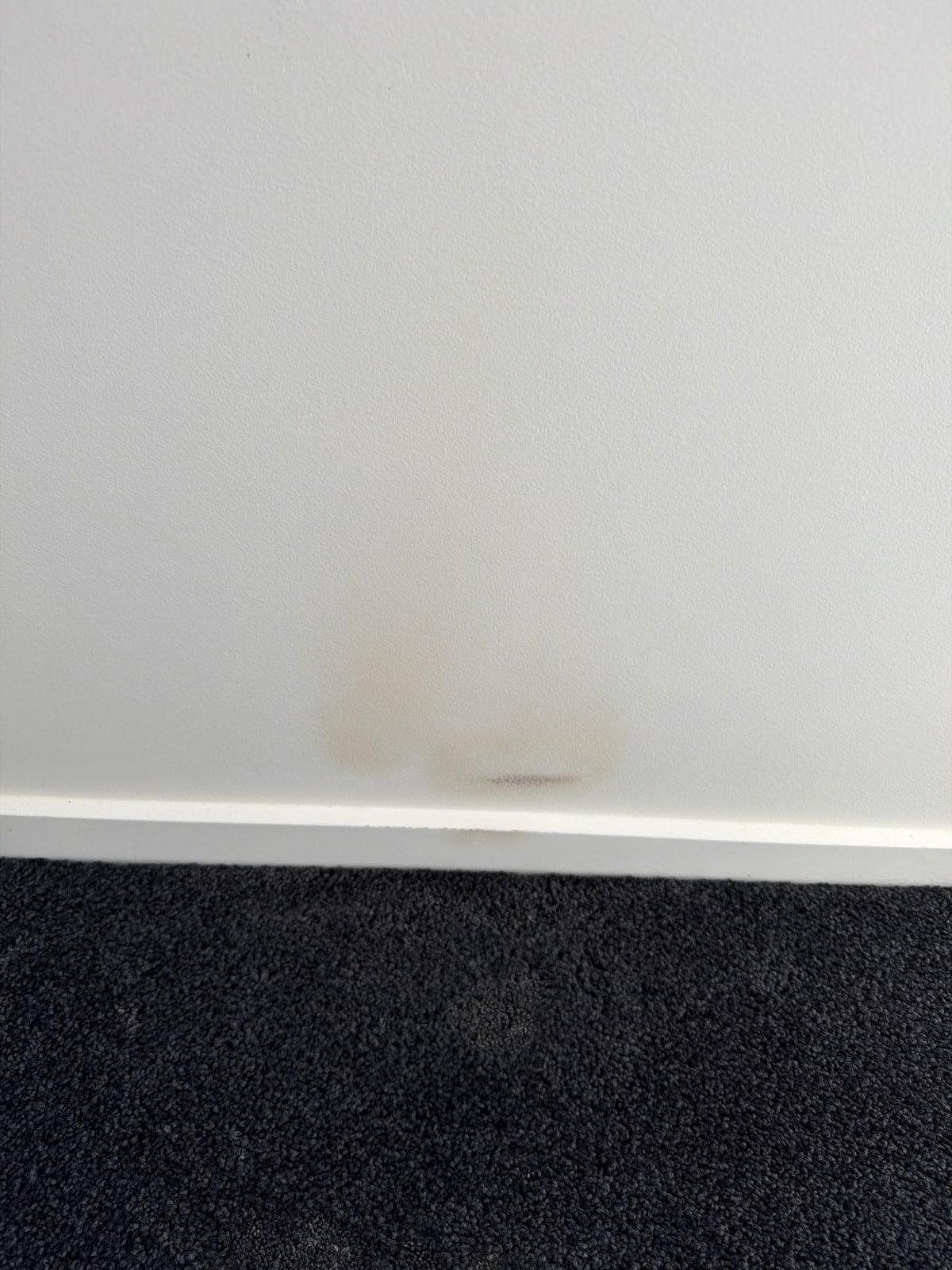
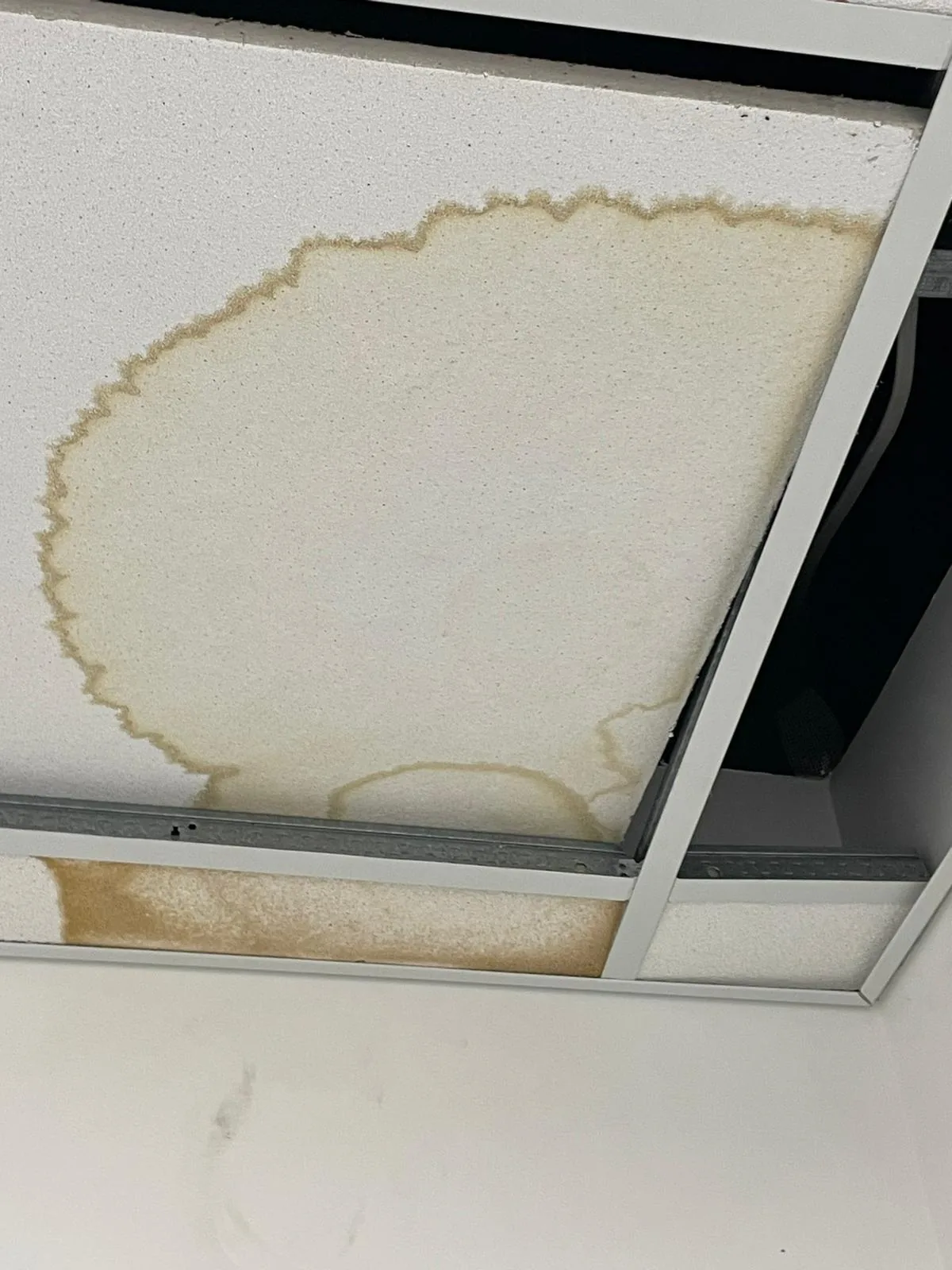
For people in St Marys and the surrounding suburbs, water damage can start small and still cause lasting trouble if moisture is left in walls, subfloors or under flooring. Staining, a musty smell and lifting boards are common signs that a floor hasn’t dried fully. Prompt removal of wet materials and proper drying are what limit that kind of follow-on damage.
Elite Restoration is an IICRC Certified Firm and operates 24/7 for emergency mitigation call-outs. Where insurance is involved, the team liaises with the insurer on the claim, and the job is managed through to close out.
Read more about our Water Damage Restoration service.

 Water Damage Restoration
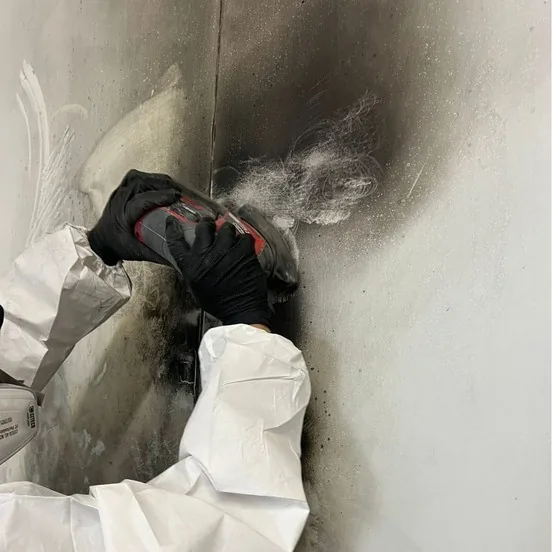 Fire and Smoke Restoration
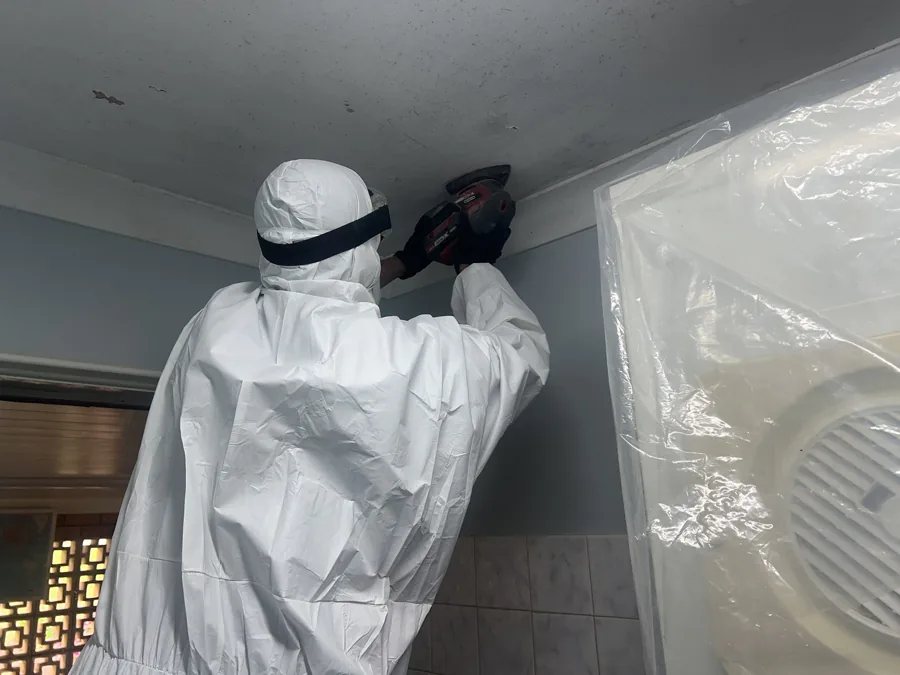 Mould Removal & Remediation
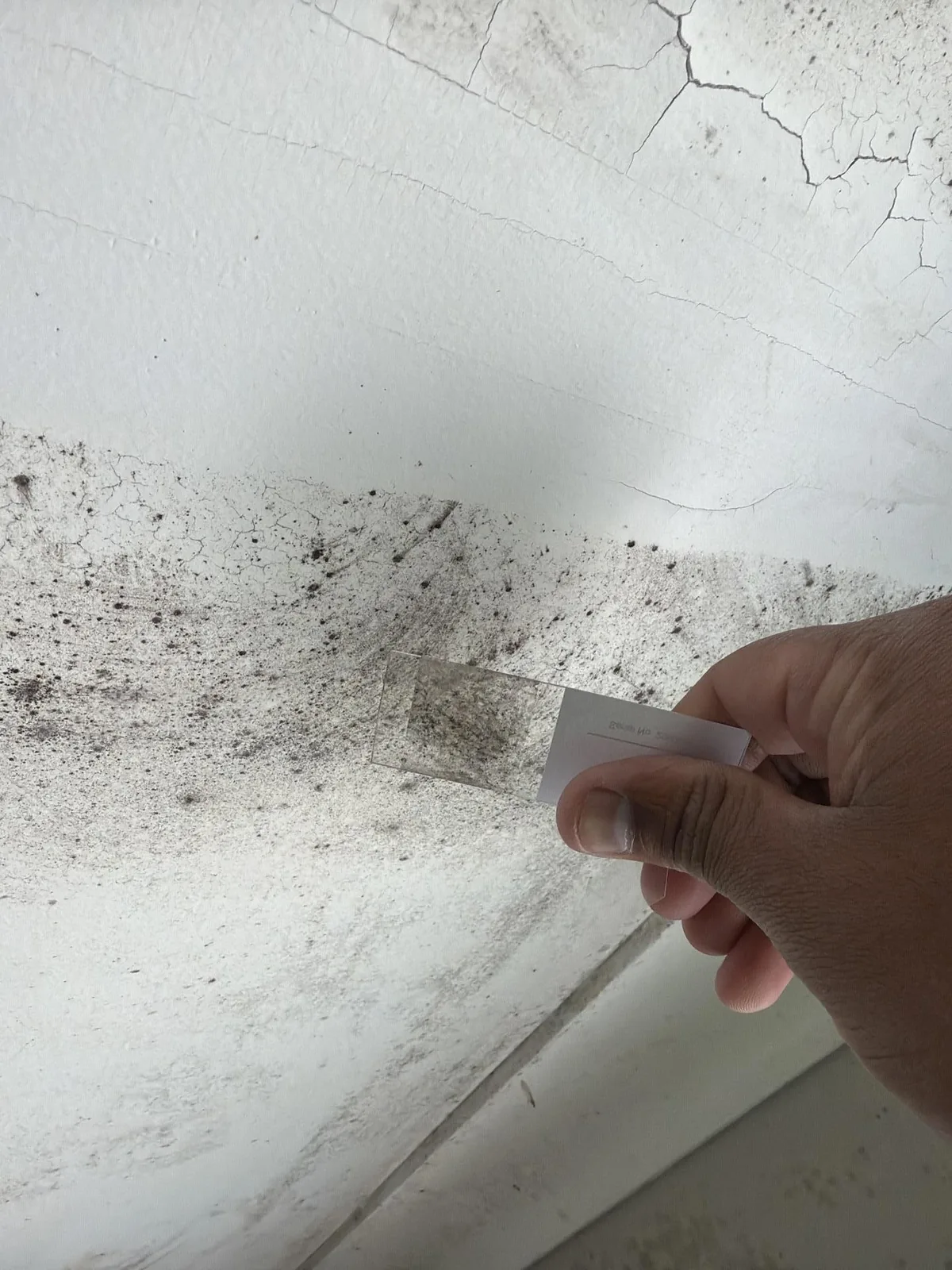 Mould Inspection
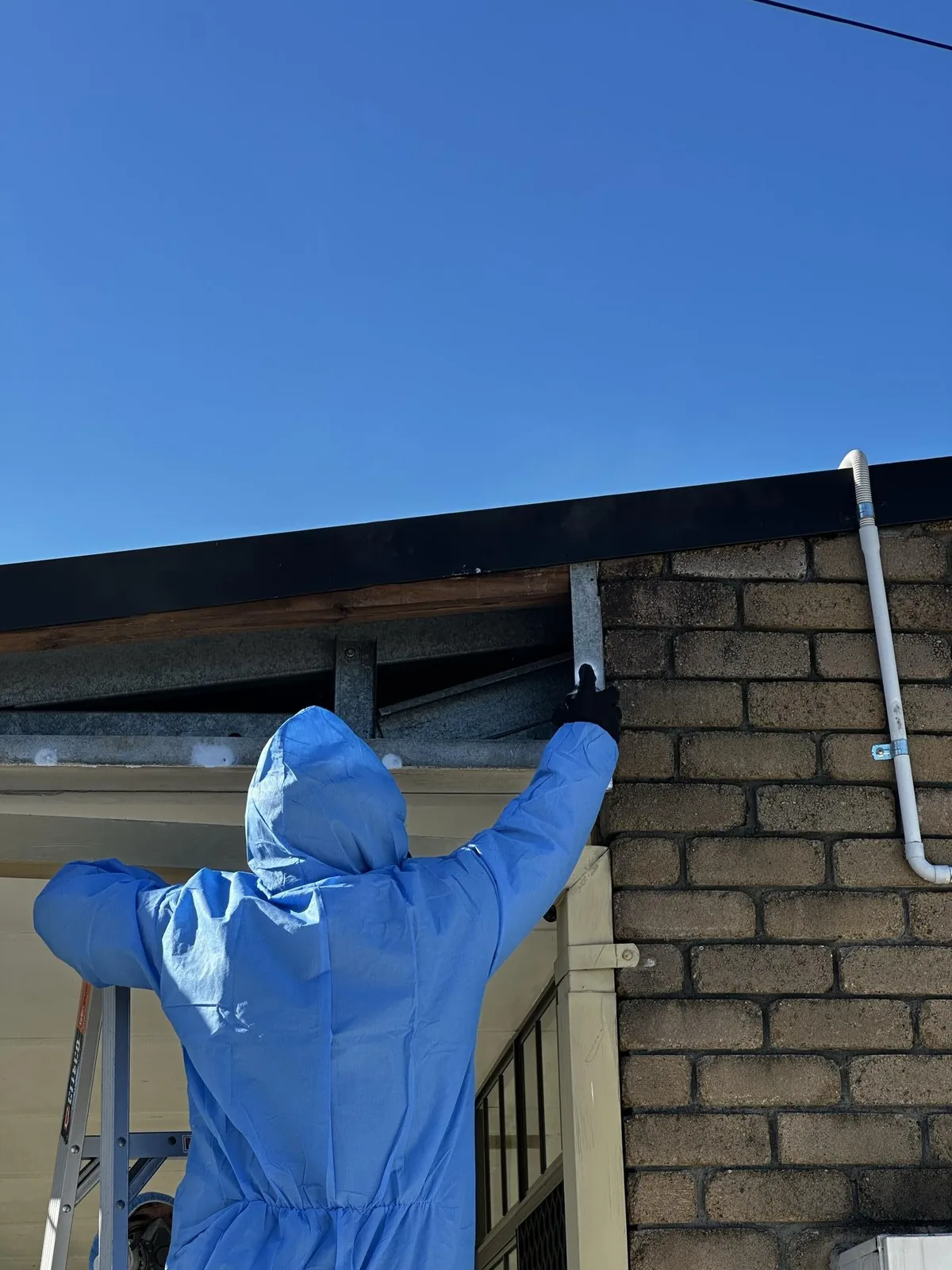 Asbestos Removal
 Asbestos Testing
 Dehumidifier Hire
 Air Quality Testing
 Structural Drying
 Water Leak Detection
 Trauma & Crime Scene Cleaning
 Deceased Estate Clearing
 Hoarding & Squalor Cleaning
 Meth Testing & Decontamination
 Lead Paint Removal