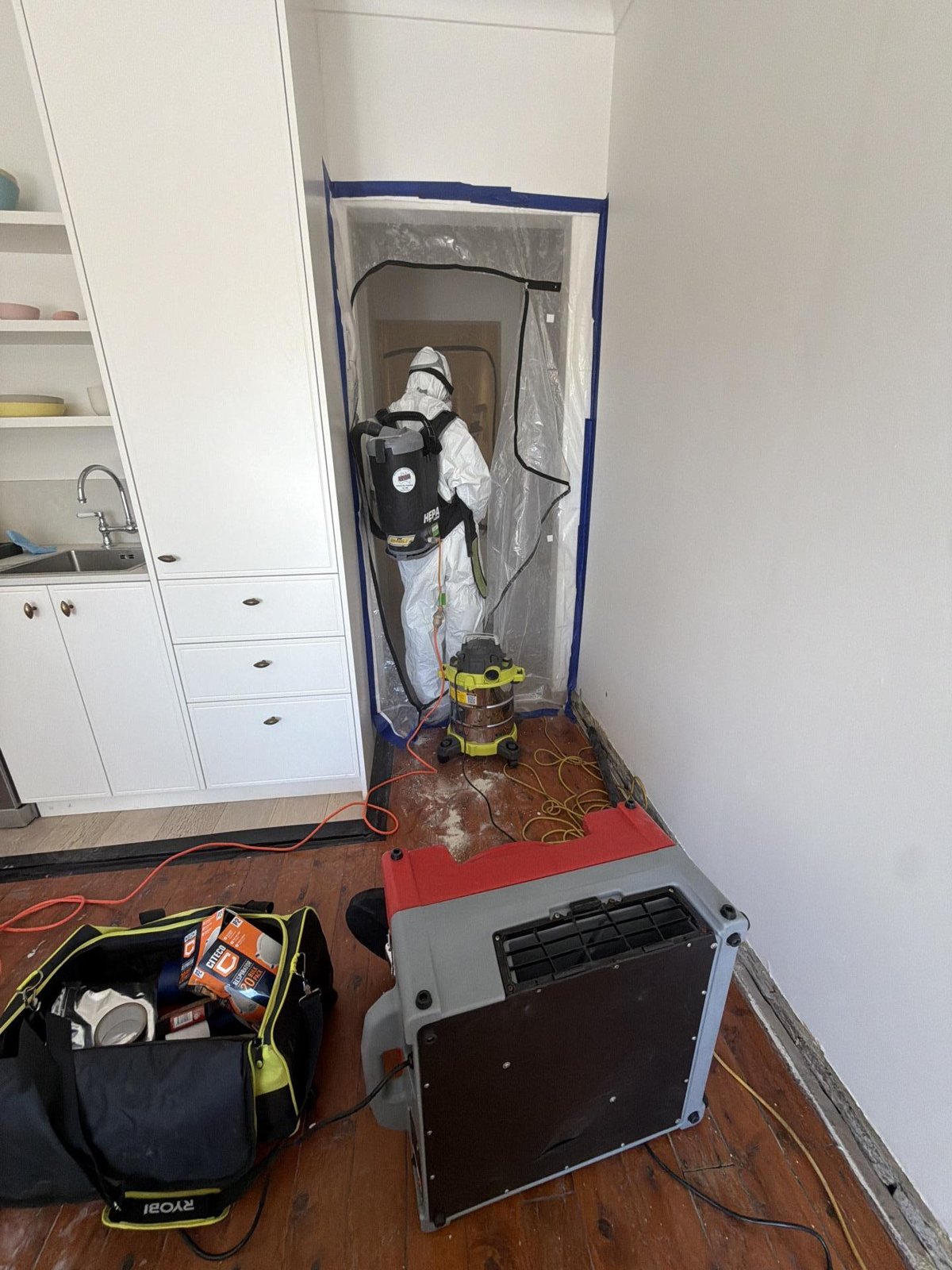
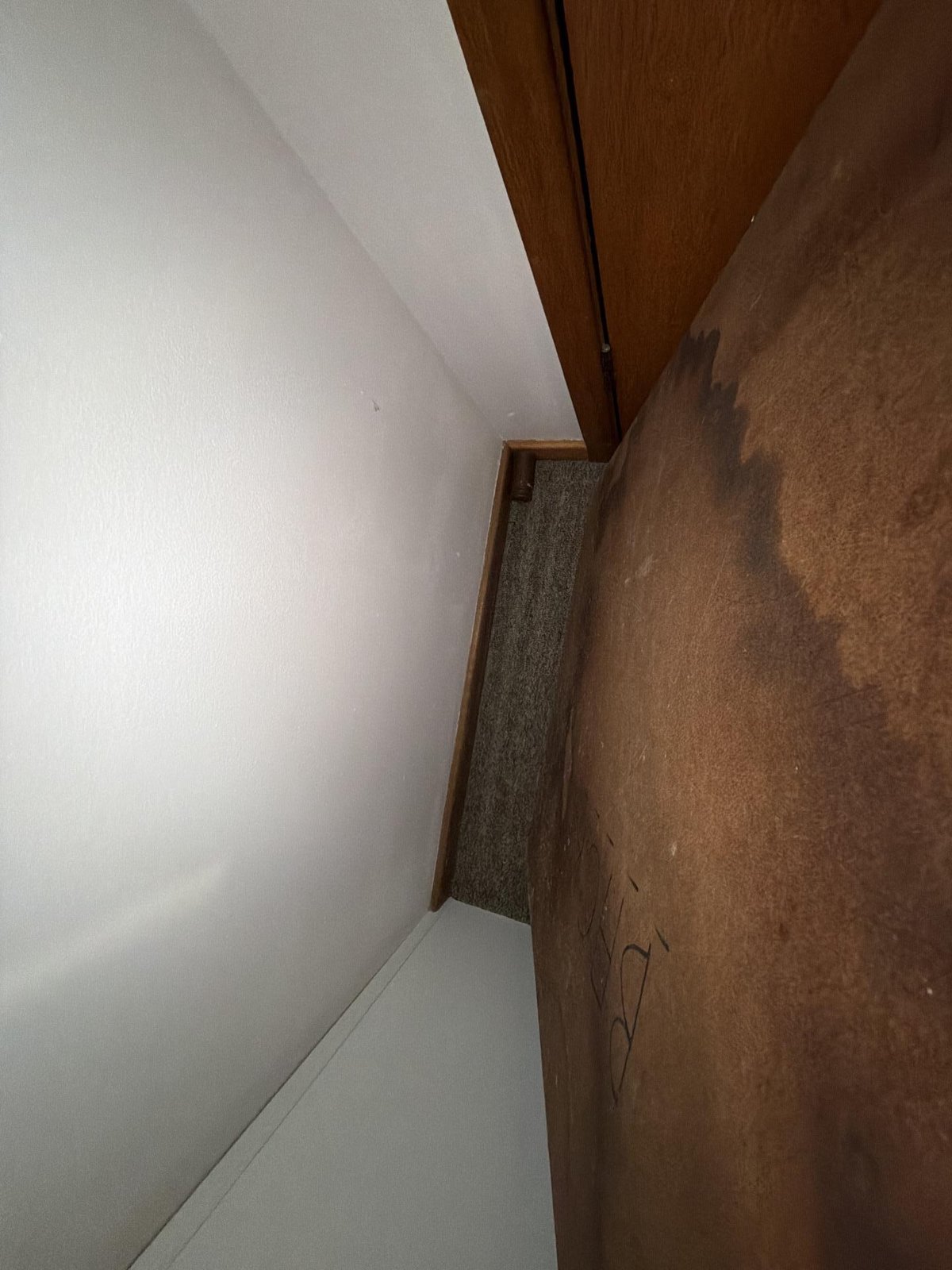
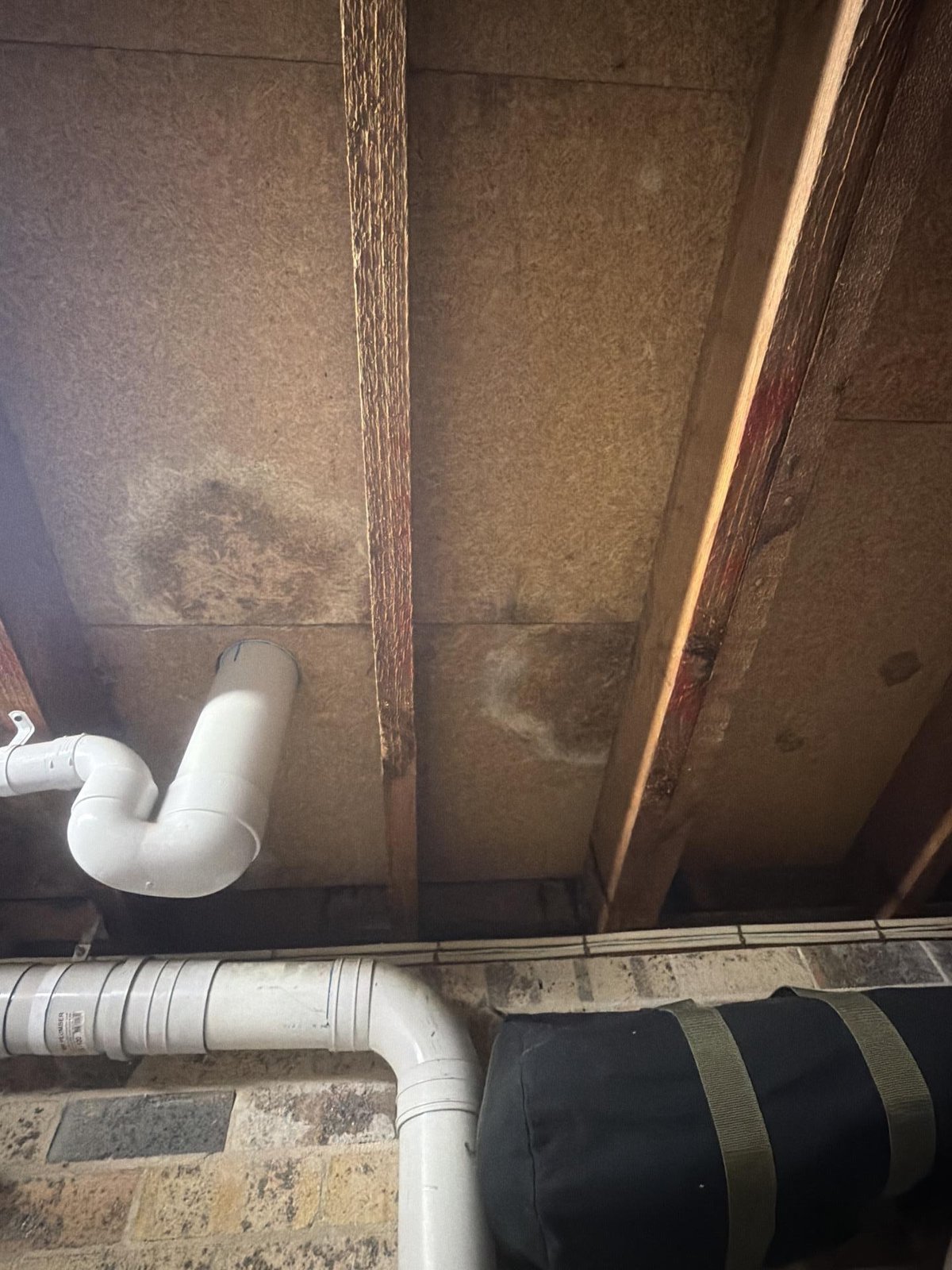
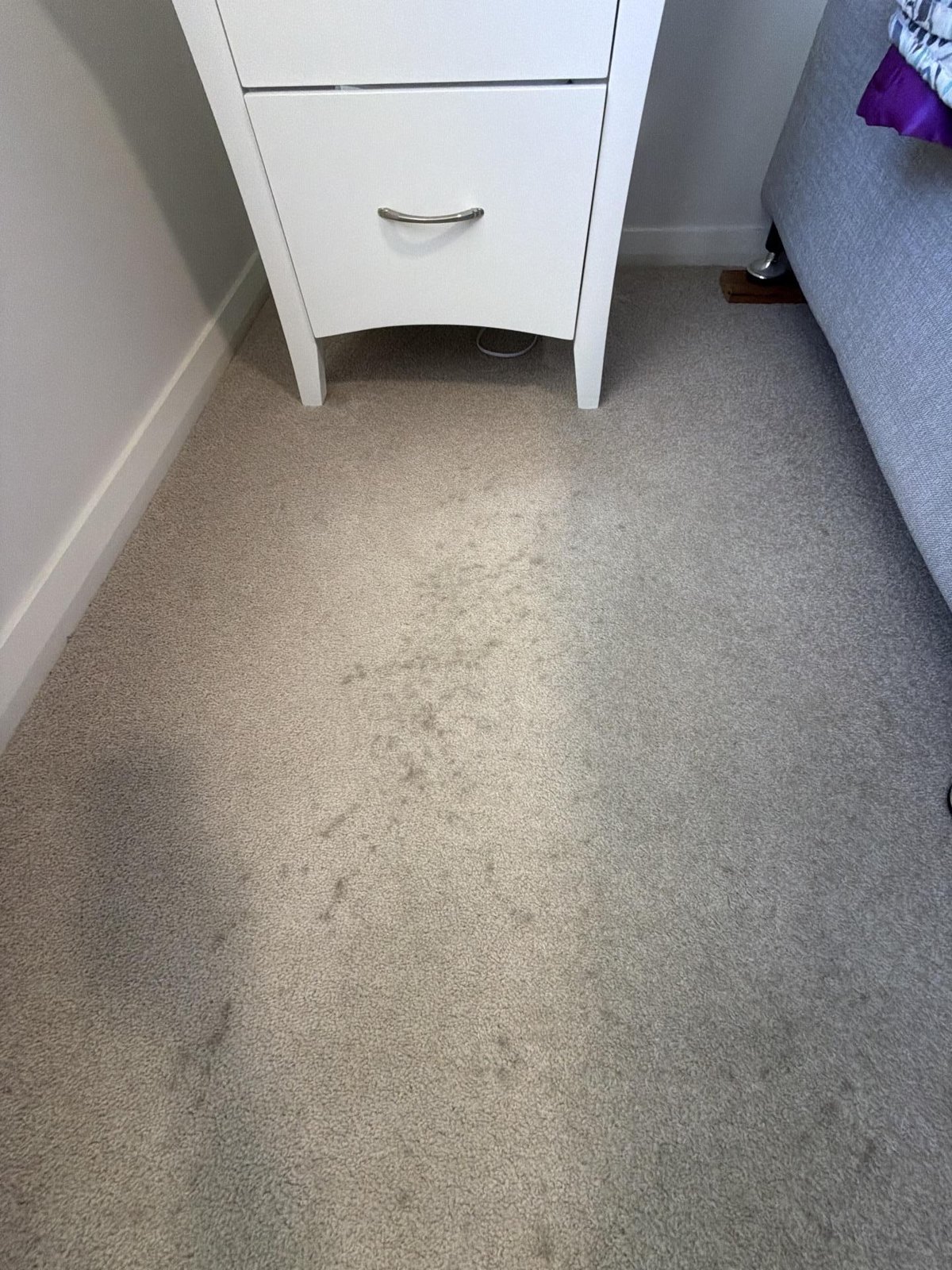
In October 2026, Elite Restoration completed a water damage job in Launceston TAS 7250. The work covered 10 rooms and was documented room by room as the job progressed.
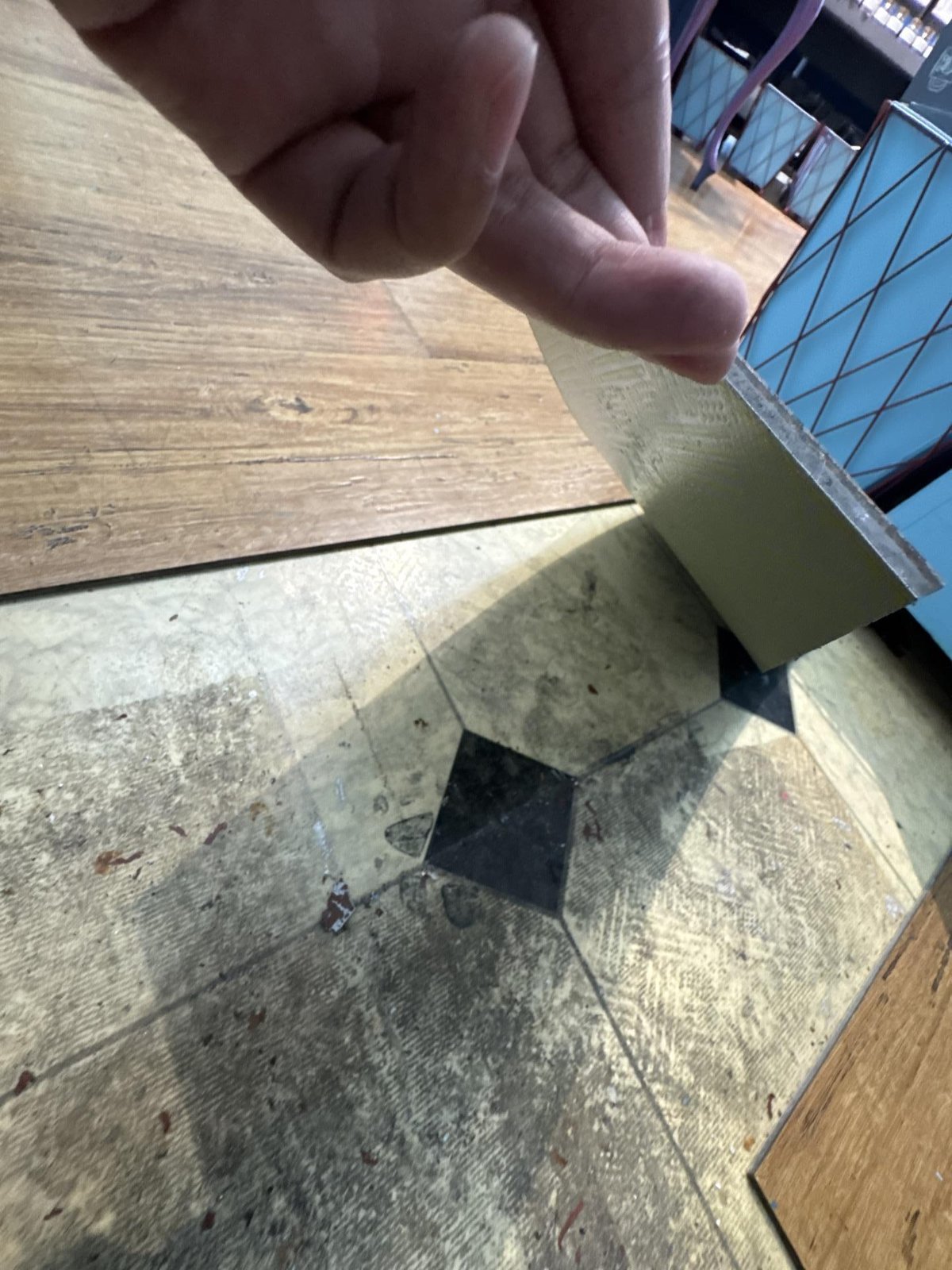
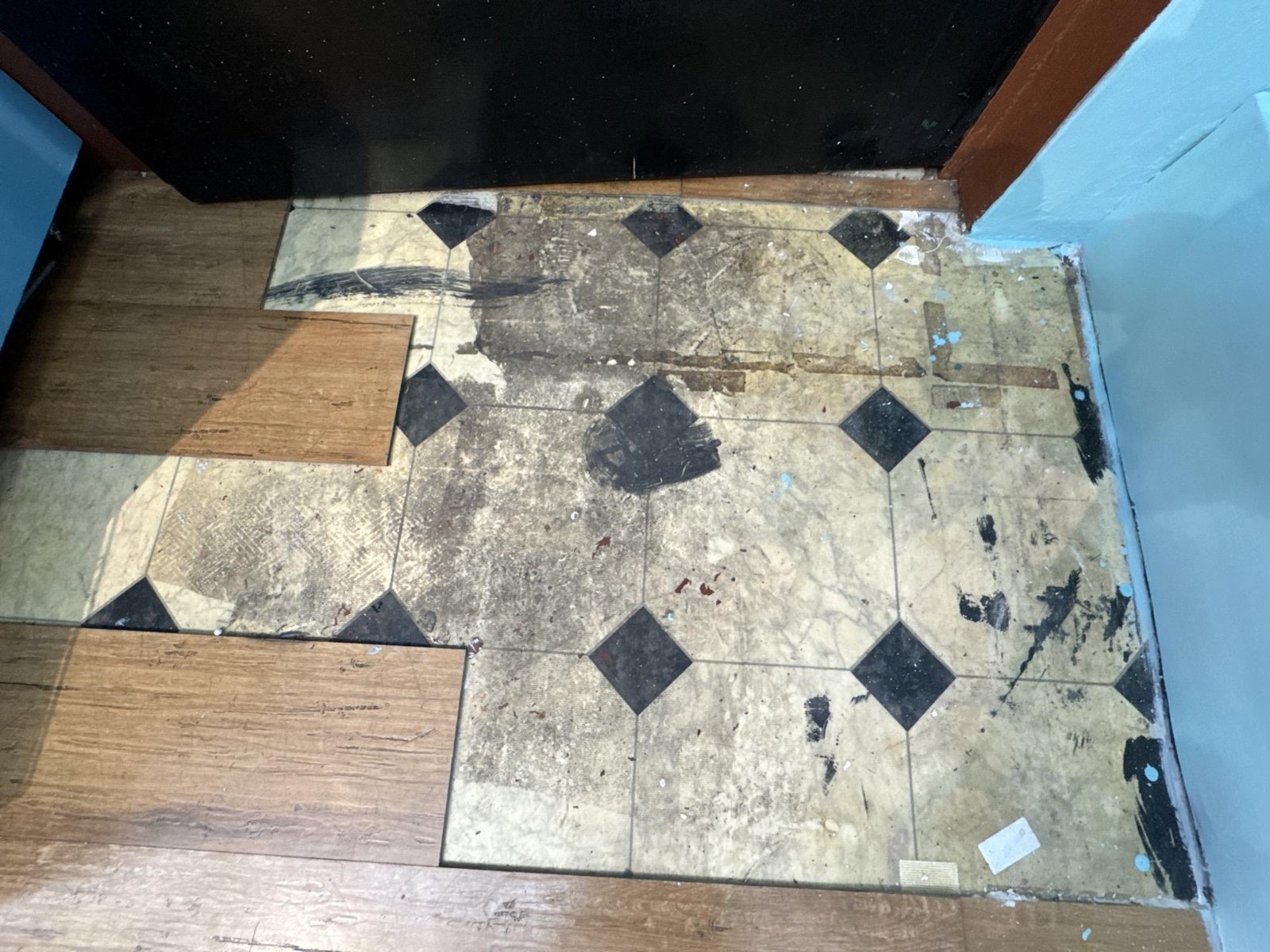
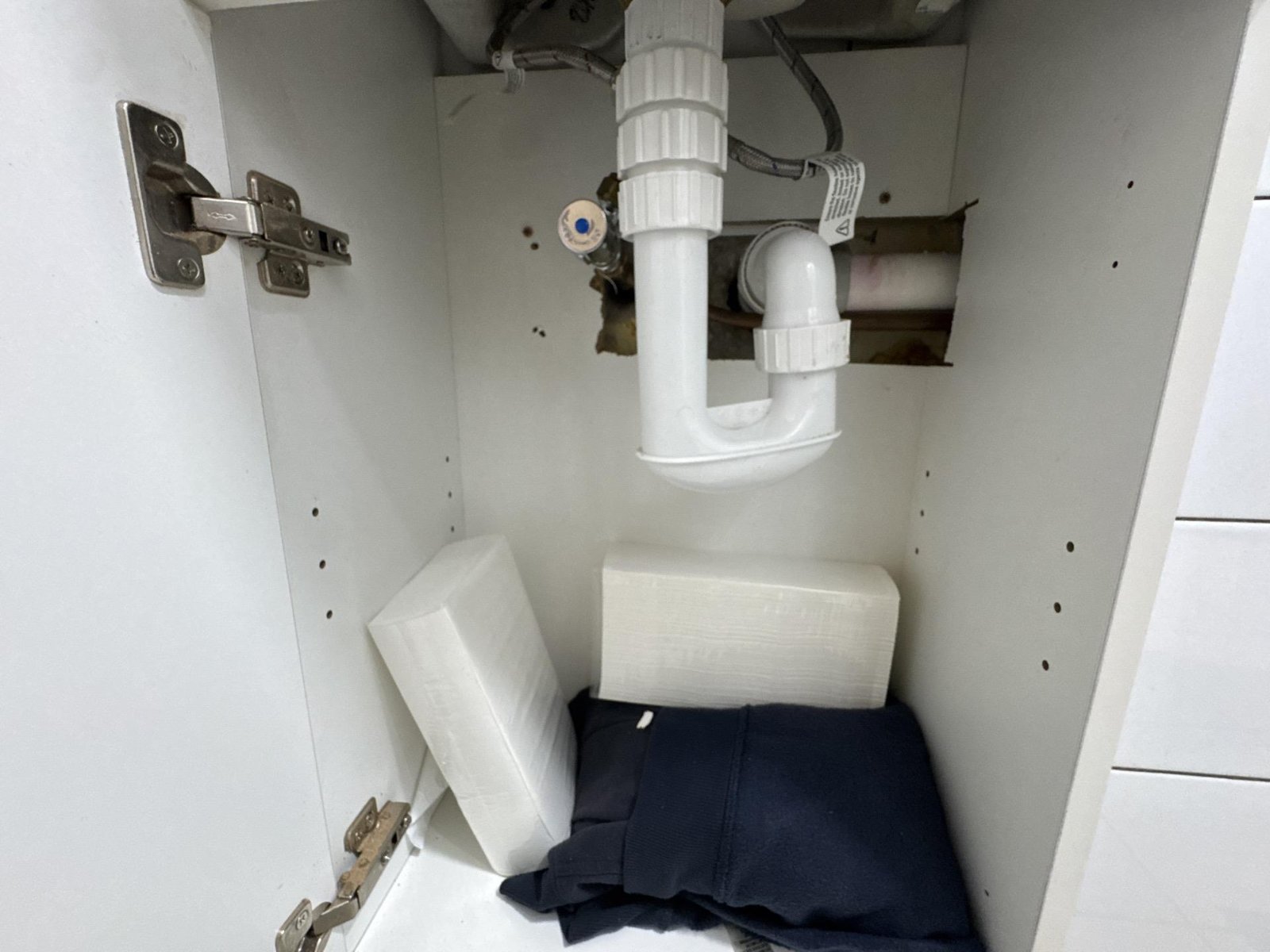
The photos from the job show an older patterned vinyl floor with black diamond tiles. Staining and lifted sections sat beside timber flooring, which is common where water has run across mixed floor types. Another photo shows a sample of sheet flooring held against a worn, stained floor, used to match the existing material when repairs are scoped. Inside a vanity cupboard, the white sink trap and pipework were checked, with bagged towels and cloth on the floor where moisture had collected.
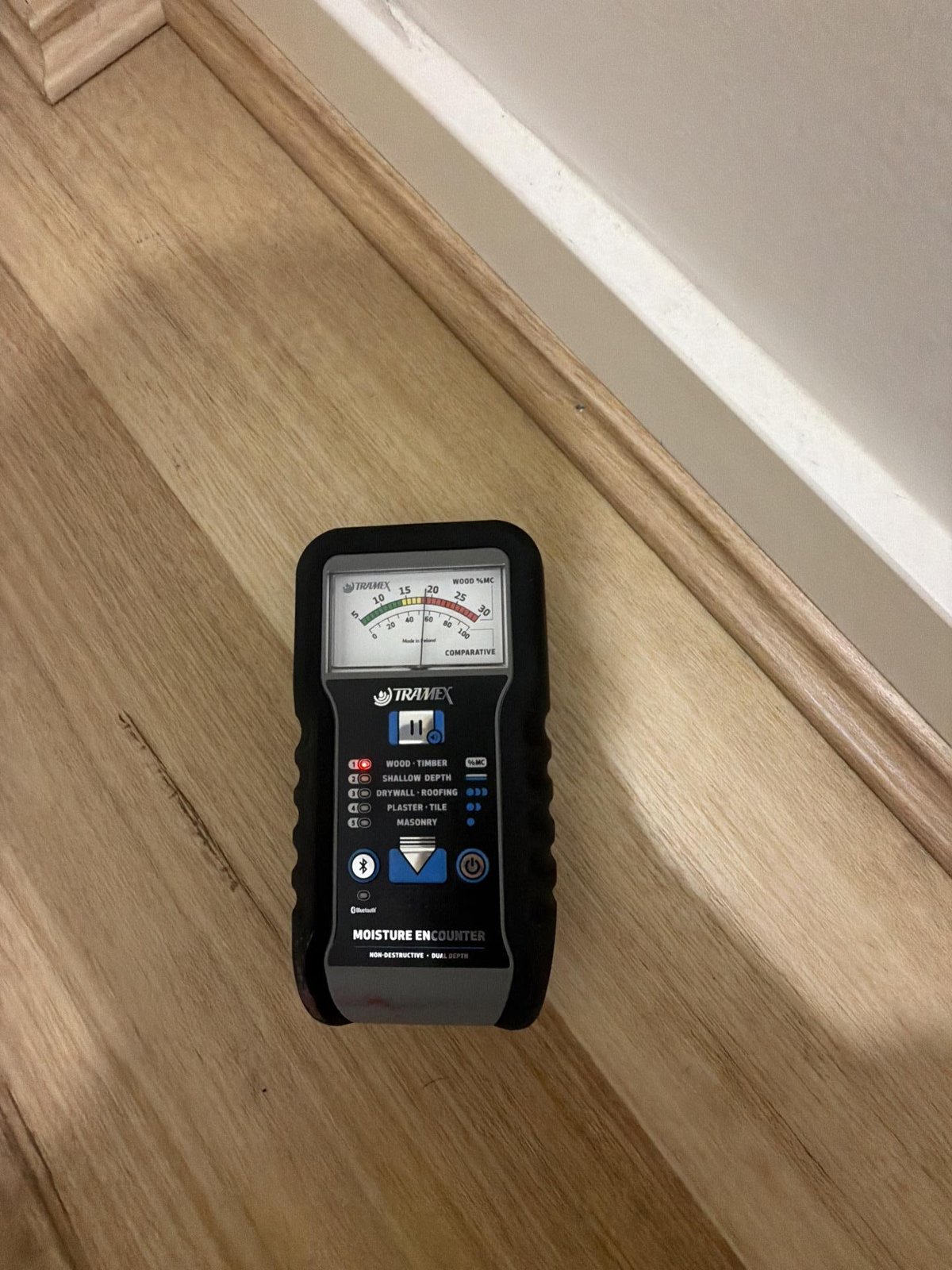
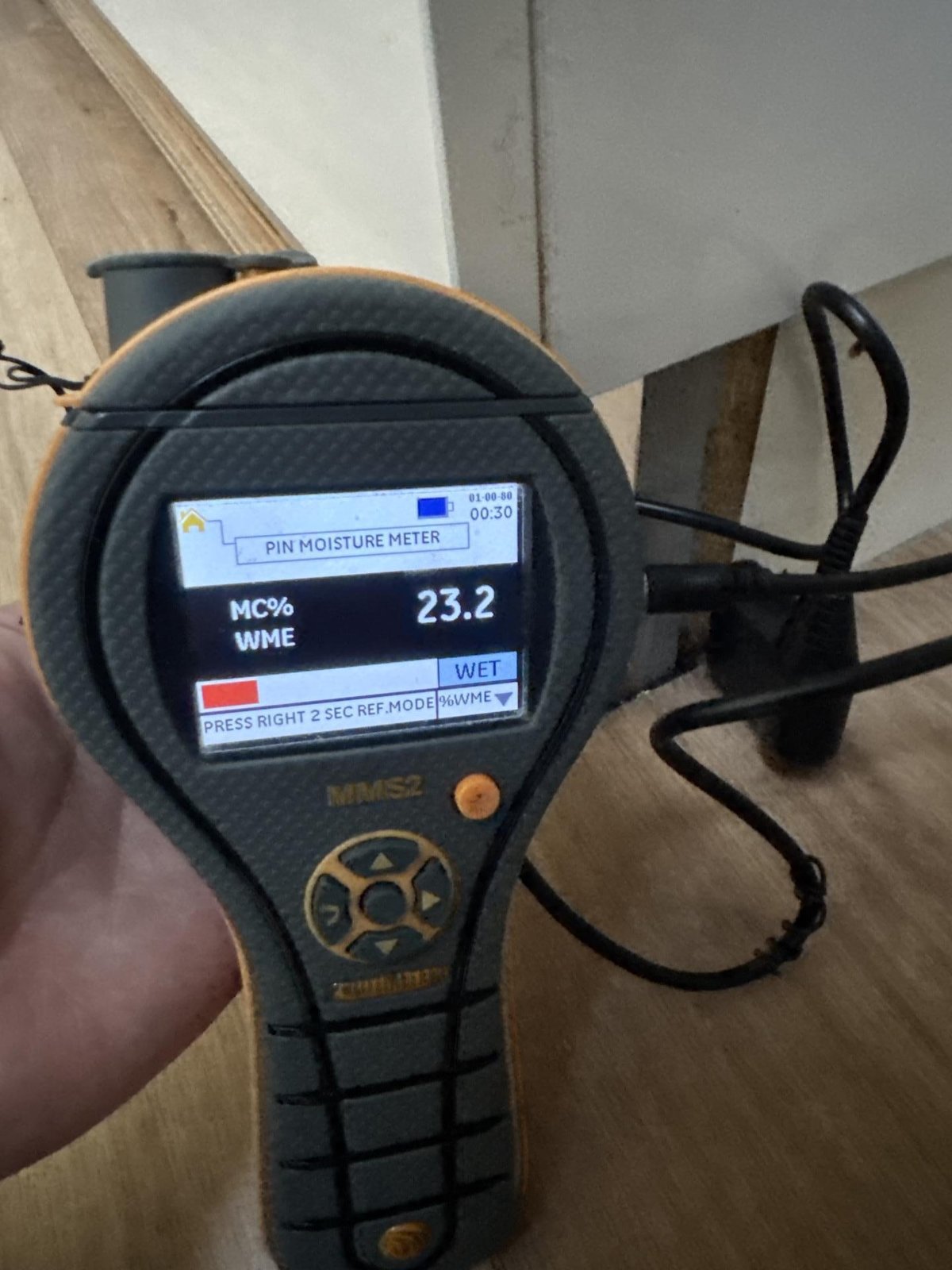
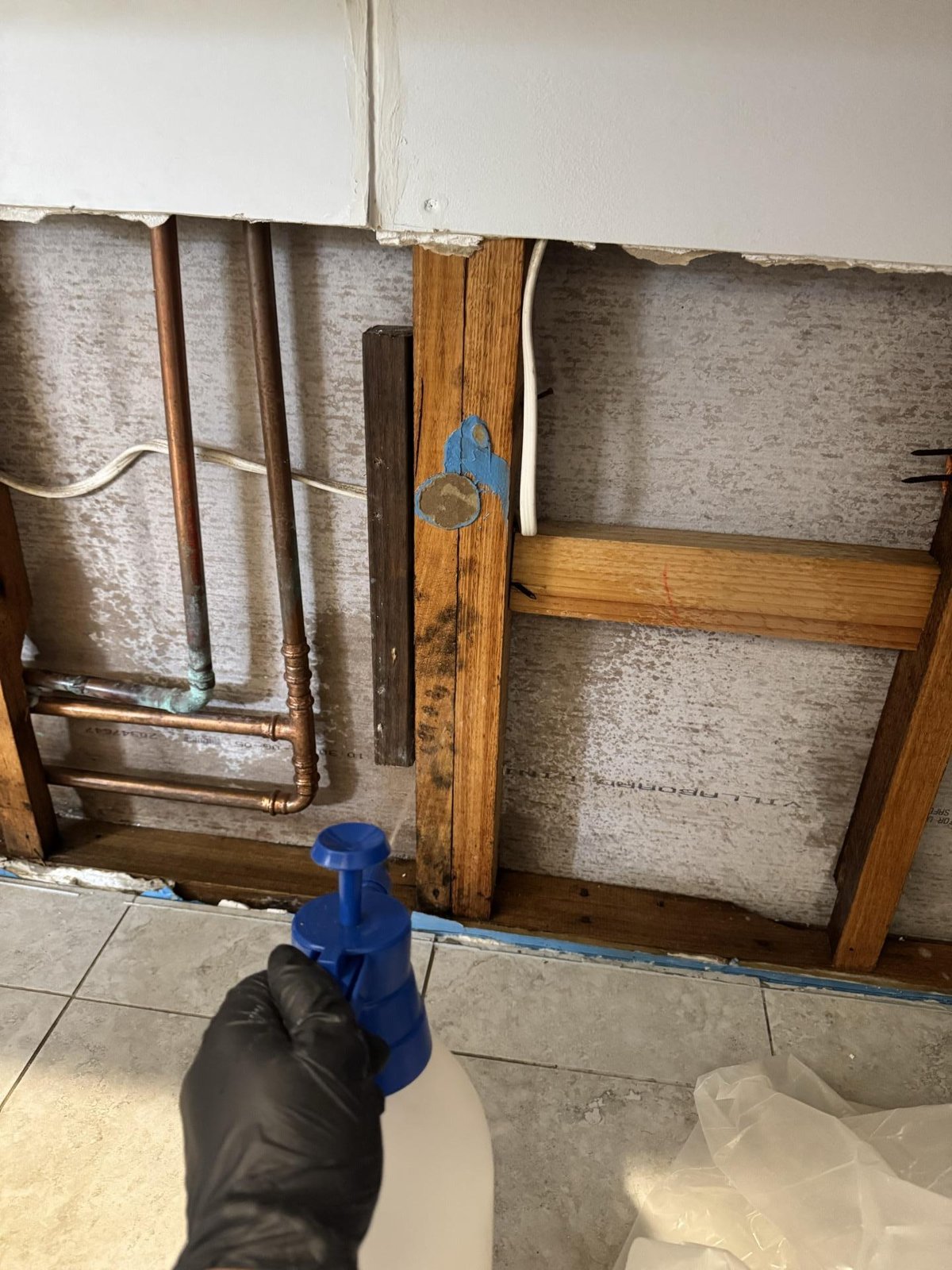
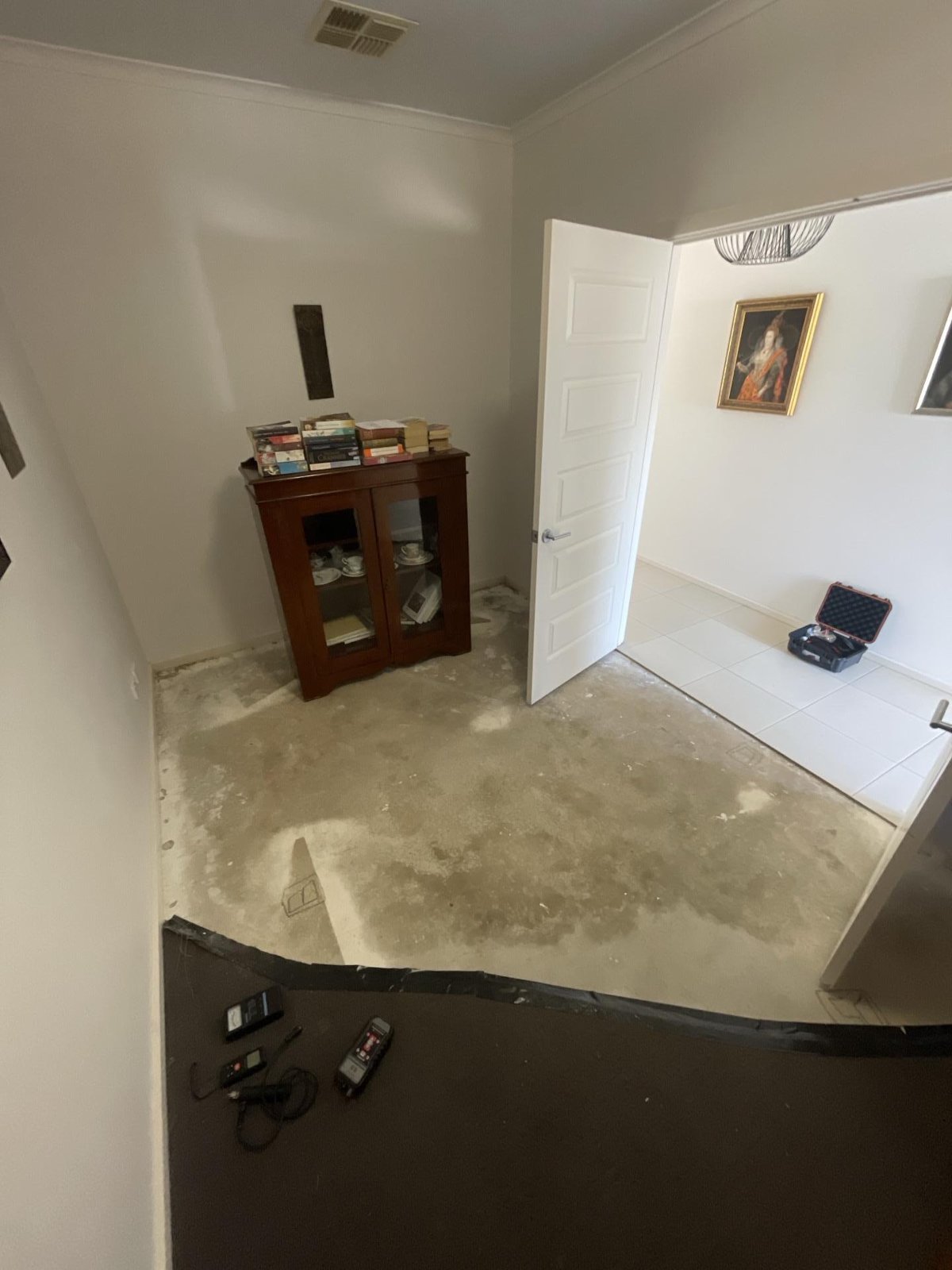
For a job like this, the work generally starts with assessing where water has travelled, including under and behind flooring, and recording moisture readings so the drying can be tracked. Affected materials that can’t be dried are removed, and drying equipment is set up and monitored until readings return to normal. Documentation runs alongside the work, so the scope of the repairs is clear before rebuilding begins. The work is carried out in line with IICRC S500, the industry standard for water damage restoration.
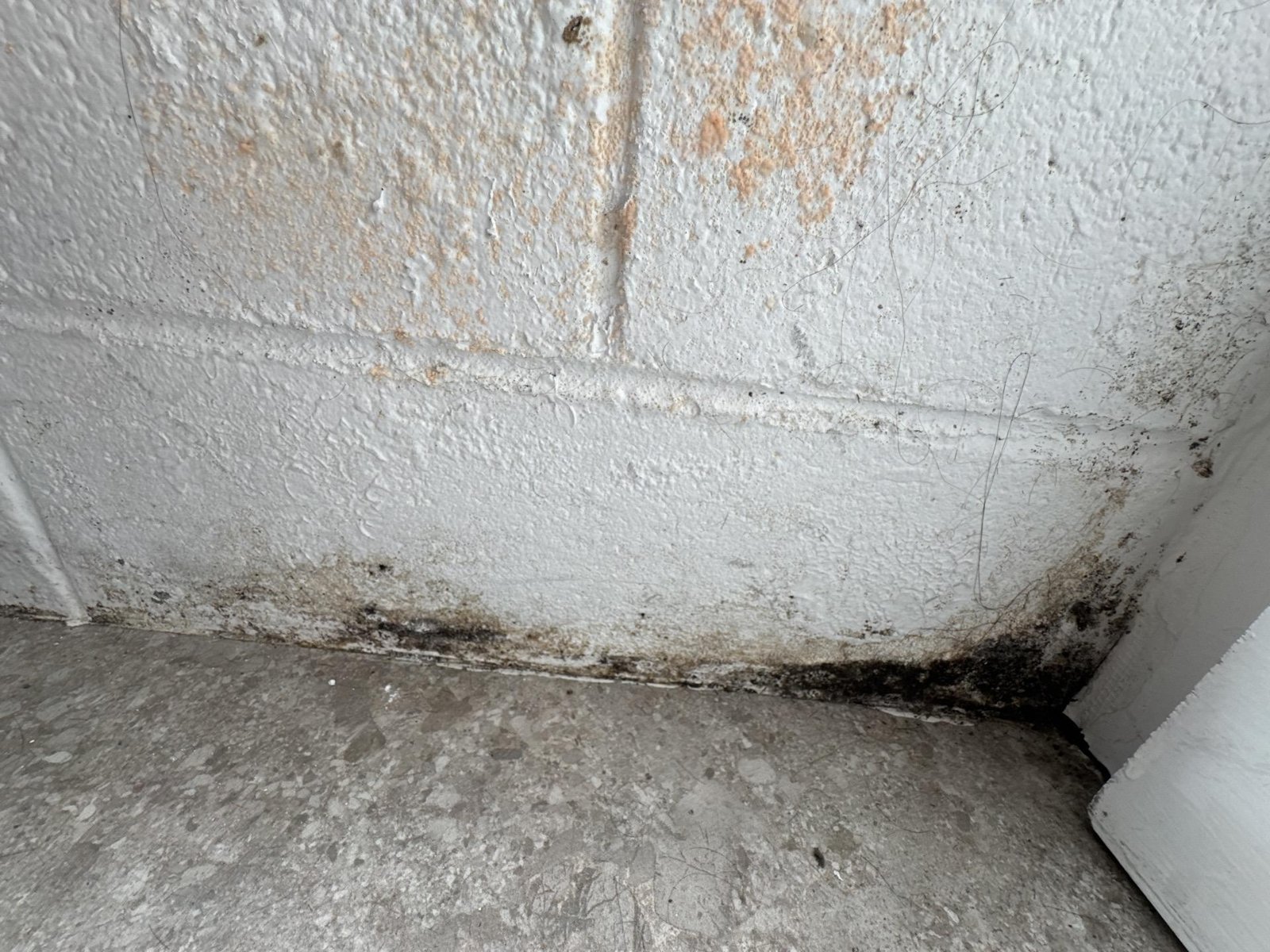
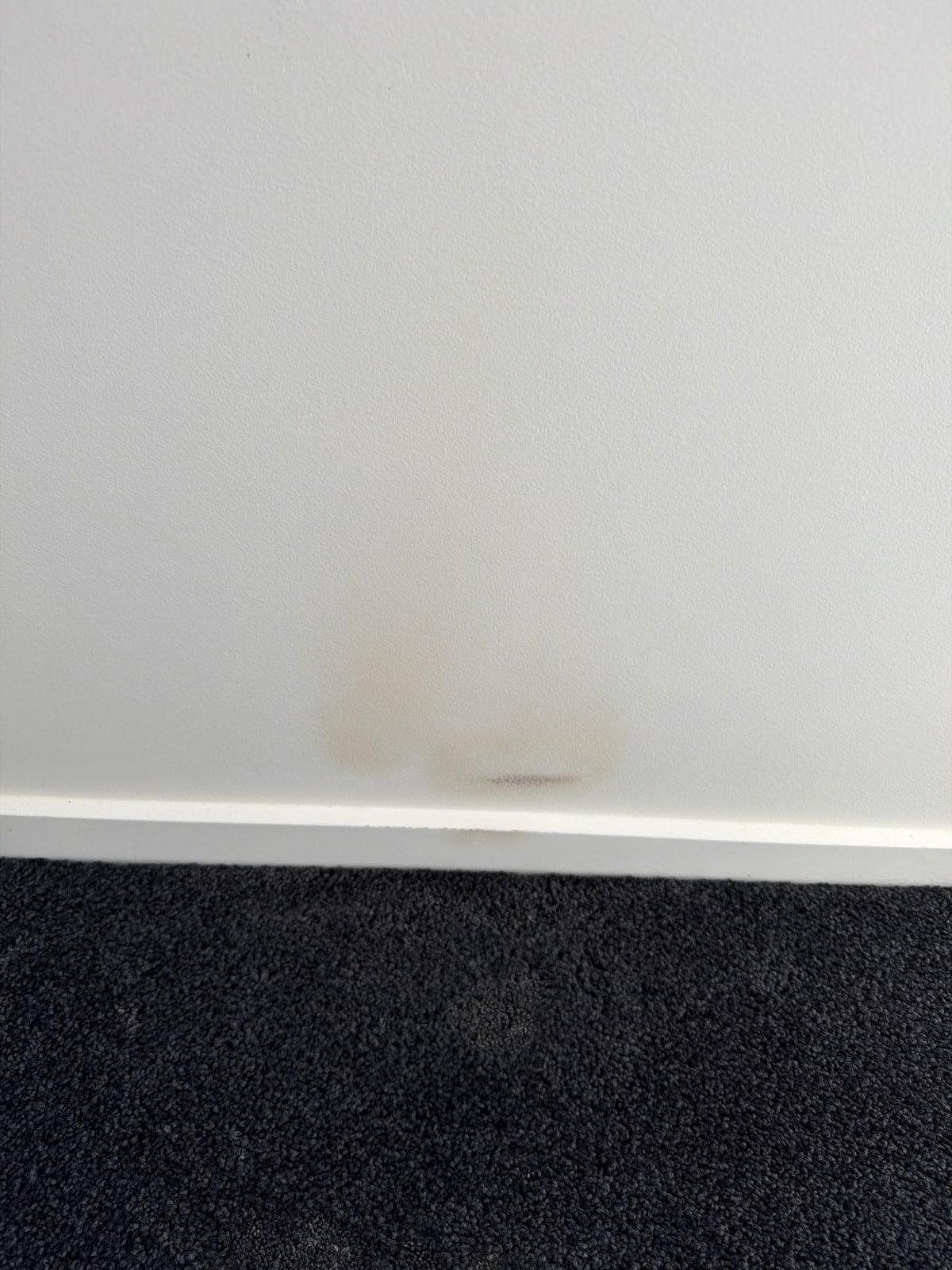
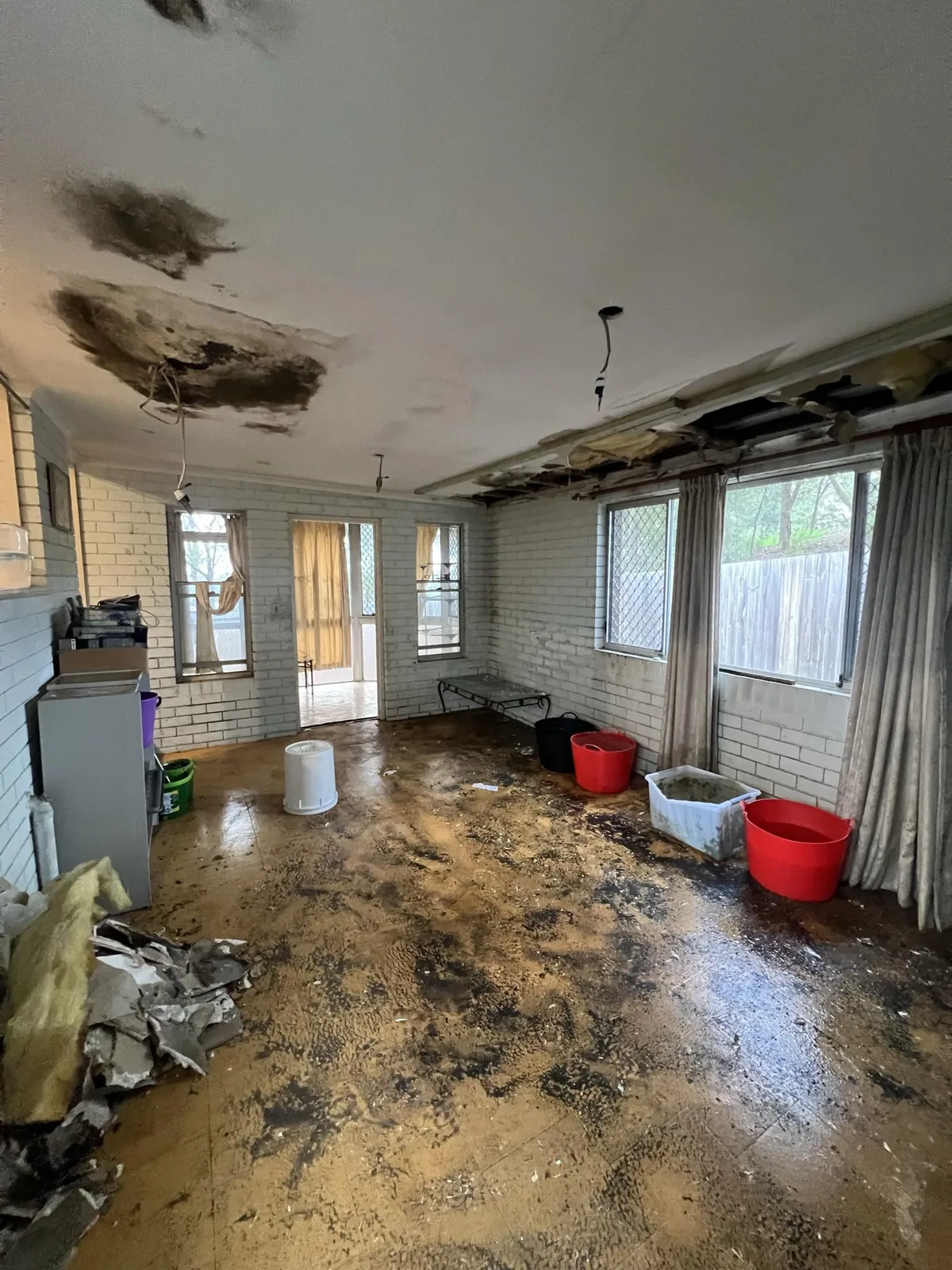
Water damage often spreads further than what is visible on the surface. Floors that look only slightly marked can hold moisture in the subfloor, and that moisture can lead to swelling, lifting and mould if it is not dealt with promptly. Anyone in the Launceston area who has had water in their home or business should know that a careful assessment early on tends to limit the scope of the repairs needed later.
Elite Restoration is an IICRC Certified Firm, and the work on this job followed the same process used across its water damage projects. This update is shared so that readers can see how a multi-room water damage job is typically assessed, recorded and dried.
Read more about our Water Damage Restoration service.

 Water Damage Restoration
 Fire and Smoke Restoration
 Mould Removal & Remediation
 Mould Inspection
 Asbestos Removal
 Asbestos Testing
 Dehumidifier Hire
 Air Quality Testing
 Structural Drying
 Water Leak Detection
 Trauma & Crime Scene Cleaning
 Deceased Estate Clearing
 Hoarding & Squalor Cleaning
 Meth Testing & Decontamination
 Lead Paint Removal