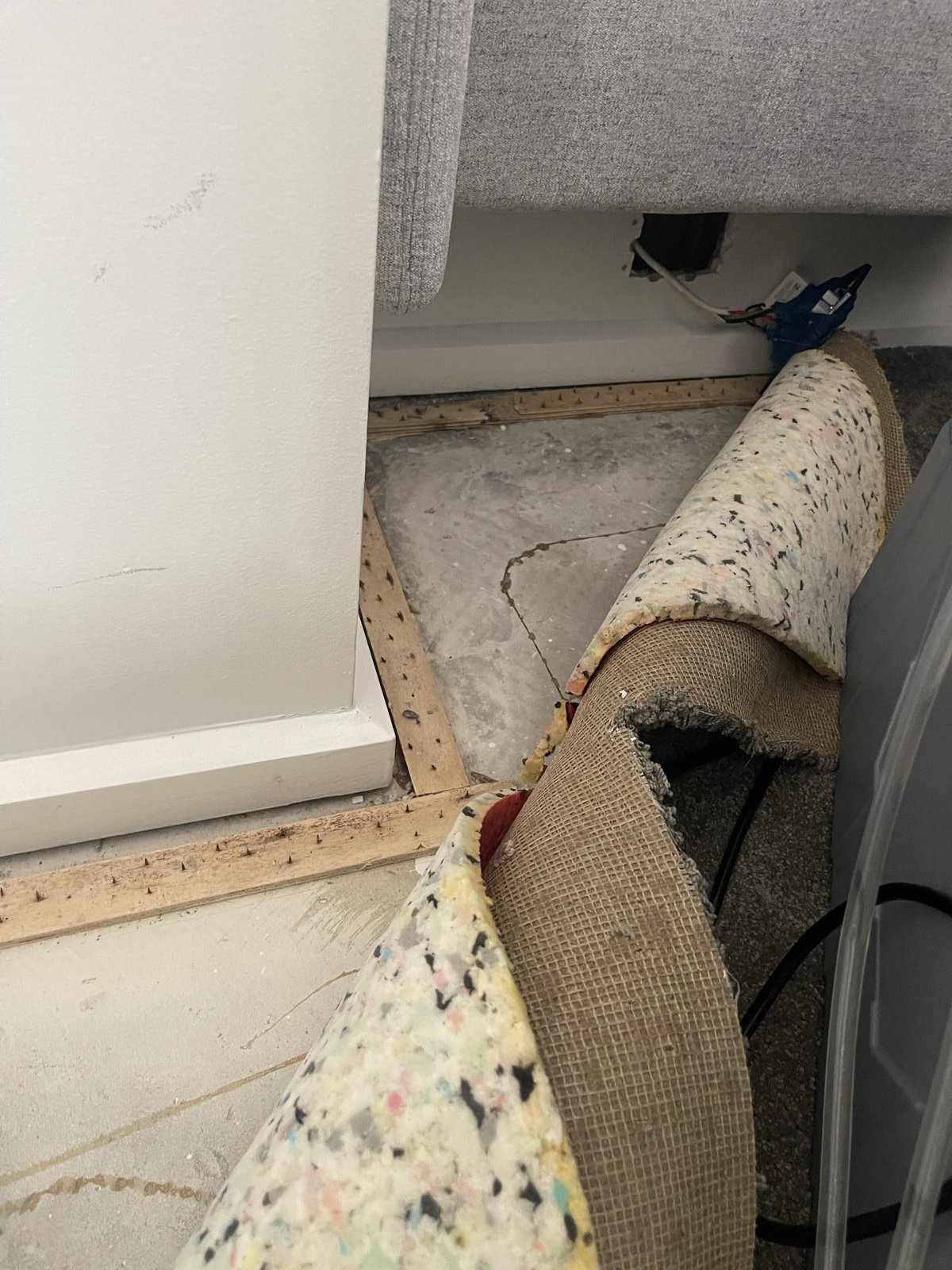
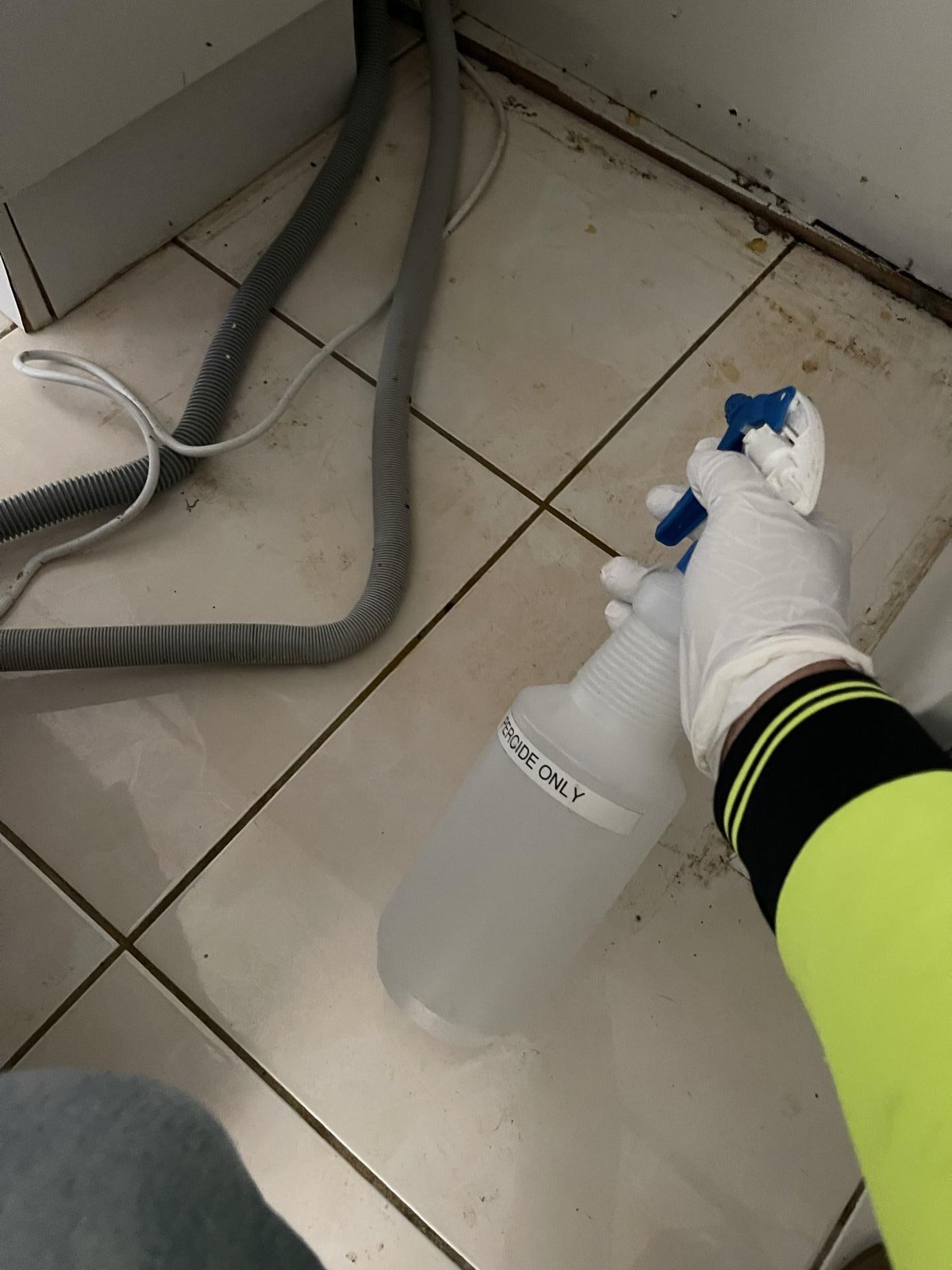
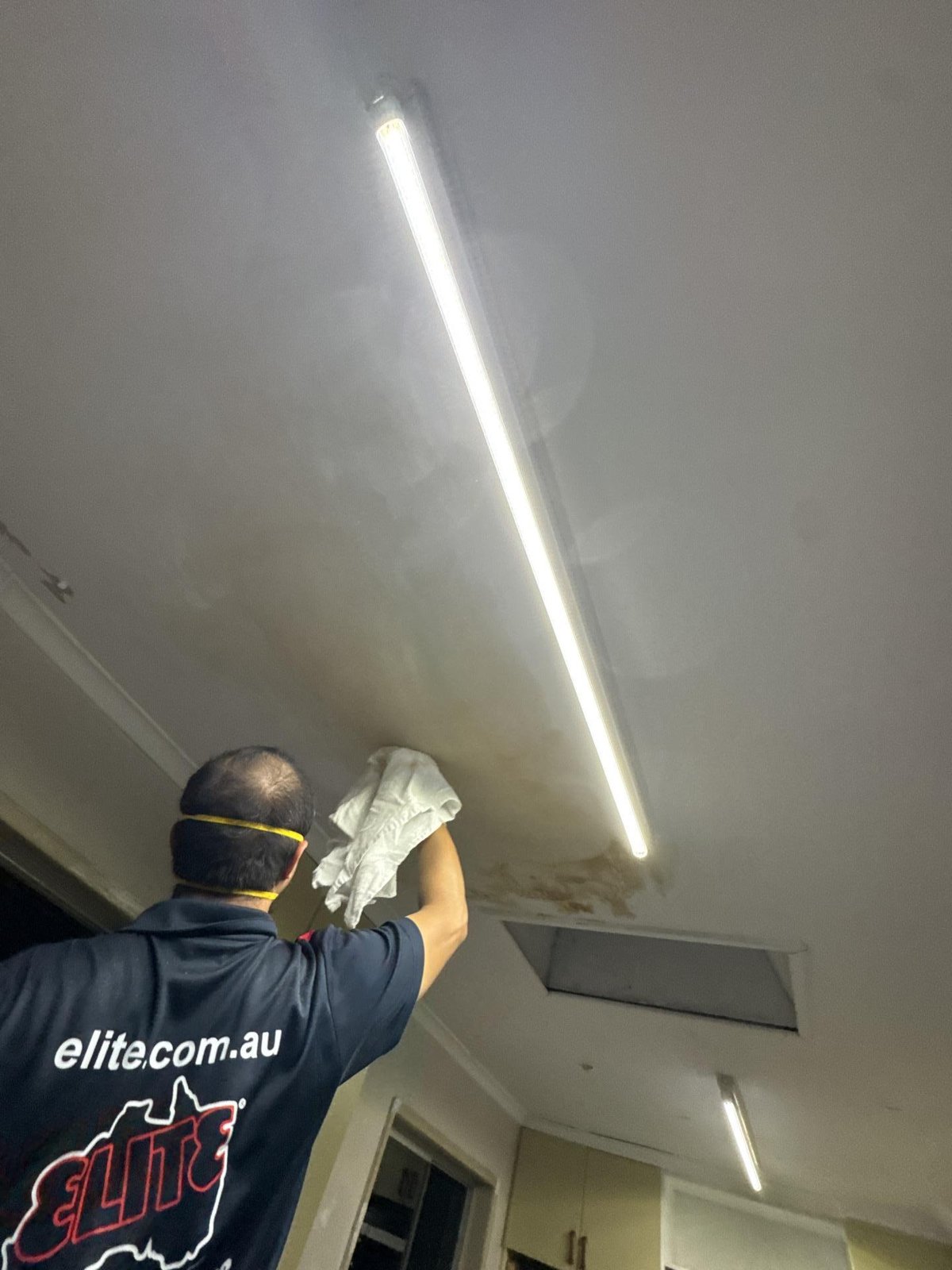
Water damage work in a home usually starts with the floor. In this job, carpet and underlay were pulled back from a stained concrete floor, and the tack strips along the skirting board were exposed so the moisture could be assessed properly. Lifting the floor covering early is what lets the technicians see where water has travelled and what needs to dry out before any rebuilding can start.
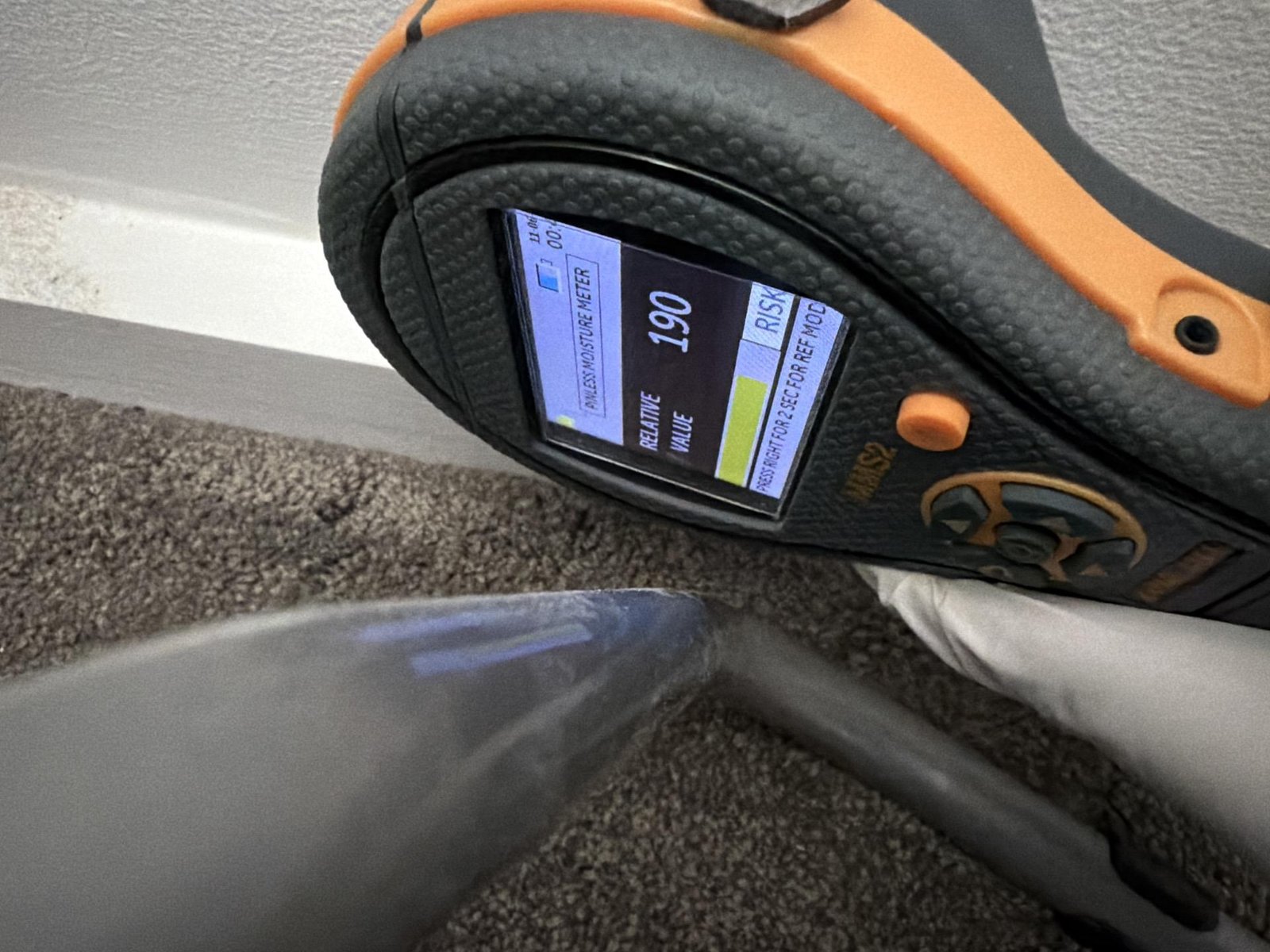
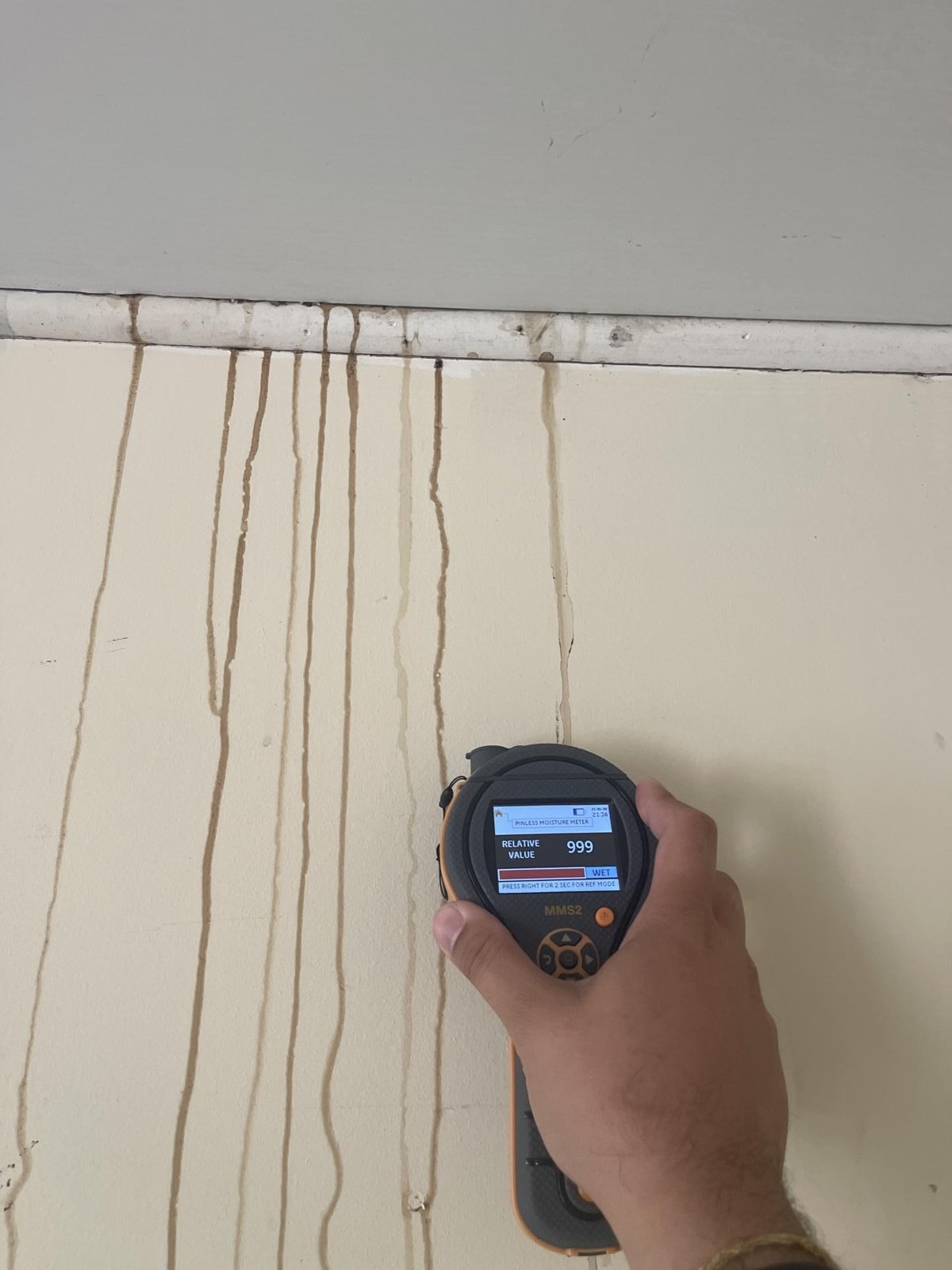
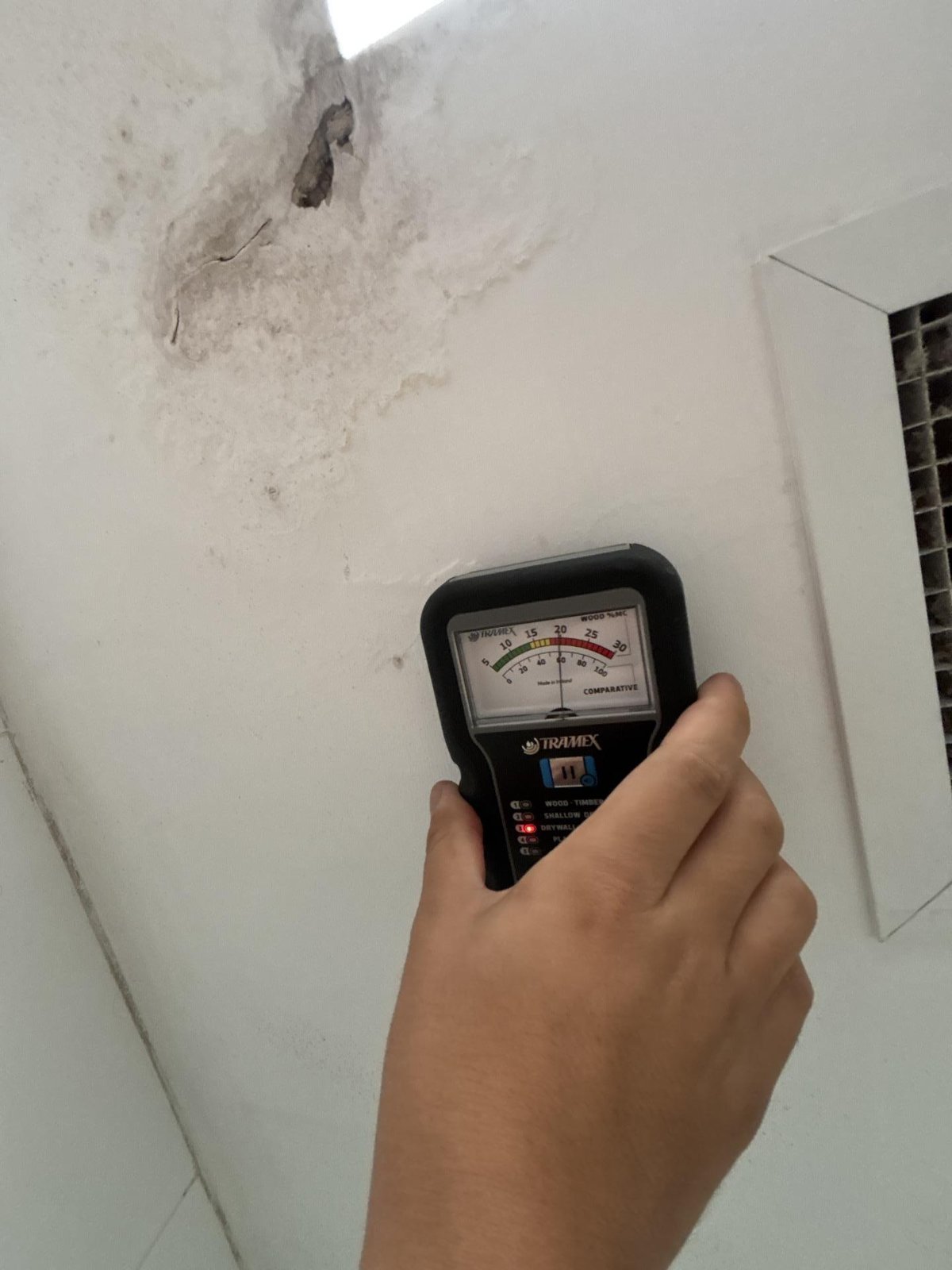
Moisture readings are taken throughout the process rather than at a single point in time. A technician checks carpet moisture with a pinless moisture meter, then checks the wall surfaces against the same reference. This gives a clear picture of how far the water has spread, so that drying equipment is placed where it is needed and the progress of each room can be tracked over the following days.
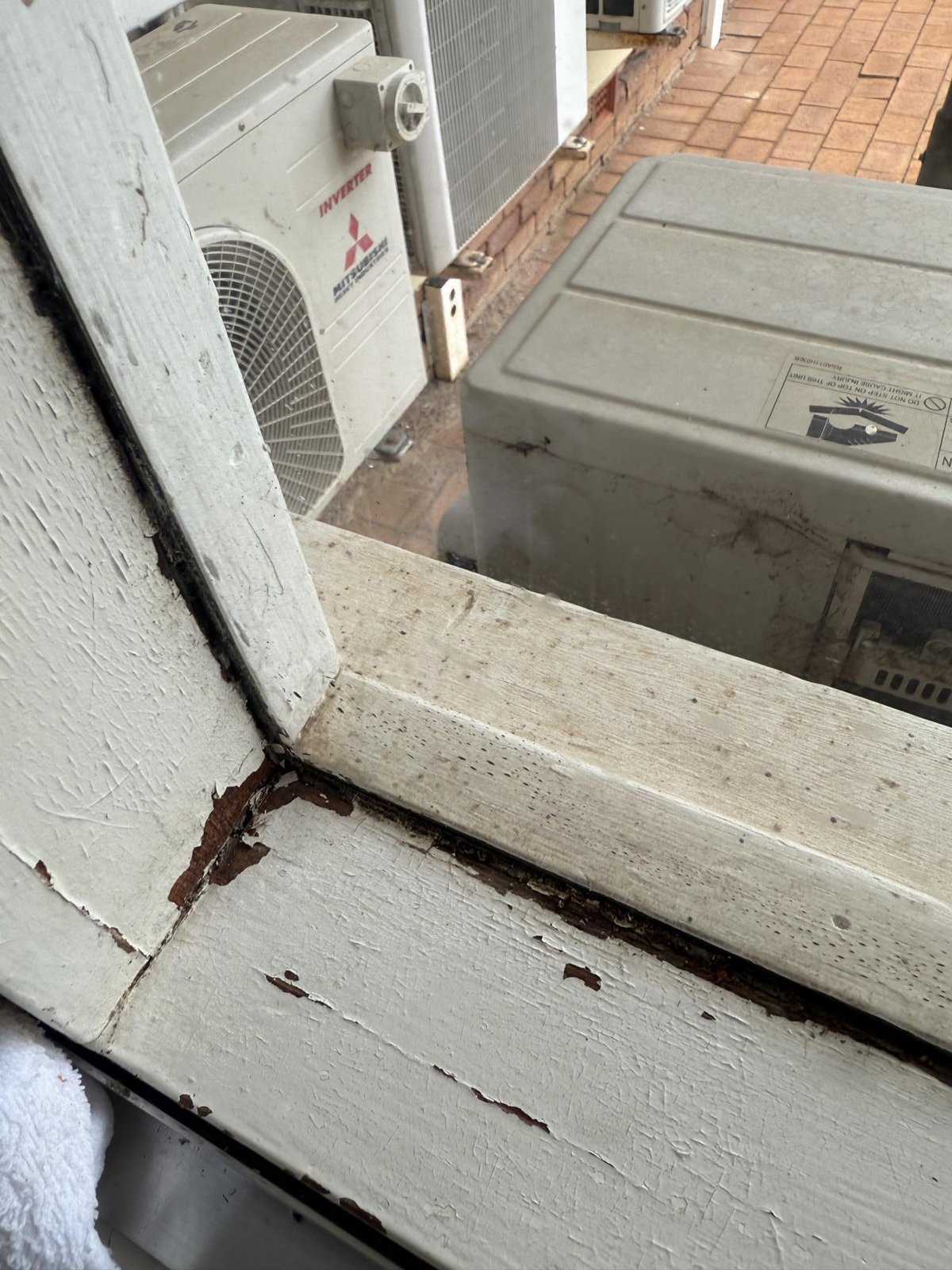
Across the 9 rooms, each area was recorded as the work moved through the property. Documenting every room makes it easier to compare readings from one visit to the next and to show exactly what was done. The work was carried out in line with IICRC S500, the industry standard for water damage restoration, which sets out how assessment, drying and monitoring should be handled.
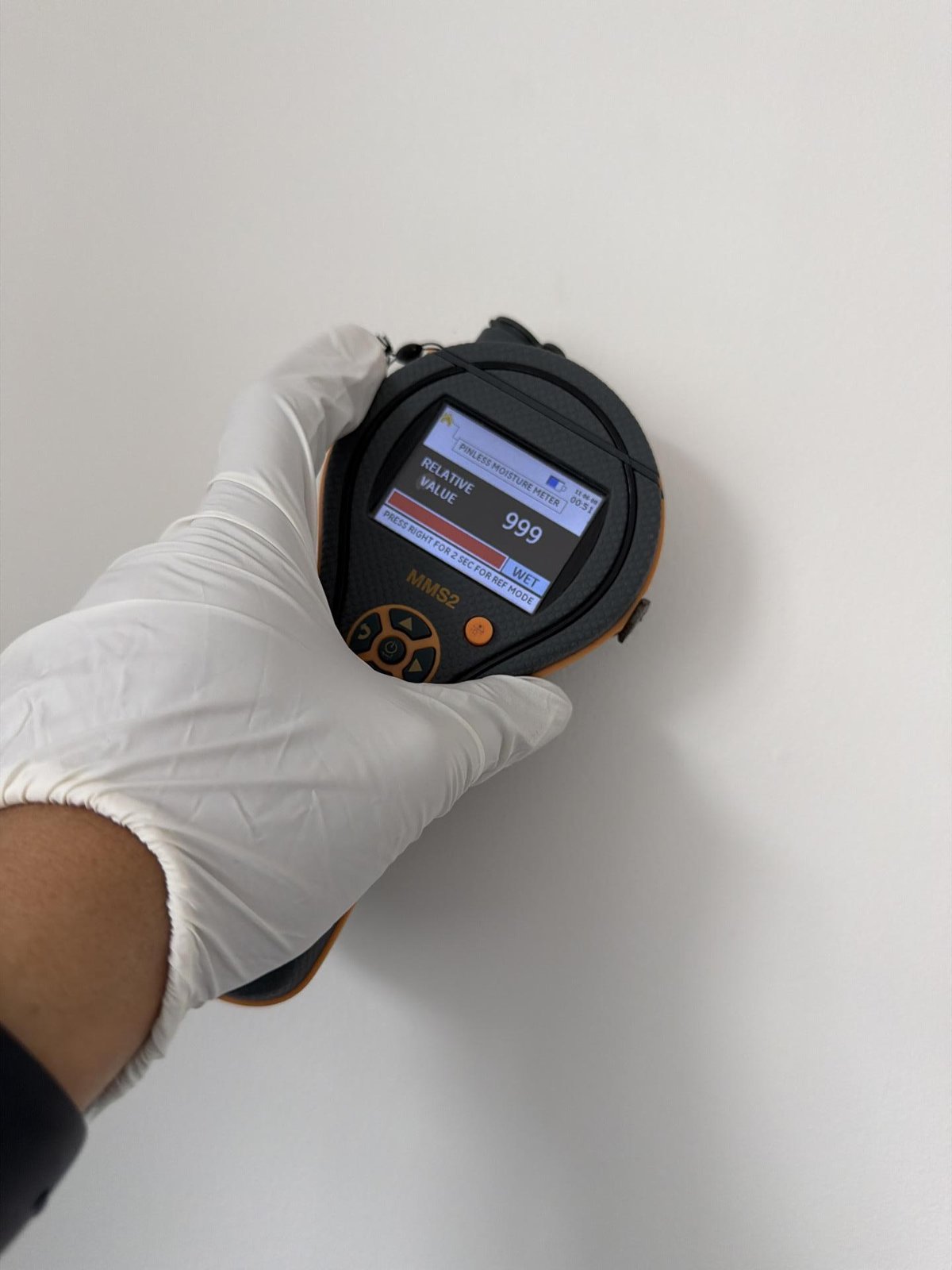
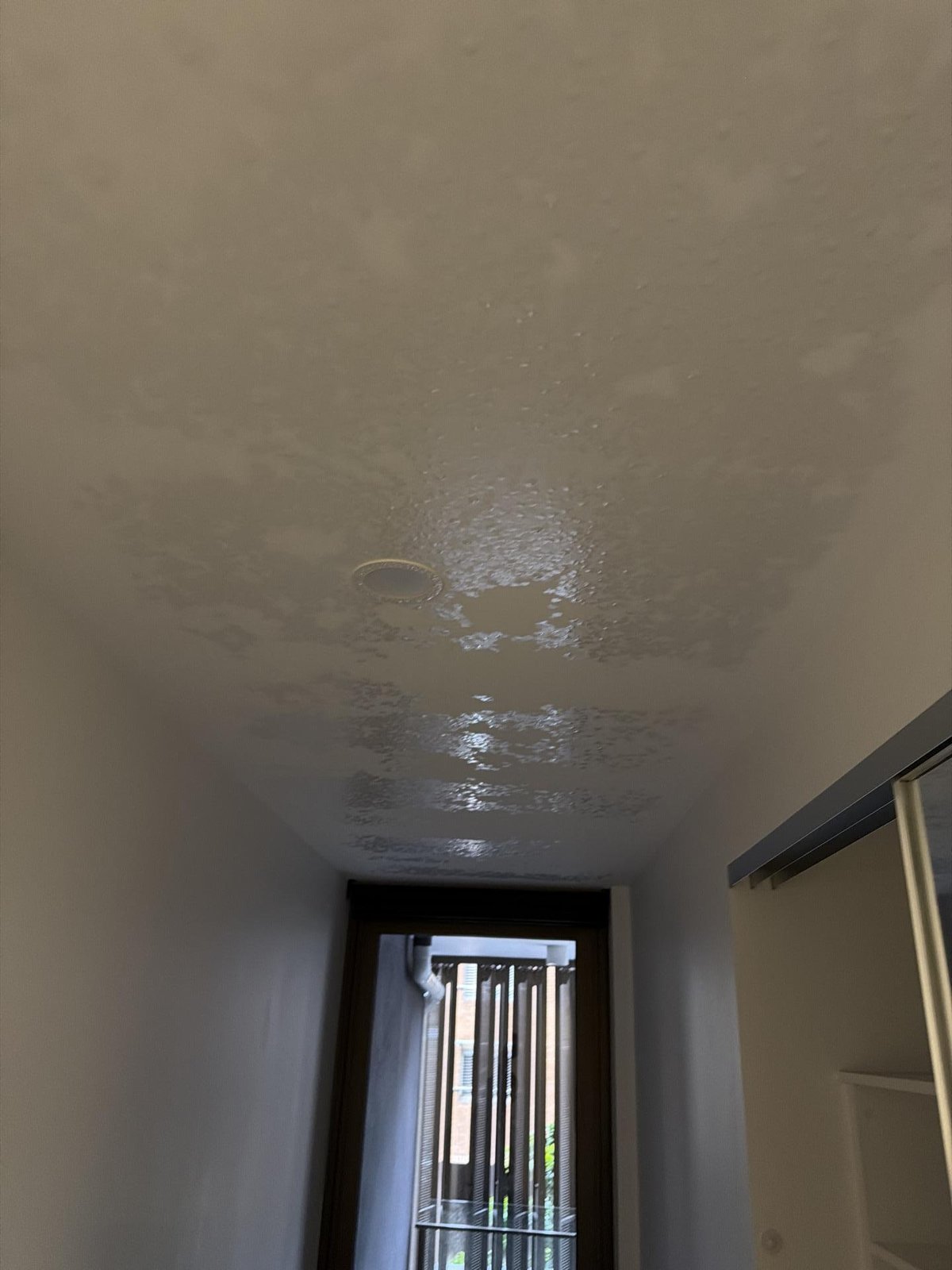
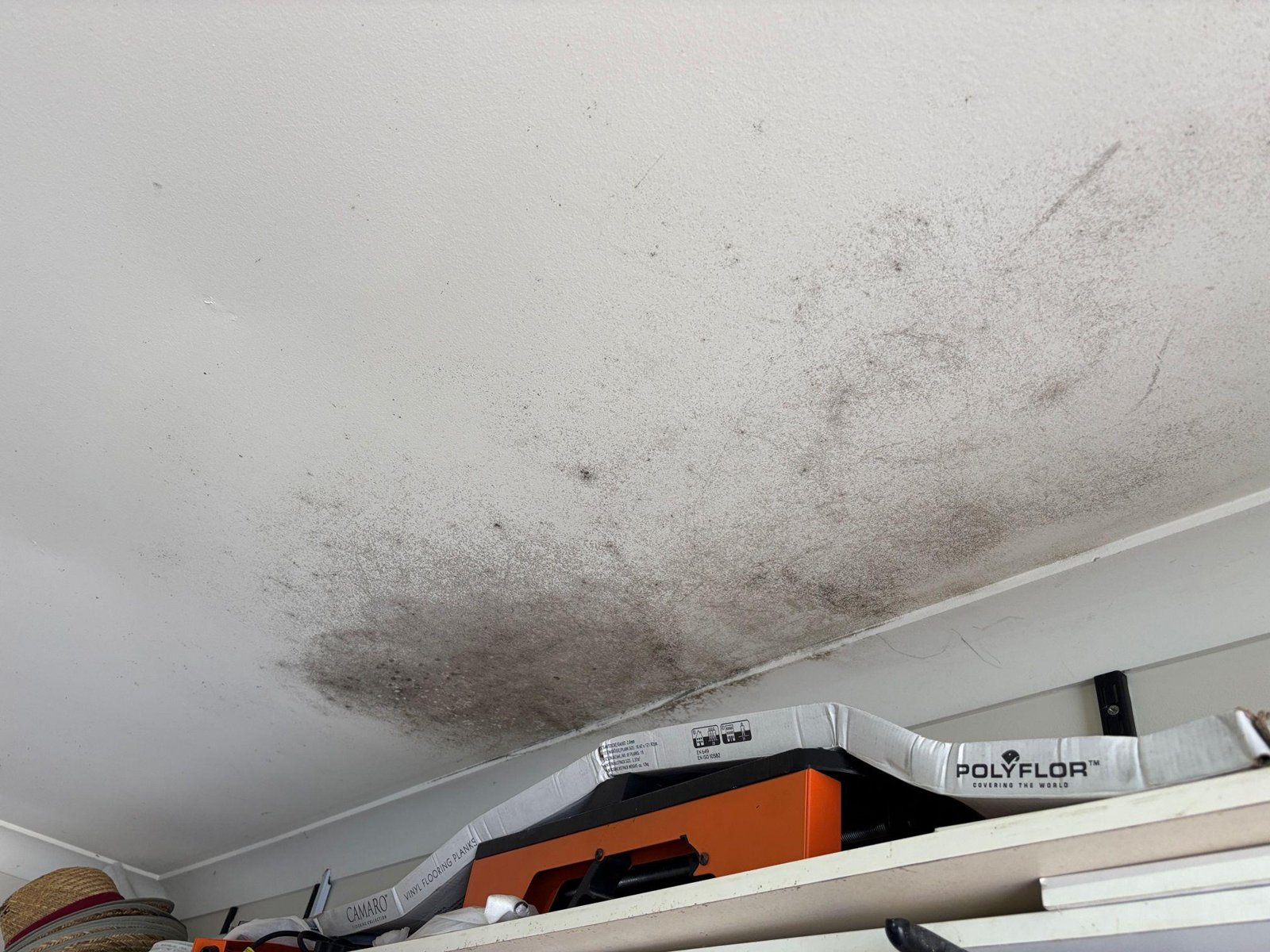
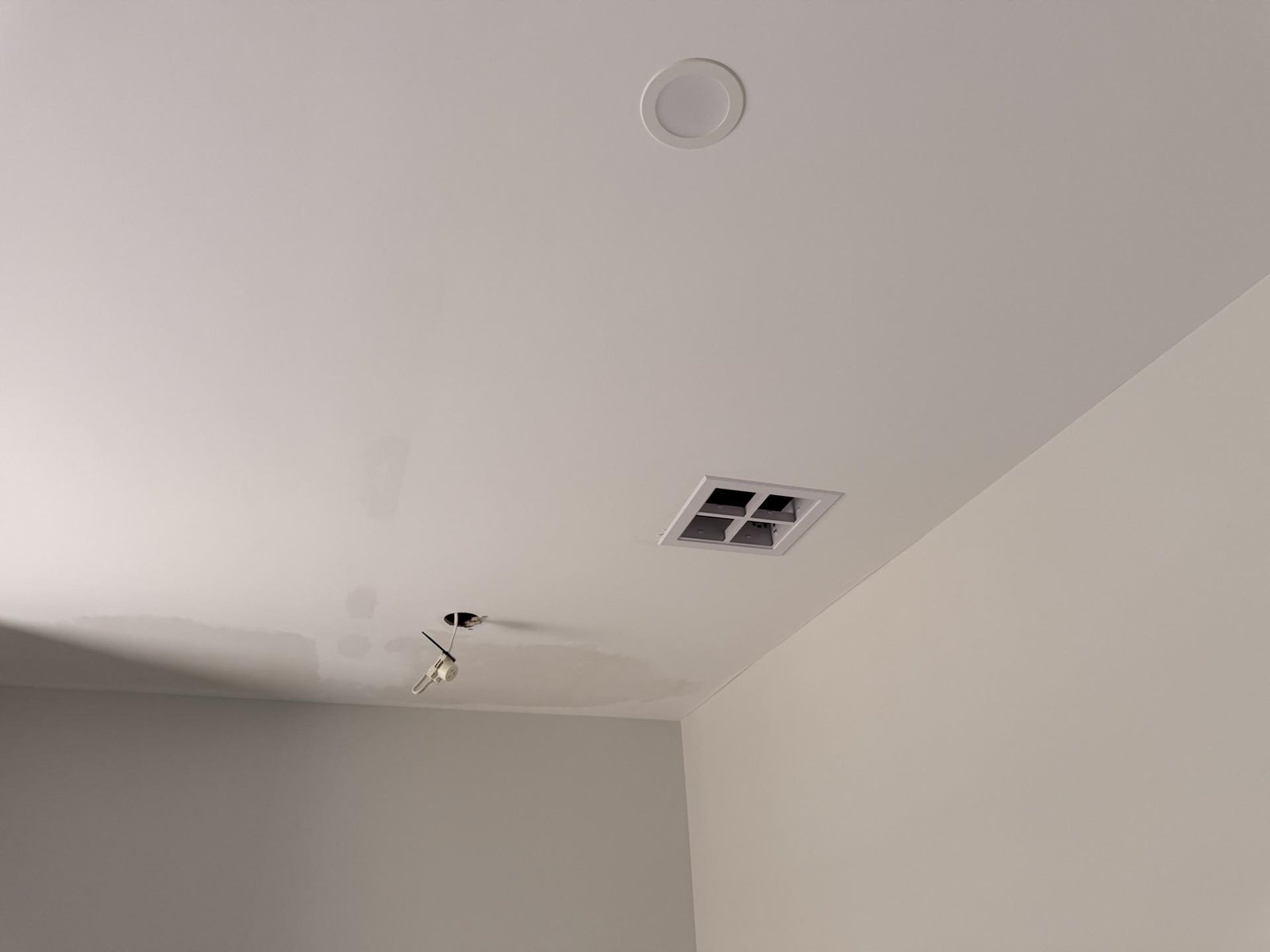
Water damage can look contained from the doorway while moisture sits behind walls and under flooring for days. For anyone living or working in South Brisbane, the practical lesson is that surface drying is not the same as a dry structure. Checking floors, skirting boards and the lower sections of walls after a leak or flood gives a much better indication of whether the building has truly recovered.
If you have had water in your home, it is worth having the affected areas measured rather than assuming they are dry. Early assessment usually means less material has to be removed and a faster return to normal use of the space.
Read more about our Water Damage Restoration service.

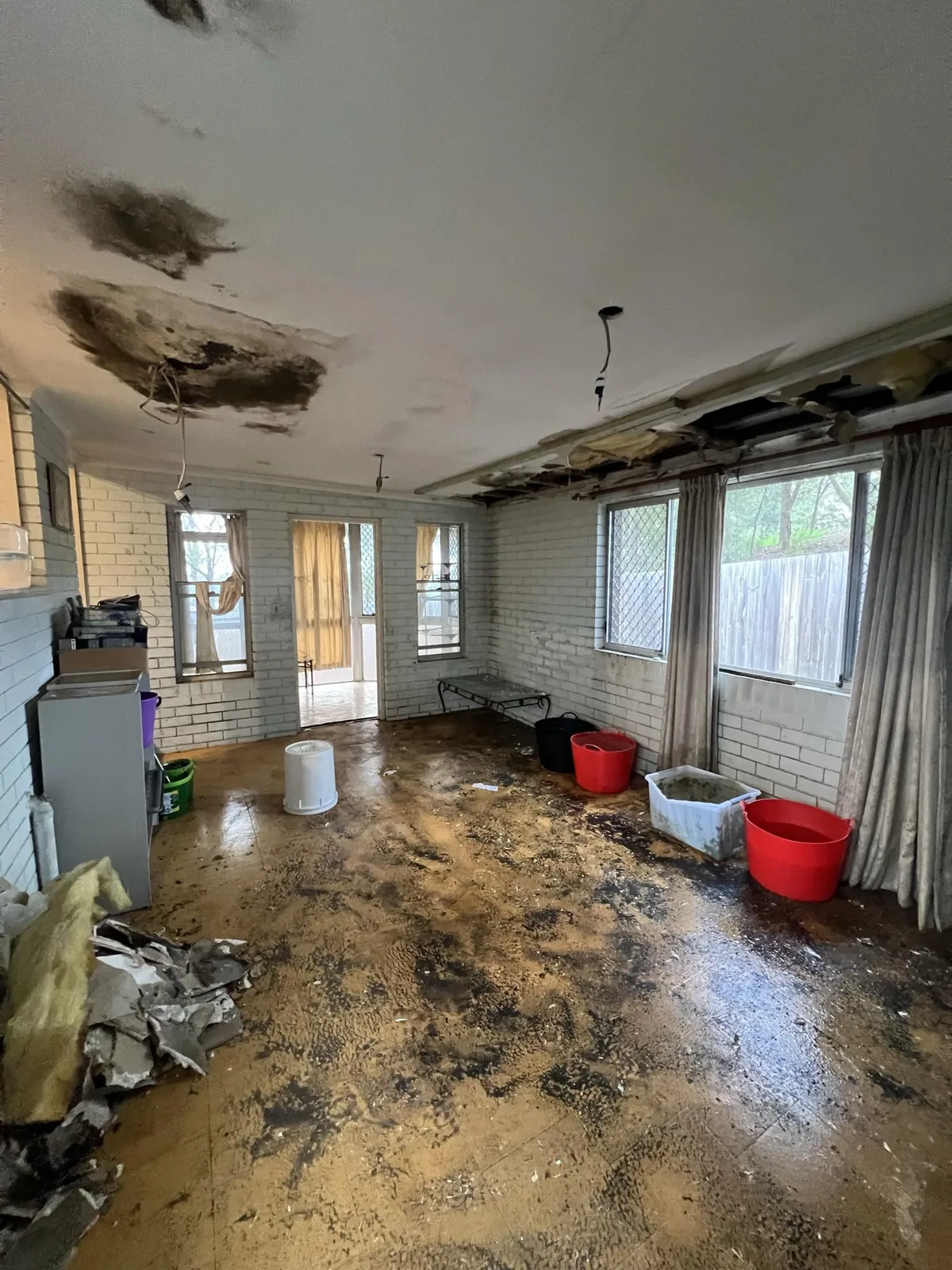 Water Damage Restoration
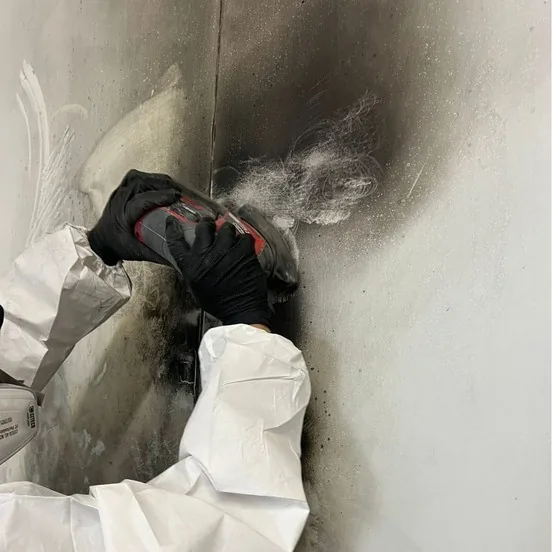 Fire and Smoke Restoration
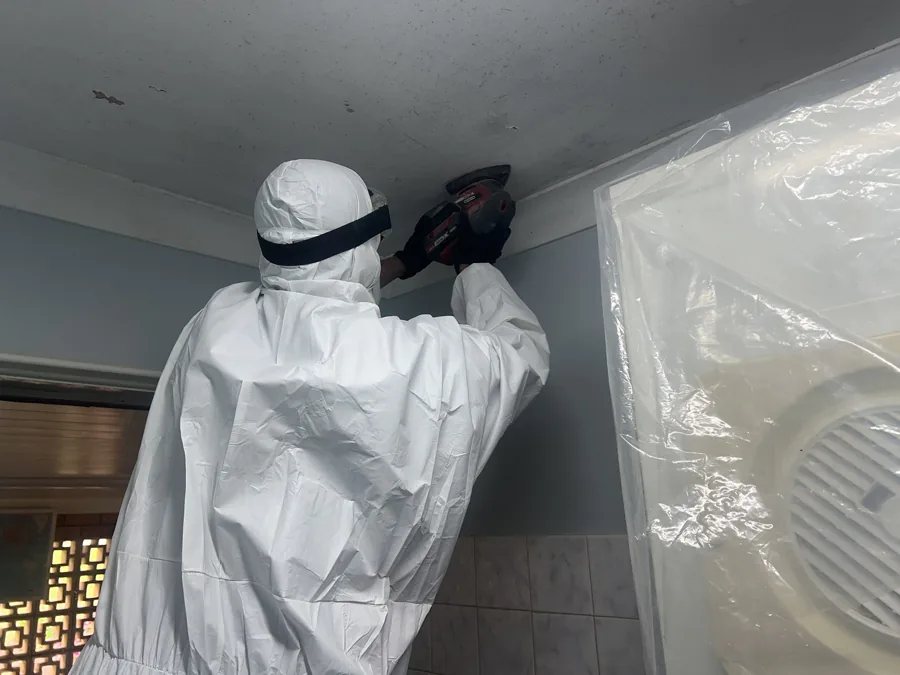 Mould Removal & Remediation
 Mould Inspection
 Dehumidifier Hire
 Air Quality Testing
 Structural Drying
 Water Leak Detection
 Trauma & Crime Scene Cleaning
 Deceased Estate Clearing
 Hoarding & Squalor Cleaning
 Meth Testing & Decontamination
 Lead Paint Removal