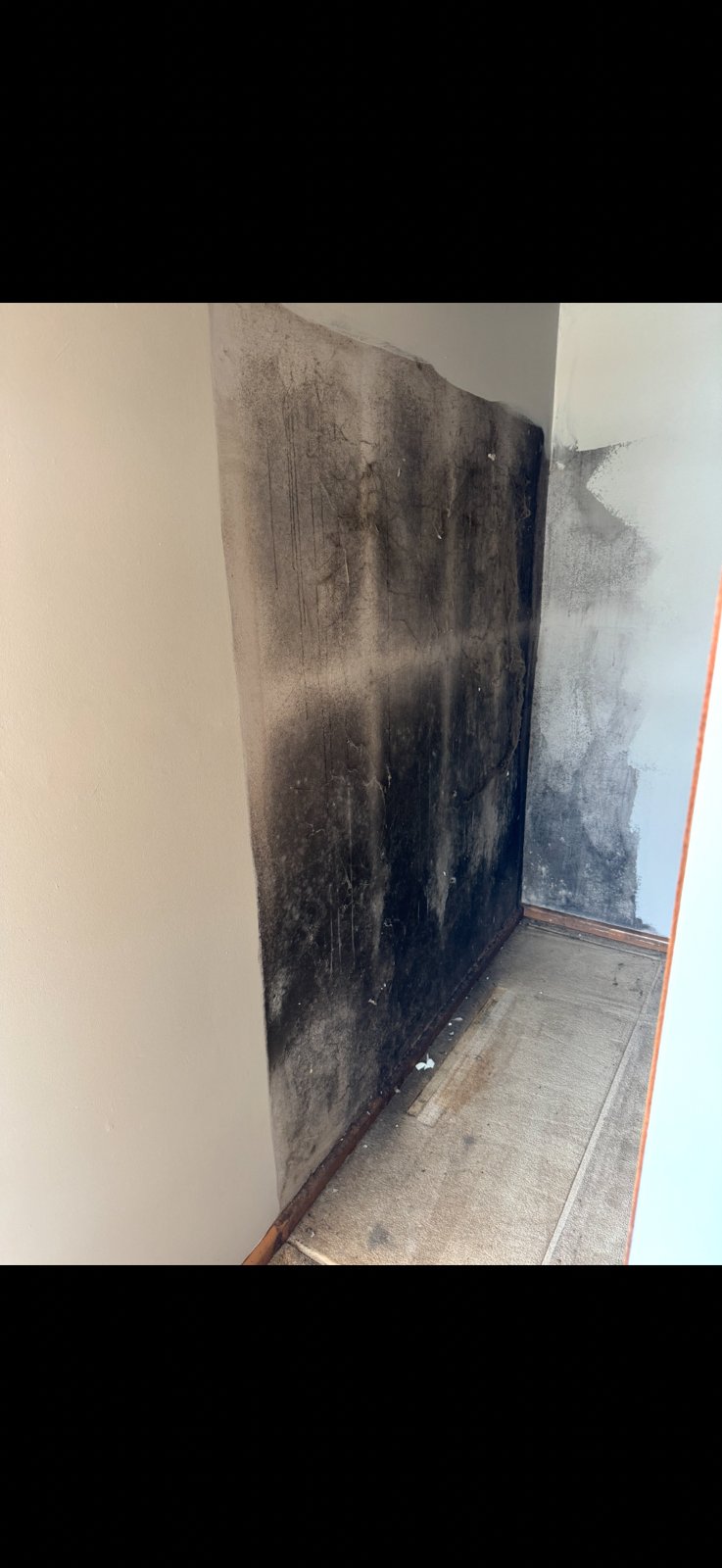
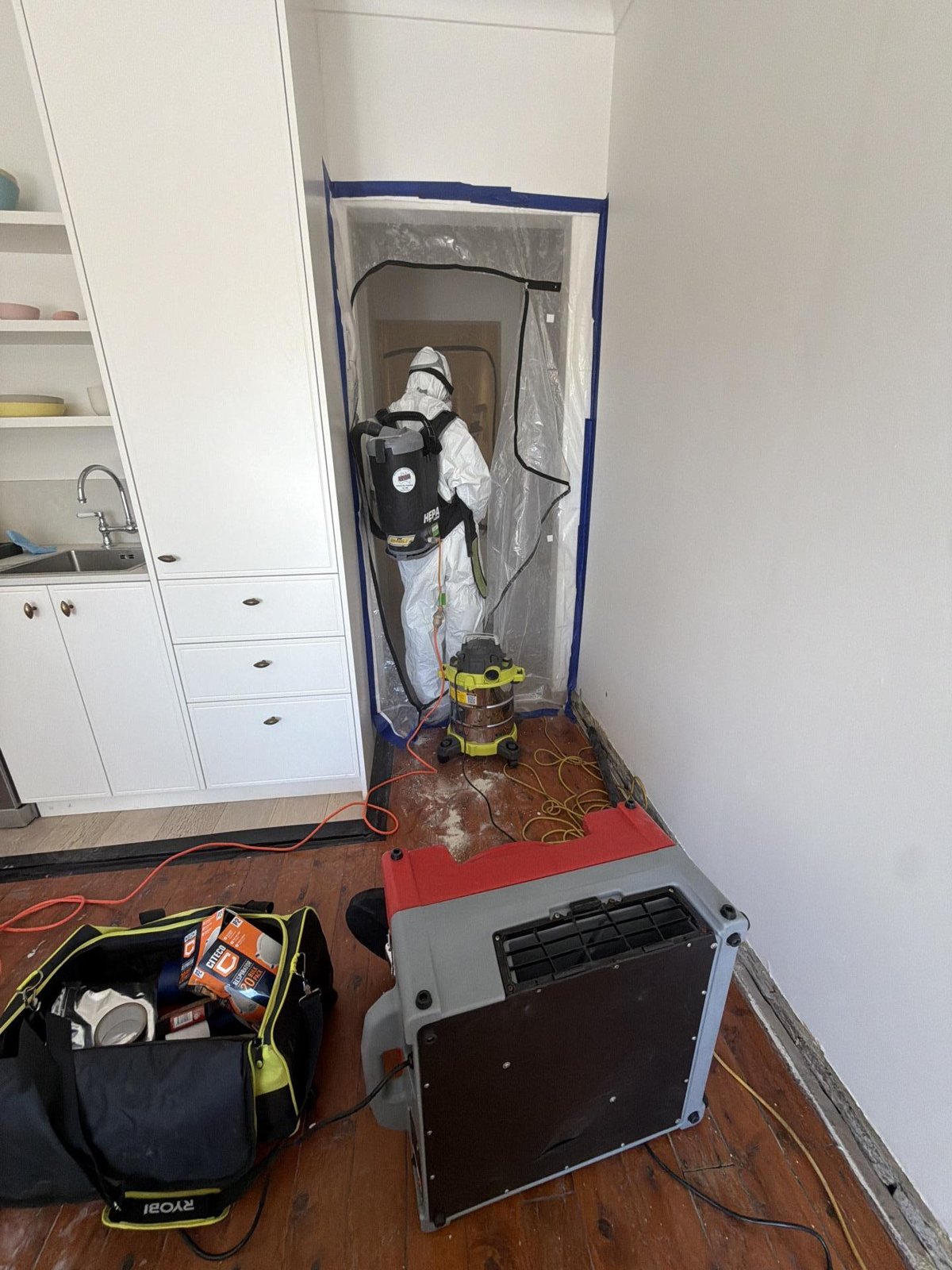
In May 2026 our team carried out mould remediation in Drummond VIC 3461. Over the course of the job, 10 rooms were documented, recording the condition of each space before and during the work.
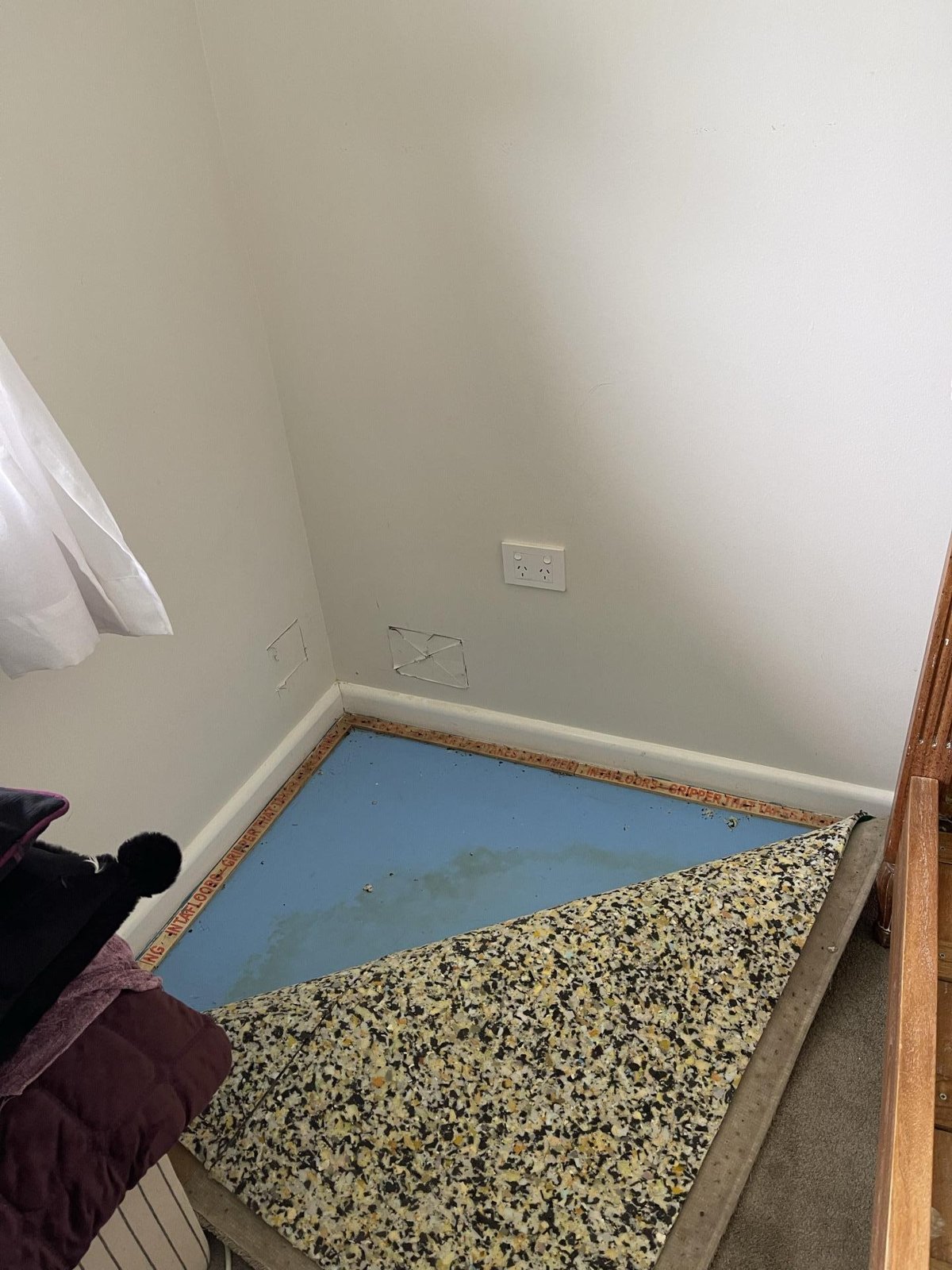
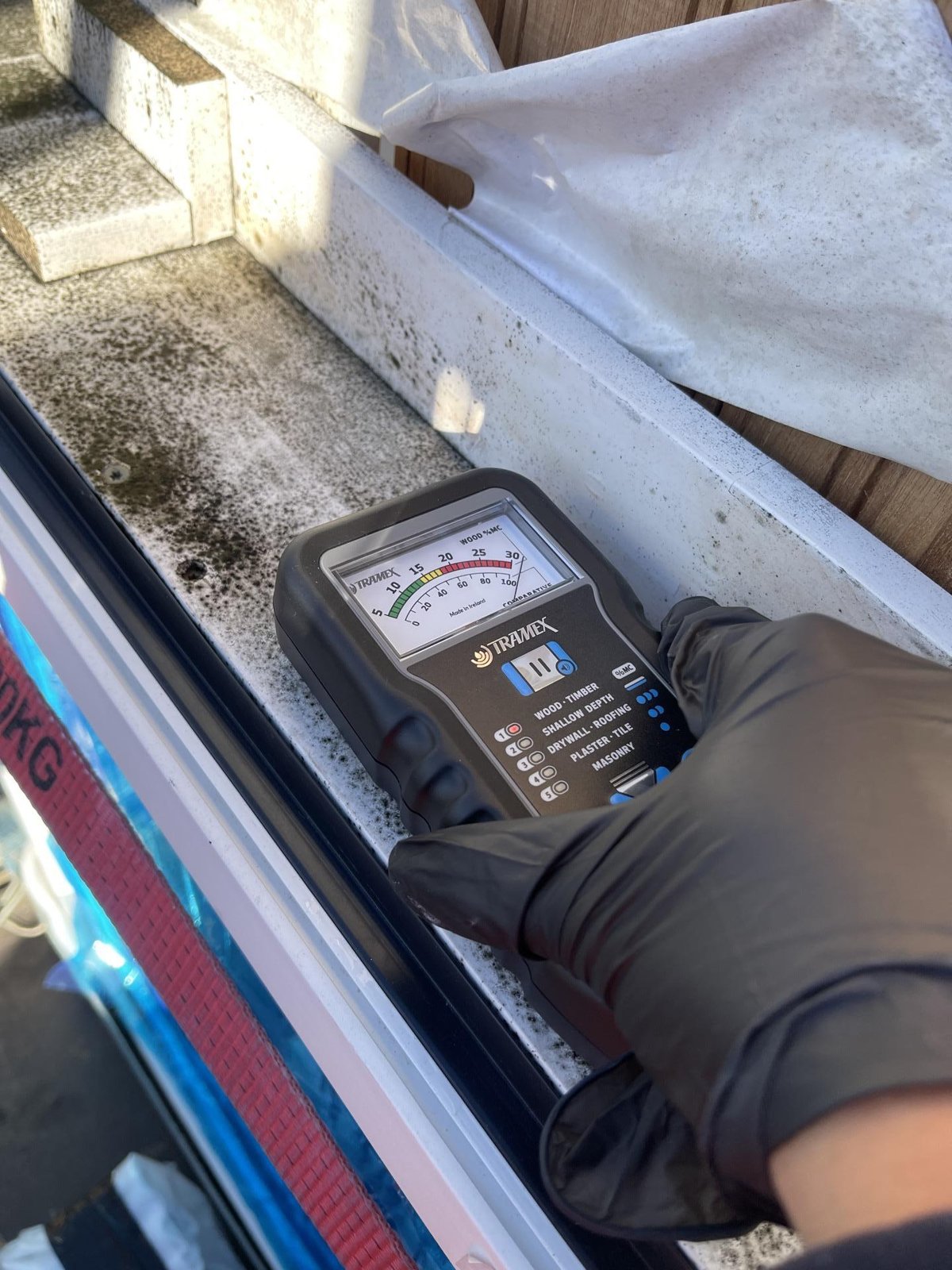
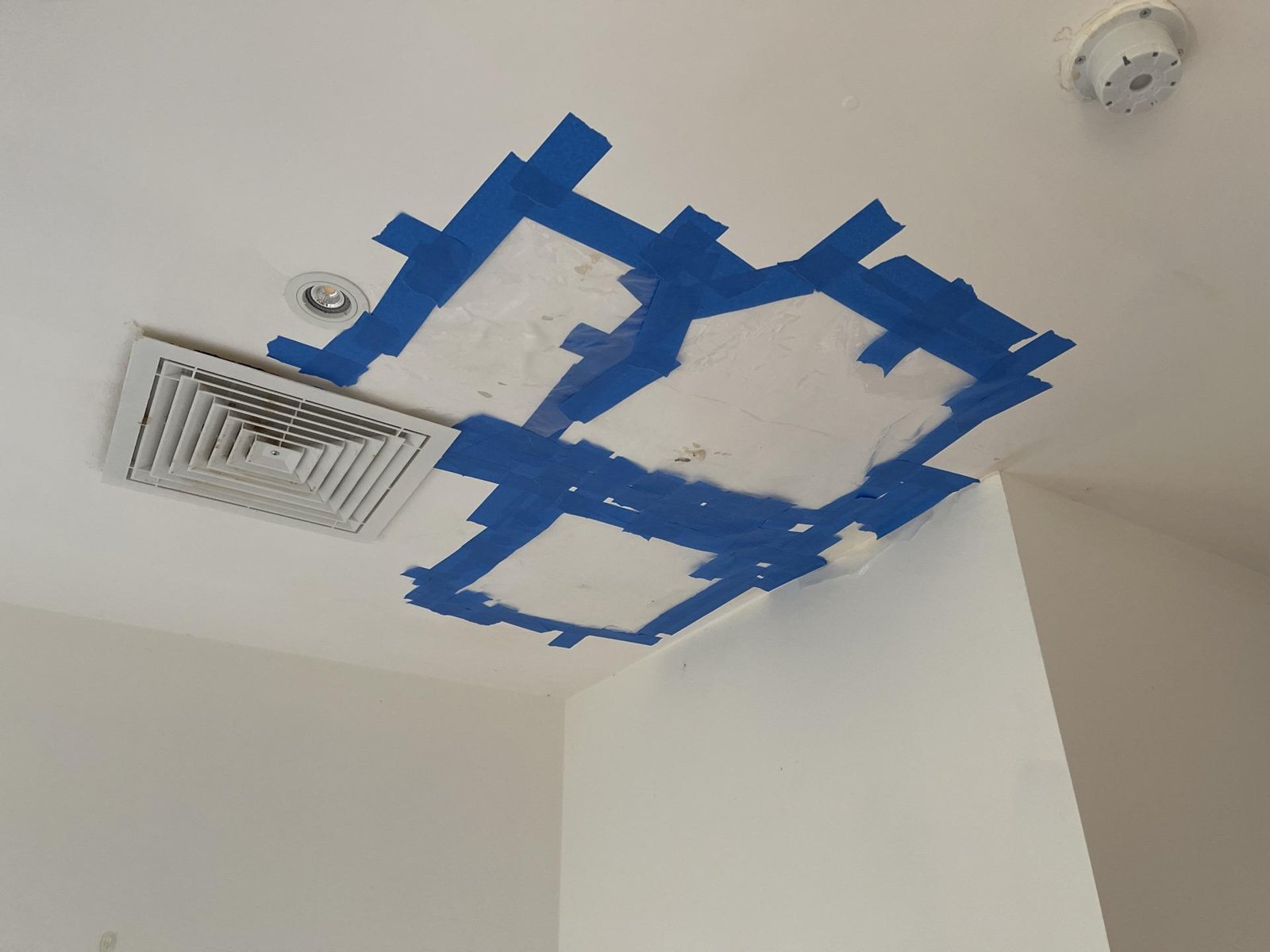
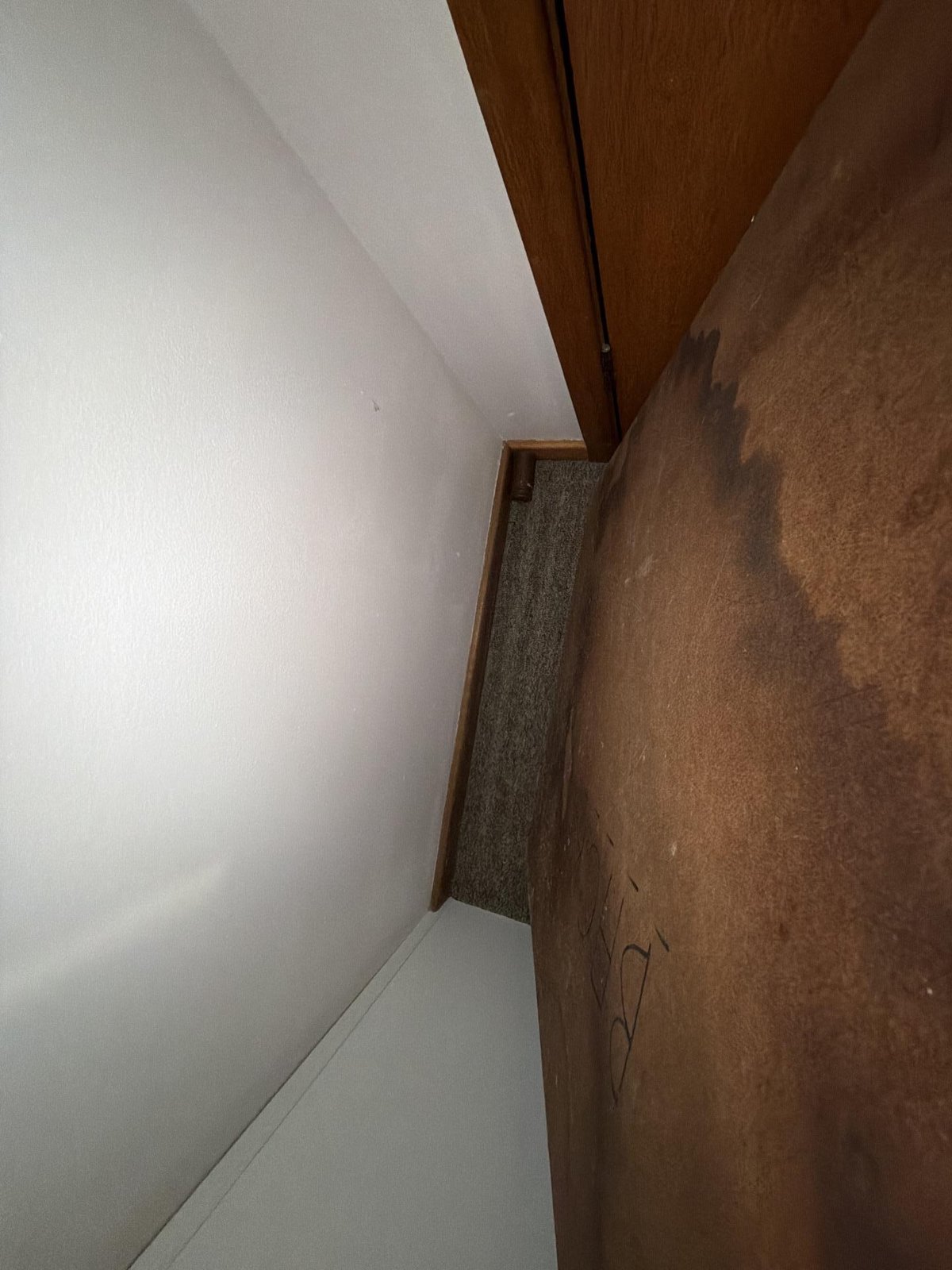
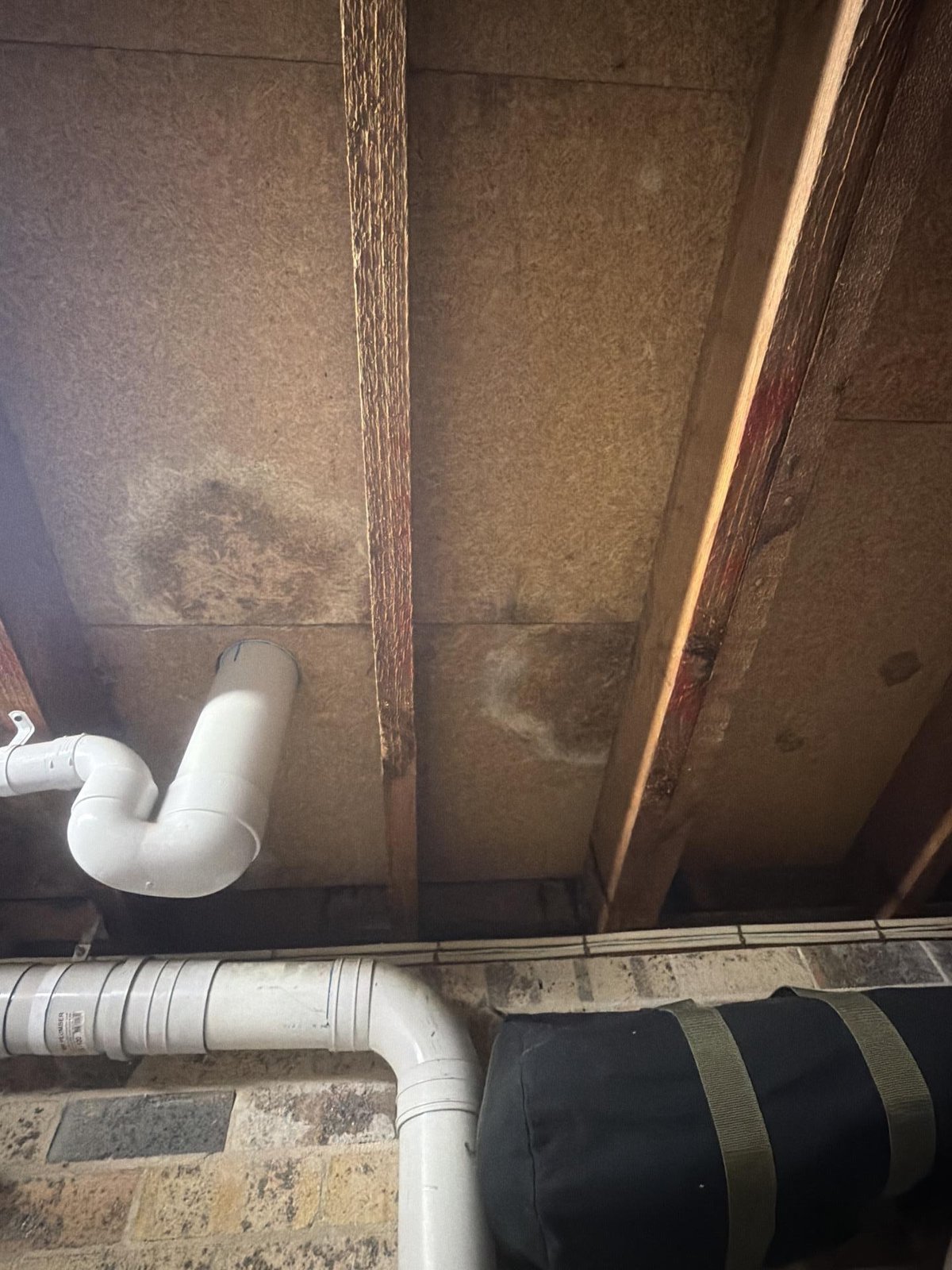
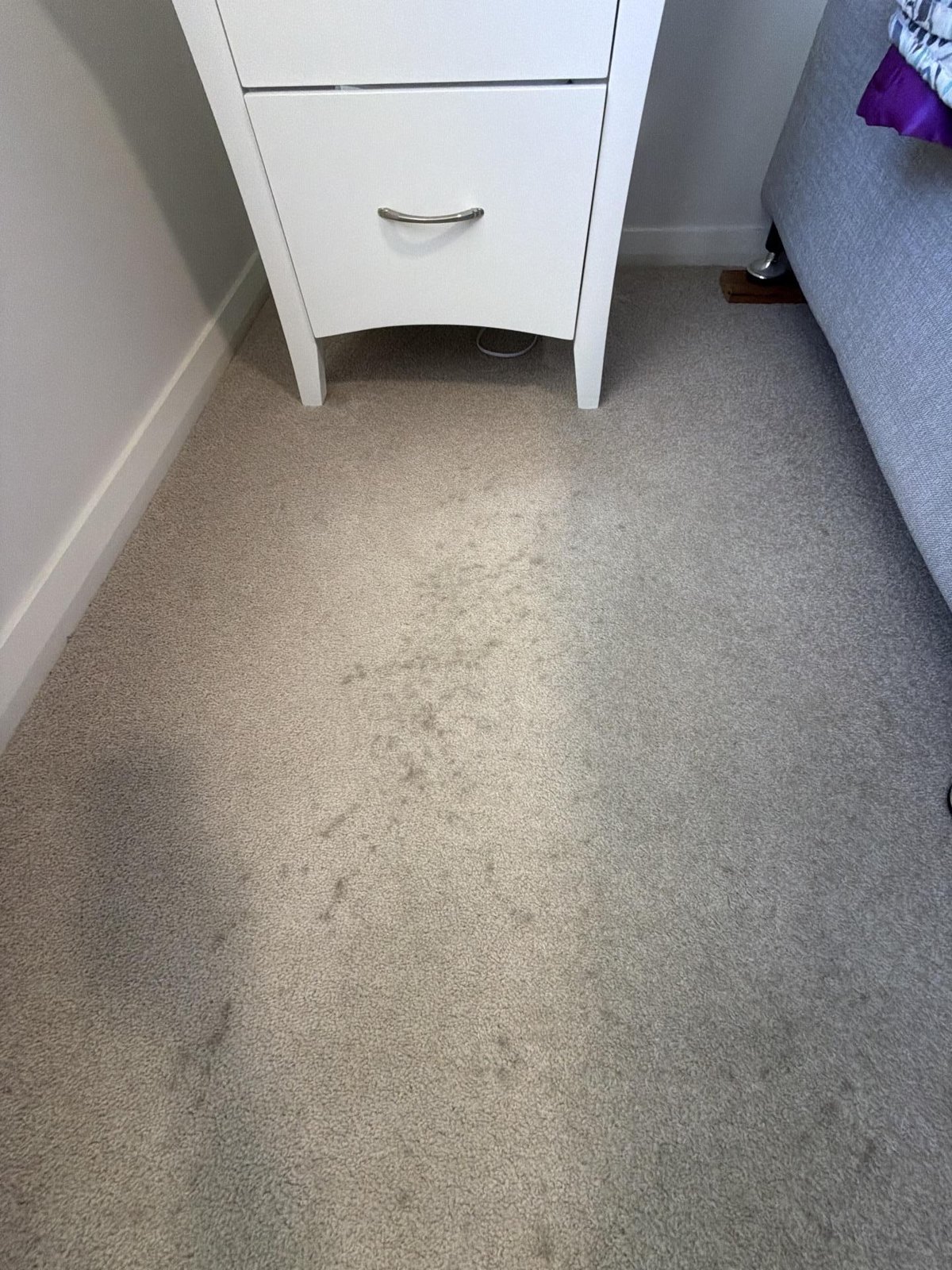
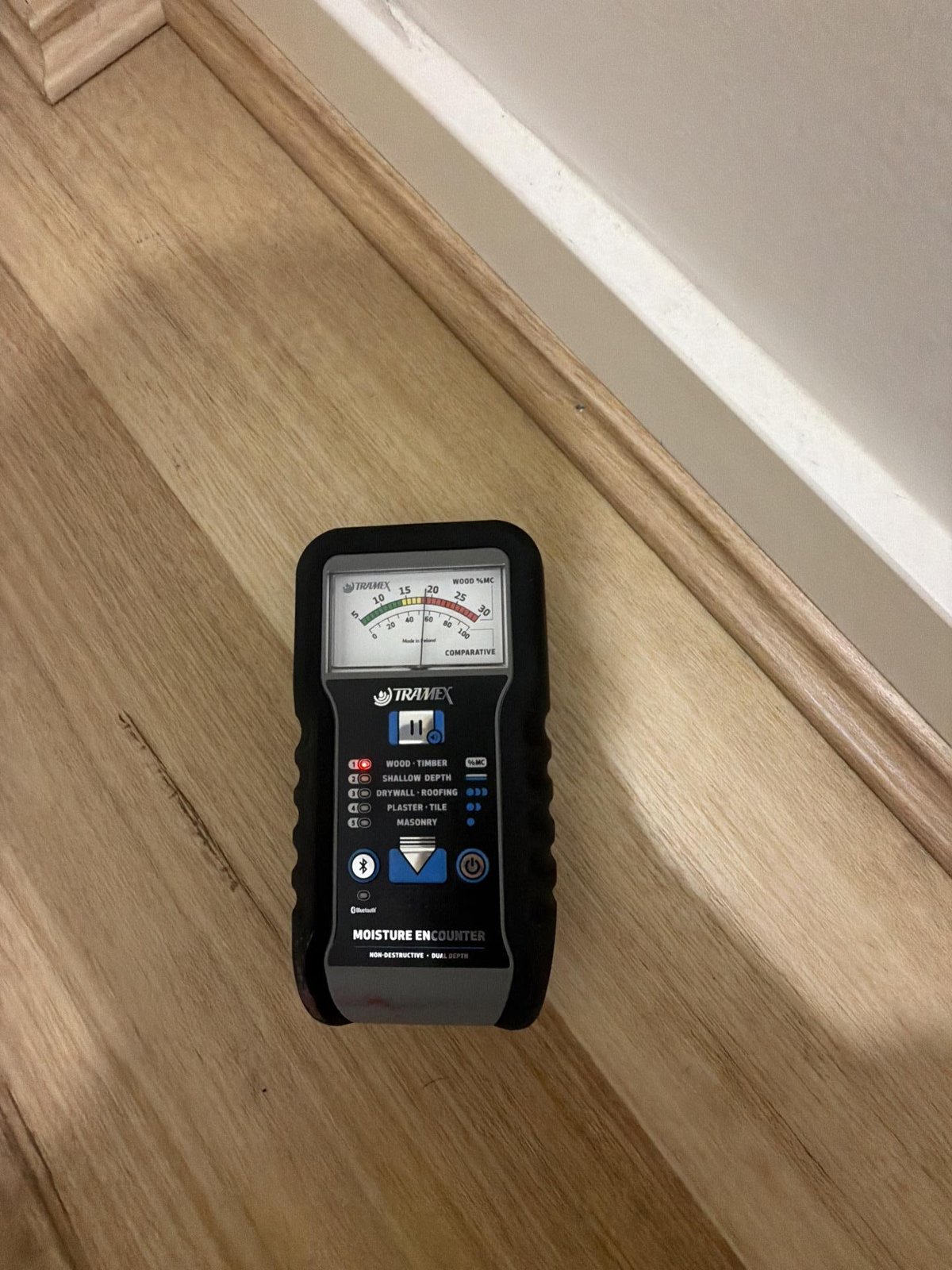
On a job like this, the first step is assessing where moisture has got into the building and how far the growth has spread. Flooring is one of the first places to check. In this case the vinyl had lifted and the blue underlay was exposed, with water staining visible in a corner of one room. Lifted or damp floor coverings can hold moisture against the subfloor for a long time, so they are usually removed to allow the area underneath to dry and be inspected.
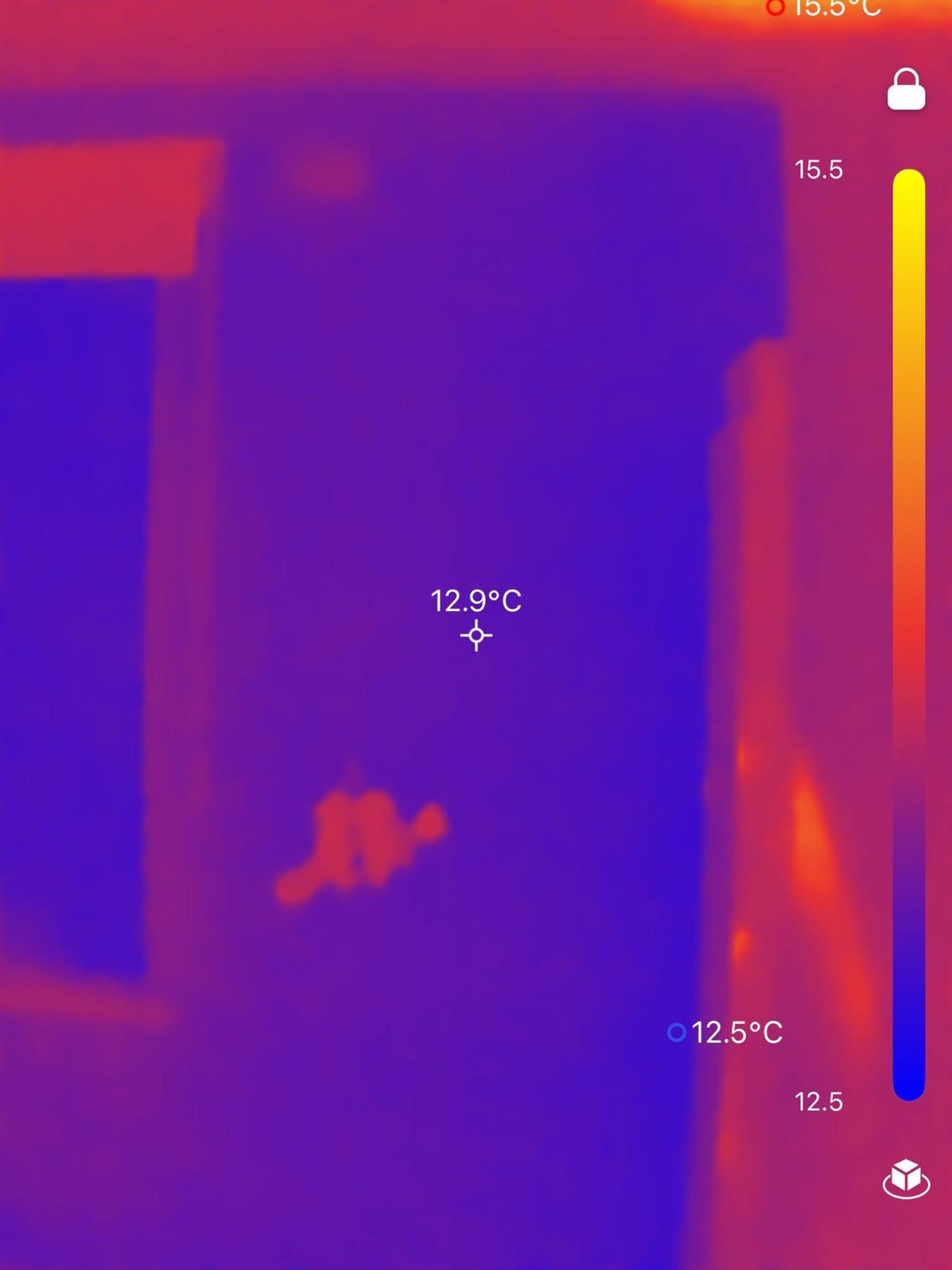
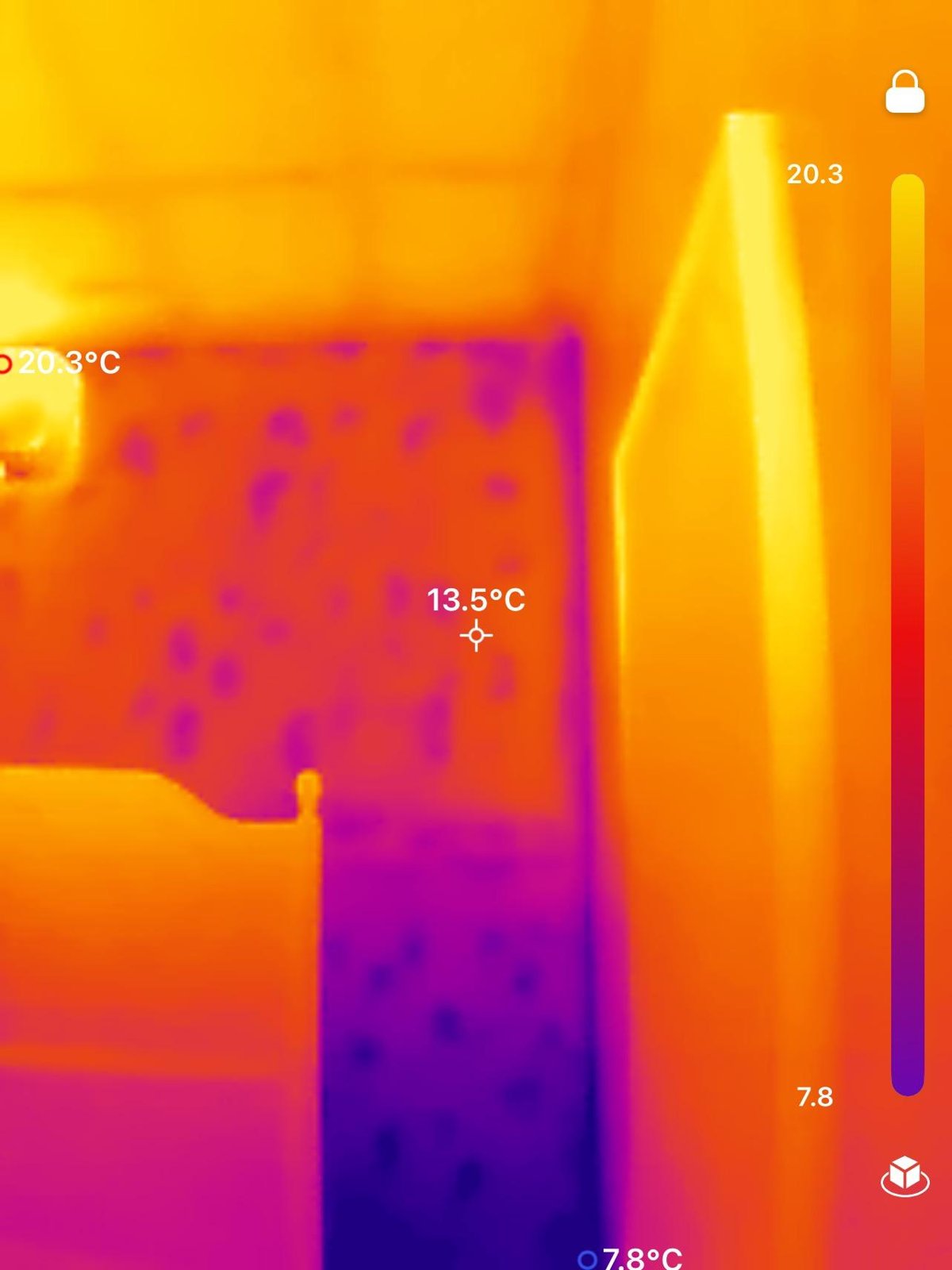
Thermal imaging was used to look past the surface. A wall showing cool, mottled patches can point to moisture behind the finish, particularly next to a warmer spot such as a doorway or cabinet. Using a thermal camera helps the crew decide where to open up and where to test, rather than stripping more than is needed.
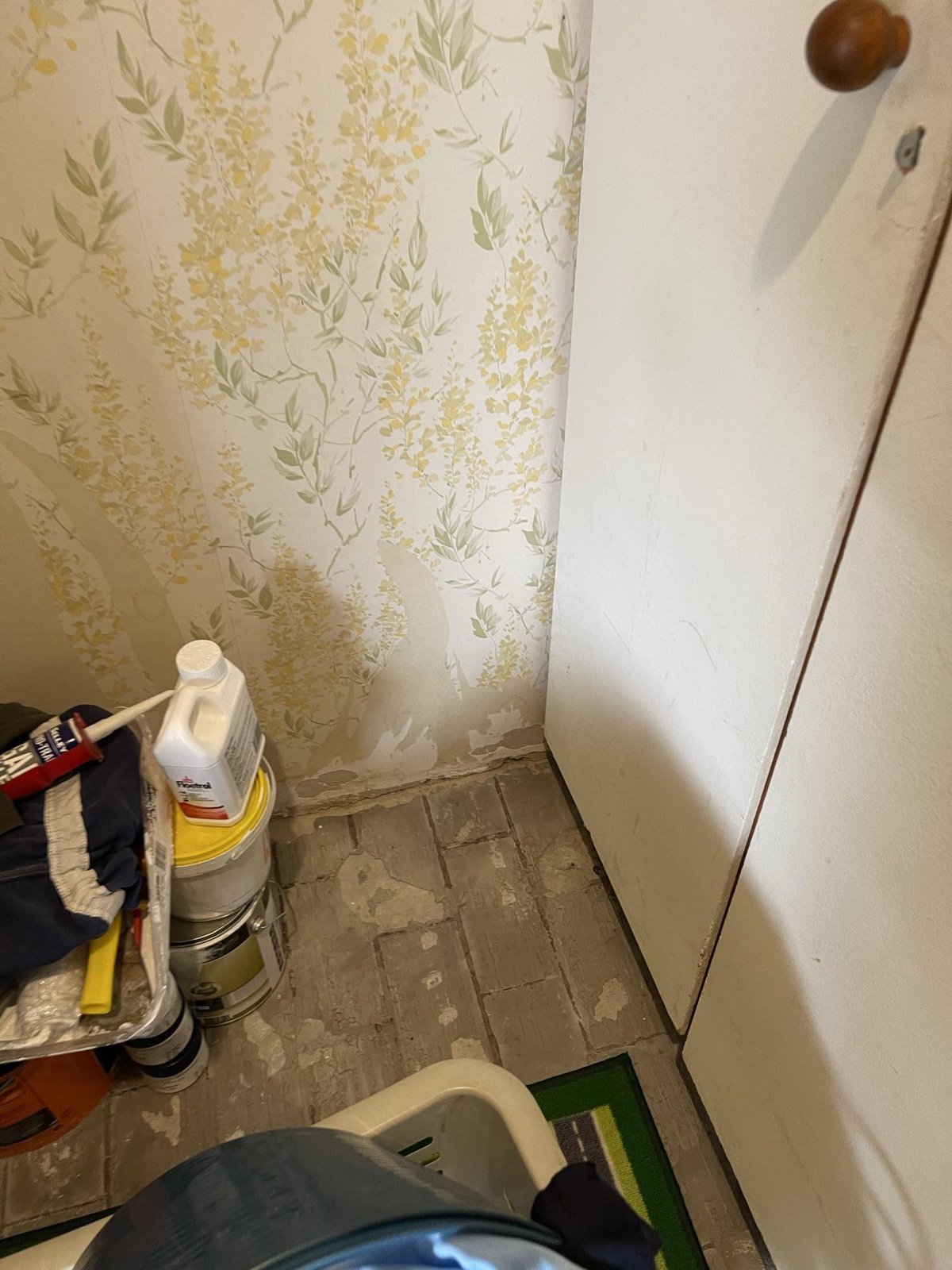
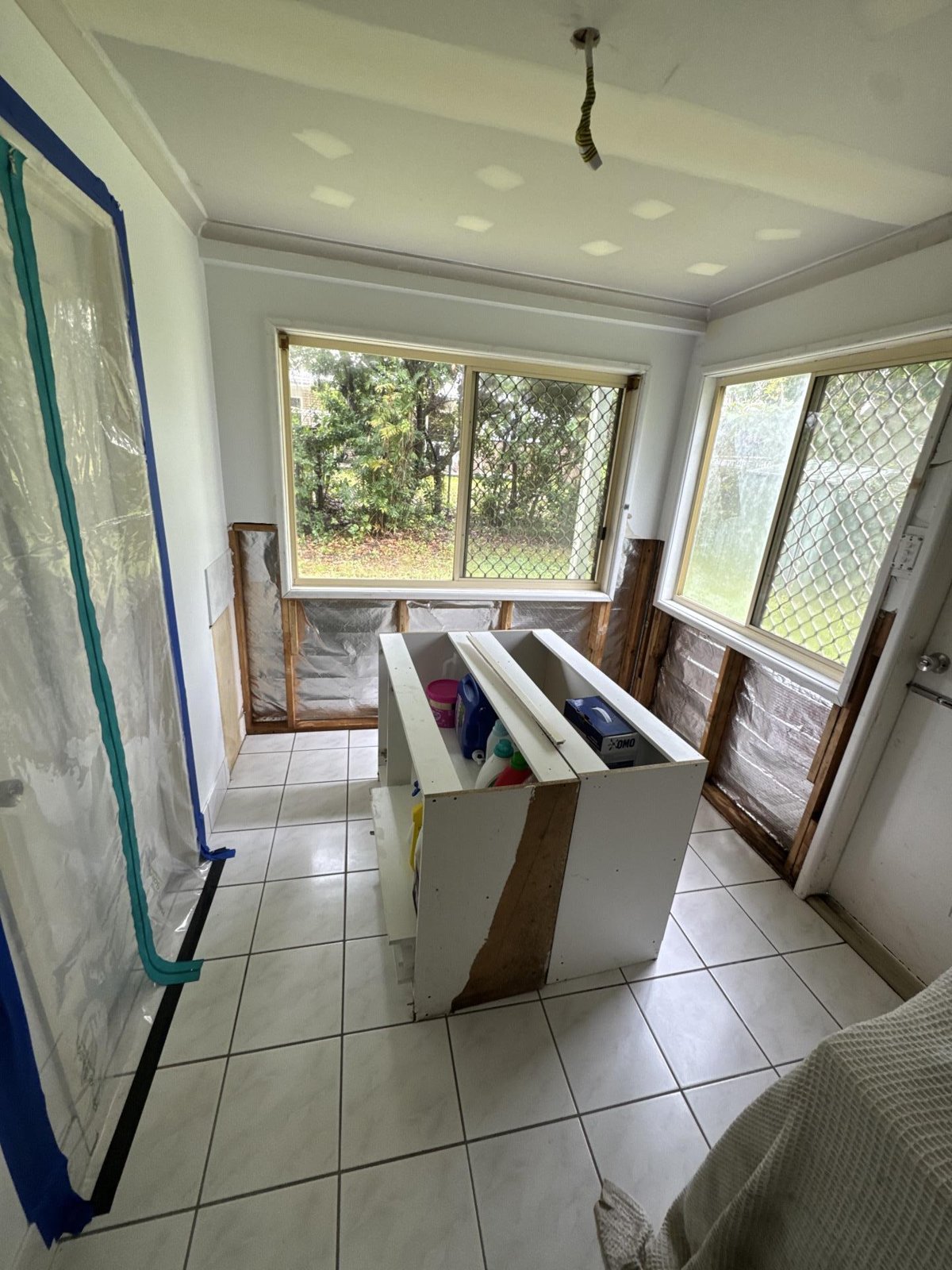
In another small room, the floorboards were stripped and the wallpaper lifted from the wall, with paint tins and a bucket set aside while the work went on. Removing the lining and finishes gives direct access to the framing and cavity, where growth often sits out of sight. All of this work is carried out in line with IICRC S520, the industry standard for mould remediation, which sets out how a site is contained, cleaned and dried and how the result is verified.
Mould matters to anyone living or working in the area because it affects indoor air quality and can damage building materials over time. Early moisture control and proper removal reduce the risk of it coming back. Elite Restoration is an IICRC Certified Firm, and the Elite brand has been operating since 1984. Our head office is in Acacia Ridge, Brisbane, and we service Australia-wide.
Read more about our Mould Removal & Remediation service.

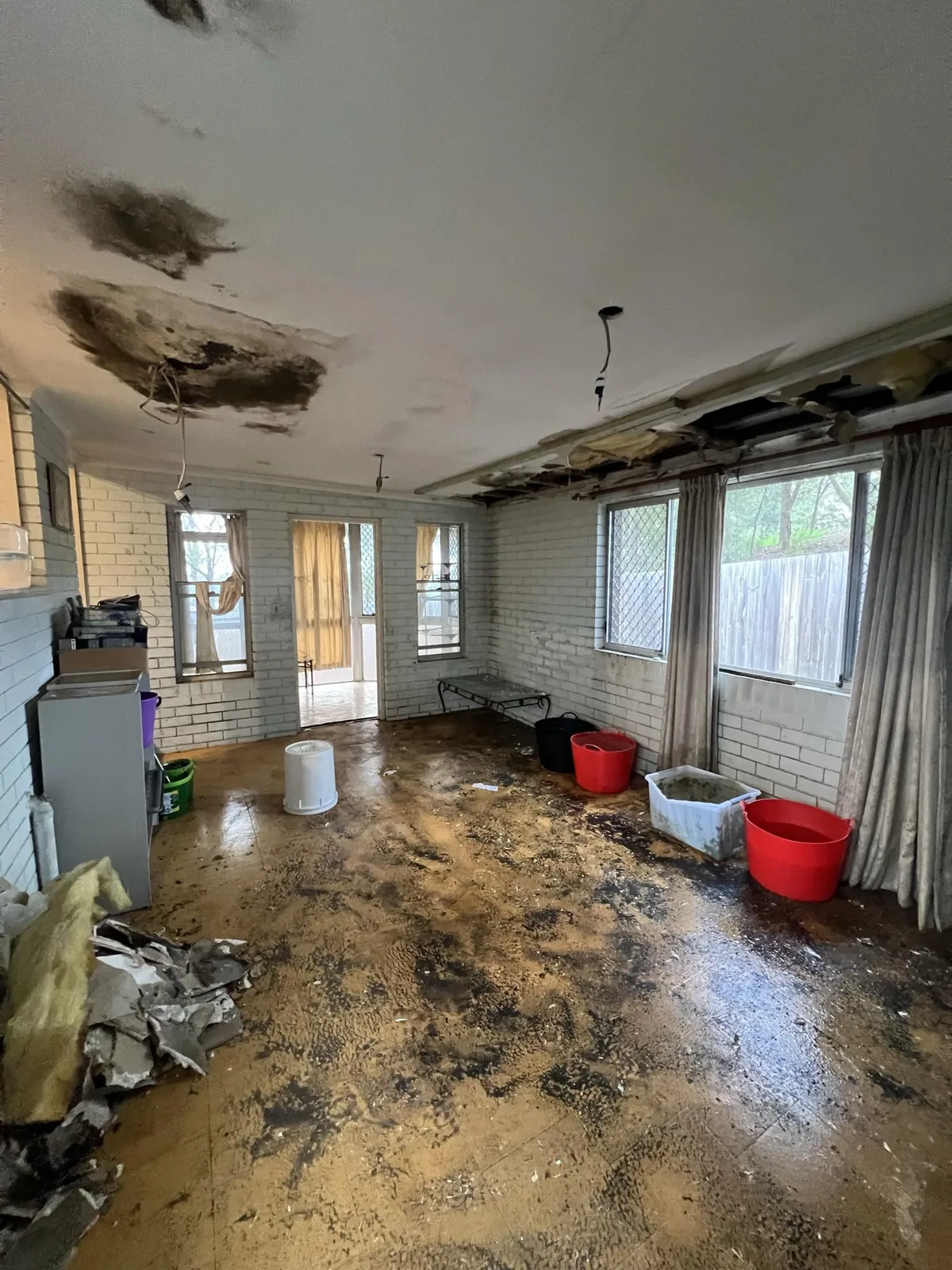 Water Damage Restoration
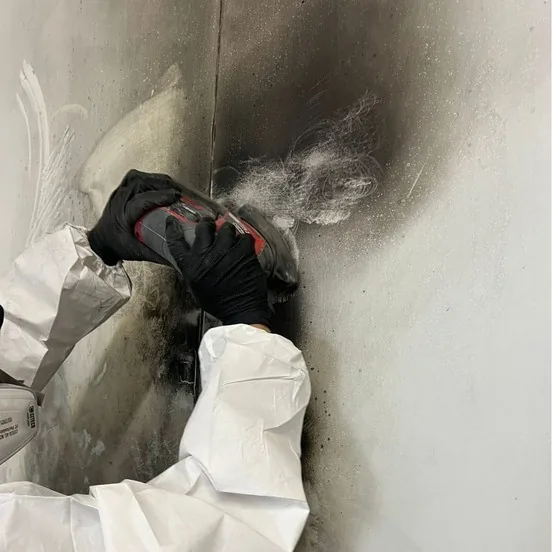 Fire and Smoke Restoration
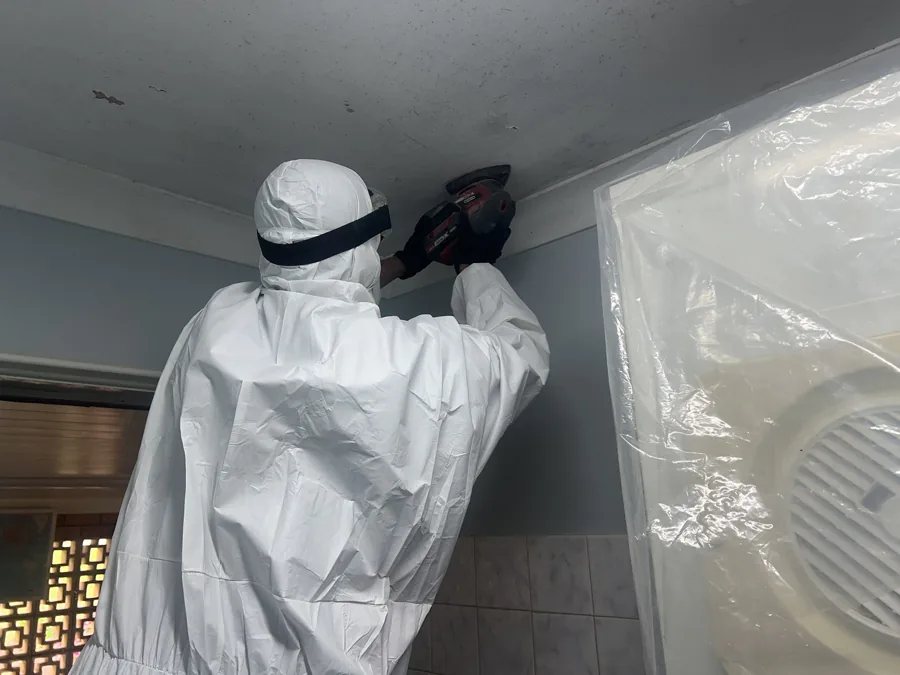 Mould Removal & Remediation
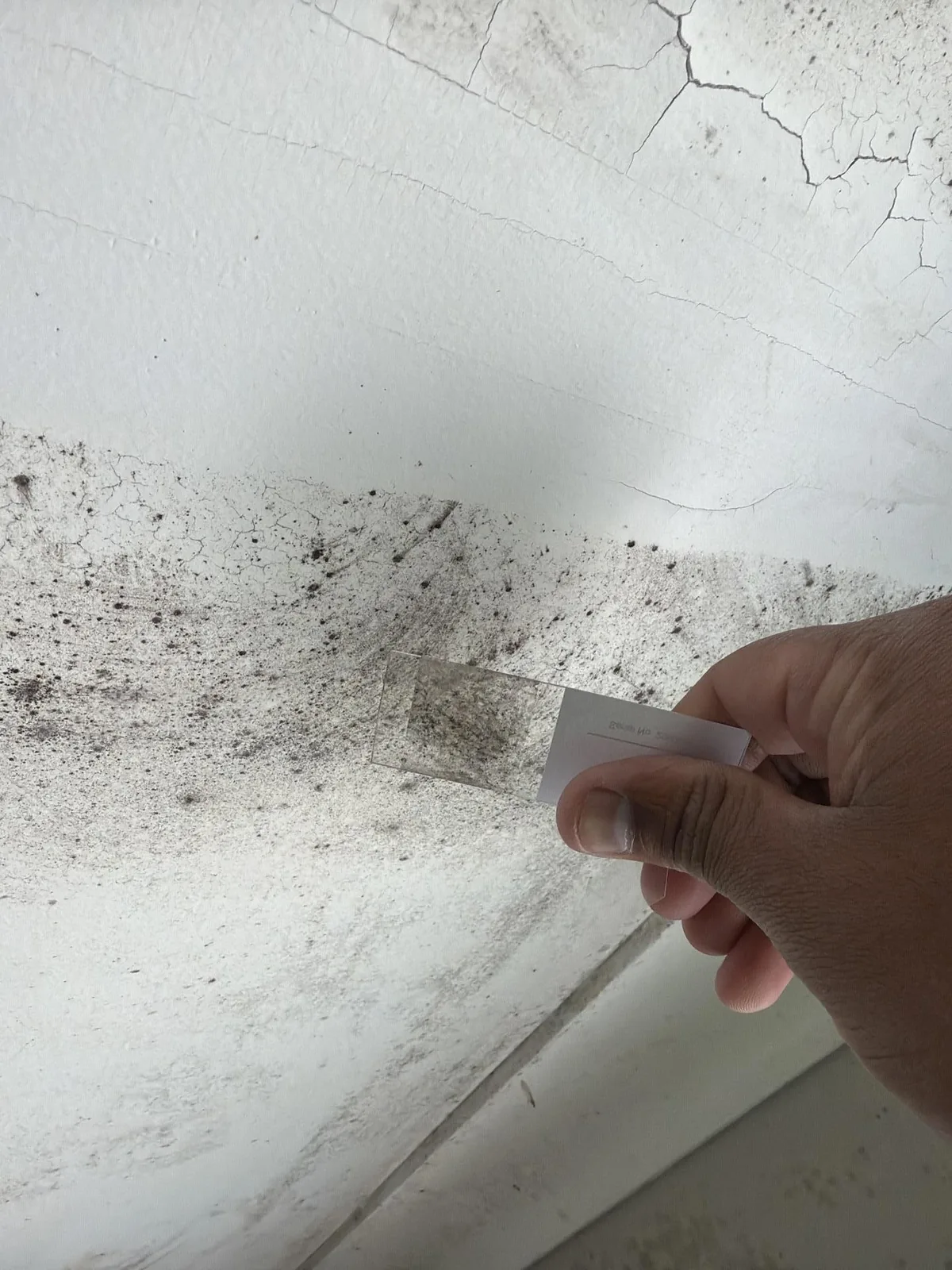 Mould Inspection
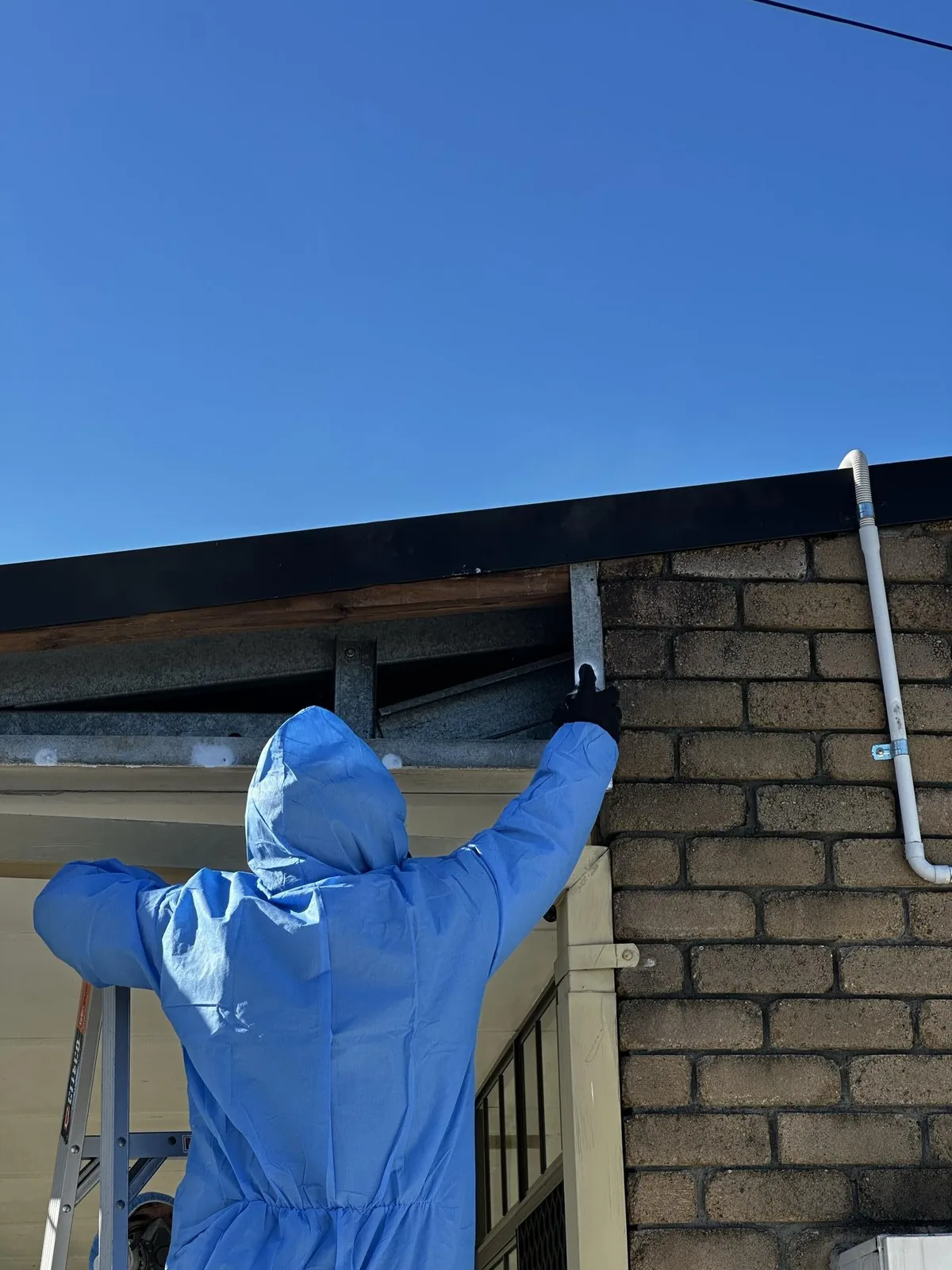 Asbestos Removal
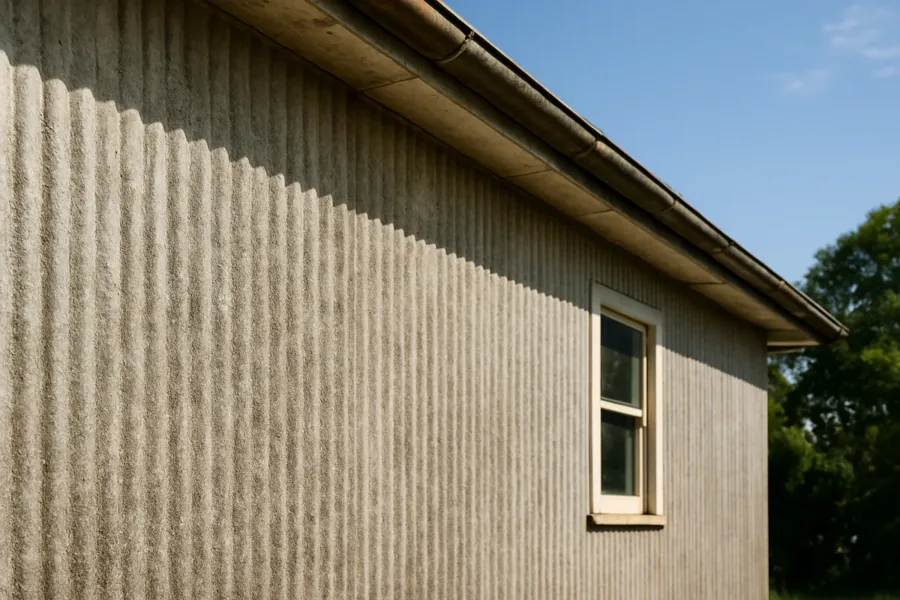 Asbestos Testing
 Dehumidifier Hire
 Air Quality Testing
 Structural Drying
 Water Leak Detection
 Trauma & Crime Scene Cleaning
 Deceased Estate Clearing
 Hoarding & Squalor Cleaning
 Meth Testing & Decontamination
 Lead Paint Removal