Mould removal in Bundaberg is a different job from wiping a wall down with bleach. Remediation means finding where the moisture is coming from, sealing off the affected room, taking out material that can’t be saved, treating what stays and drying the structure properly.
A few spots on a bathroom ceiling are often a ventilation issue you can manage yourself. Growth that spreads, keeps returning after cleaning, follows a leak, or affects someone with asthma or allergies is the point where a proper inspection is worth having.
Google4.6★★★★★★★★★★100+ reviews
What's included
Mould Inspection & Air Quality Testing
IICRC-aligned inspection with moisture mapping, indoor air quality sampling, and documented findings for stakeholders and insurers.
Containment & HEPA Filtration
Negative-pressure containment, HEPA-filtered air scrubbers, and worker decontamination protocols for safe in-situ remediation.
Surface Treatment & Post-Remediation Verification
Antimicrobial application followed by post-remediation verification testing to confirm clearance against project specifications.
“We had a pipe burst in our ceiling, water seeped into our walls and our unit was at a very high risk for mould :( Guosheng worked tirelessly to ensure the drying process went as smooth as possible, even working until the evening on a Friday to ensure our walls would be dry and safe over the weekend! An extremely proficient and productive company that thrives on providing excellent service and quality work. Thank you so much for all of your help! <3”
“Guosheng from Elite Restoration did an amazing job dealing with the water damage to my unit, due to a burst pipe. Nothing was too hard and Guosheng had multiple tricks up his sleeve to ensure maximum drying capacity. The communication throughout the whole process was excellent, which made this very stressful situation for me a lot easier to handle. Thanks so much Guosheng.☺️”
Mould remediation is never a simple clean. Under the
IICRC S520 Standard for Professional Mould Remediation,
treating mould without a proper inspection risks missing the underlying
moisture source and leads to recurrence. Every mould job starts with a
professional inspection by S520-certified technicians, so containment,
controls and the remediation scope are set correctly from day one.
Inspection from $350 inc. GST. Remediation is scoped and
quoted separately, only after the inspection.
Find the cause — identify the moisture source so remediation actually holds.
Set containment — protect unaffected areas during the work.
Clear scope & documentation — written report you can give insurers or strata managers.
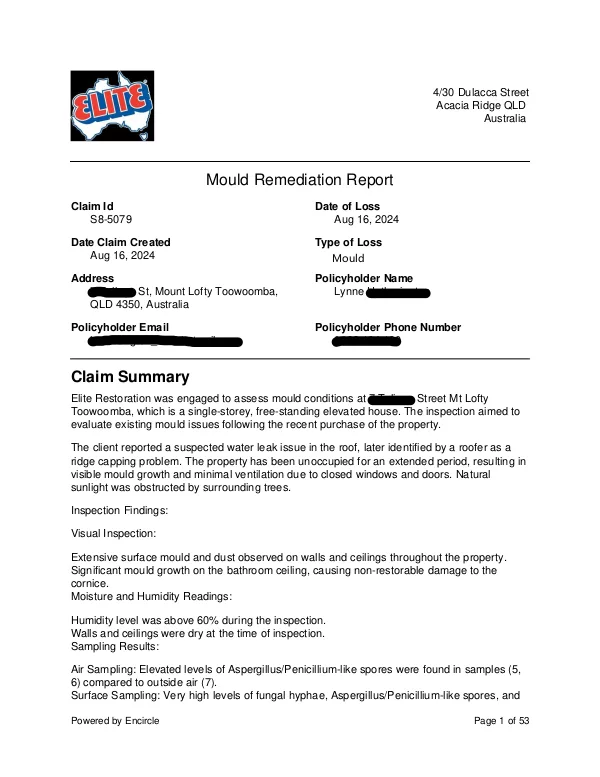
Want to know exactly what you’ll receive? Download a real example of the
written report our S520-certified technicians produce after a mould
inspection — findings, moisture readings, photos and the recommended
remediation scope.
We work in line with IICRC S520, the industry standard for professional mould remediation, and Elite Restoration is an IICRC Certified Firm. The order of work looks like this:
An inspection to map the growth and trace the moisture source, whether that’s a roof leak, plumbing or poor ventilation.
Containment of the affected area so spores aren’t carried through the rest of the house.
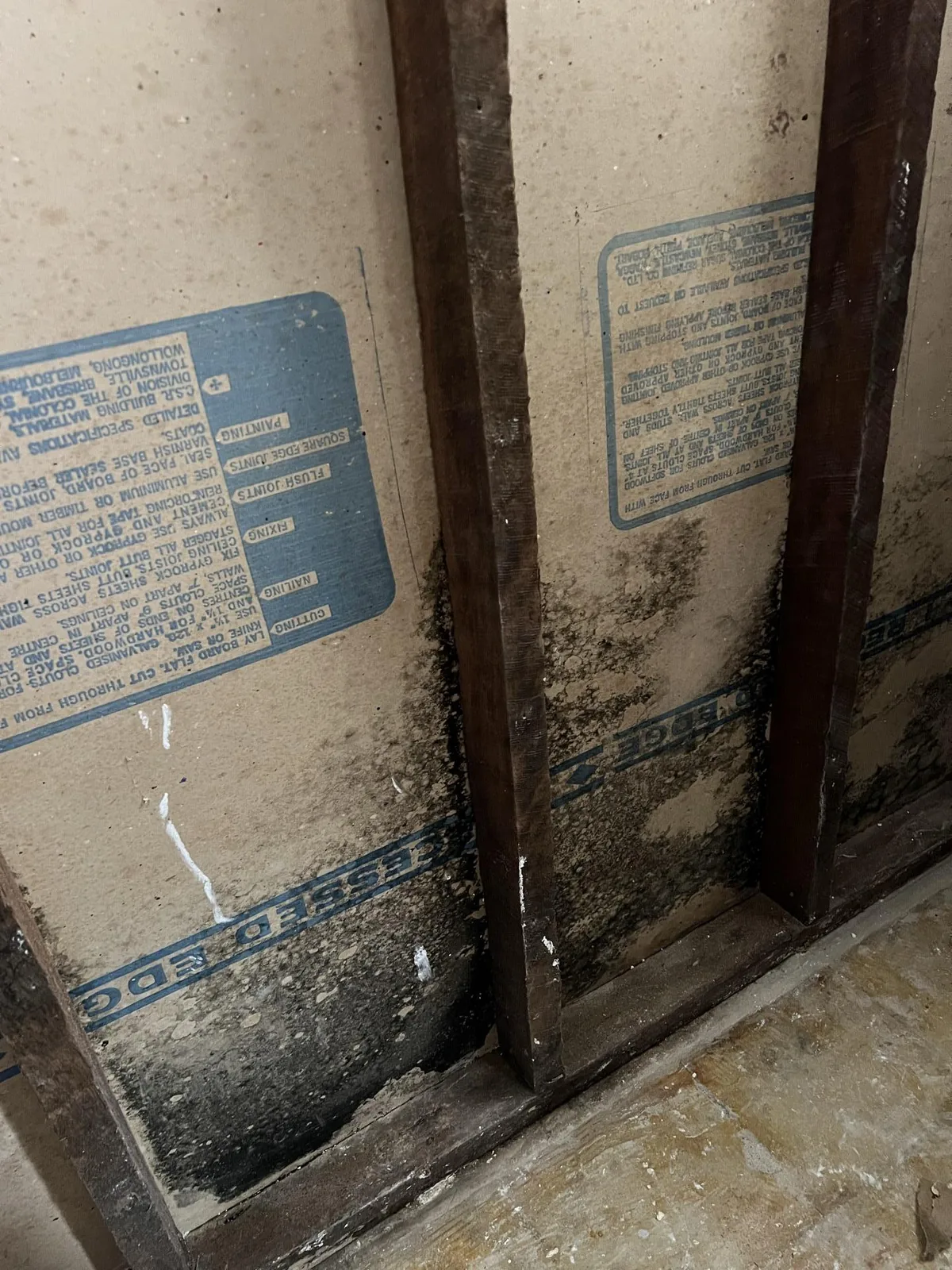
Removal of materials that can’t be cleaned, such as soaked plasterboard or insulation.
Antimicrobial treatment of the surfaces that stay.
Drying, with monitoring on alternate days until the readings are right.
A completion report within 24 to 48 hours of the work finishing.
You’ll get an initial report and a scope or quote within 24 hours of the inspection, so you know which rooms are affected before any work starts. Where sample testing helps, it goes through our NATA-accredited laboratory partners.
We cover Bundaberg along with Bargara, Childers, Gin Gin and Burnett Heads.
From a customer who had the same problem
One Google review, from Ruby Leach, describes a burst pipe that left her unit at real risk of mould:
“Guosheng worked tirelessly to ensure the drying process went as smooth as possible, even working until the evening on a Friday to ensure our walls would be dry and safe over the weekend!”
That’s the part of the job that stops mould before it starts: getting the structure dry, quickly.
Questions Bundaberg owners ask
Can I clean the mould myself?
Small surface patches on hard, non-porous surfaces usually can be cleaned. If it’s in plasterboard, carpet or insulation, covers a large area, or keeps coming back, the moisture problem needs fixing and the material may need to come out.
How long does it take?
That depends on how far the growth has spread and how wet the structure is. The scope you receive within 24 hours sets out the work, and drying is monitored on alternate days until it’s finished.
Will insurance cover it?
It depends on your policy and what caused the moisture. We liaise with your insurer on a claim and provide live onsite reporting they can use.
What does remediation cost?
The price follows the inspection, because the area involved and the material to remove set the cost. You’ll have a scope or quote before work begins.
What happens to my furniture and belongings?
Contents in the affected area are assessed during the inspection. Items that can be cleaned are kept separate from the work area, and anything else is listed in the report so you can raise it with your insurer.
Recent case studies
Mould Removal & Remediation — Norville
Completed September 2025 · property · Job SM8-9684