CASE STUDY: Water Damage Claim Summary and Mitigation Report
The claim relates to a water damage incident assessed on 19 January 2026, when Elite Restoration attended the property to inspect affected internal floor coverings.
The inspection aimed to determine the cause, extent of damage, and immediate actions required to minimise further deterioration while awaiting scope approval.
No active internal leak was identified during attendance, with the source of ingress suspected to be external and unresolved at the time.
The cause of loss is believed to be water ingress from an external wall cavity, likely originating near the roof gutter downpipe and migrating internally.
The incident was classified in accordance with IICRC standards as Category 3 water and a Class 2 loss, indicating gross contamination affecting multiple materials.
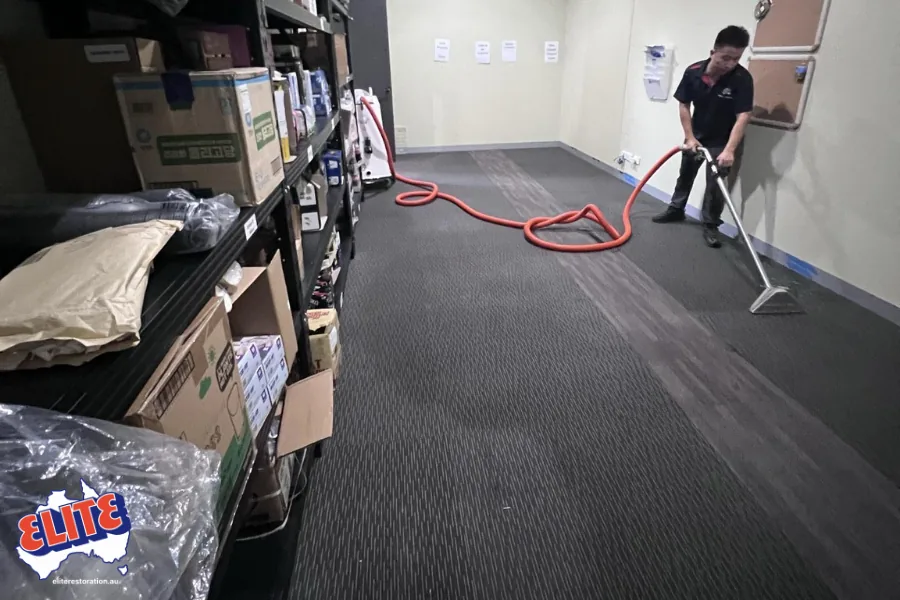
Water damage was identified in Office 1 and Office 2, with carpeted floor coverings impacted and elevated moisture levels detected in carpets and lower wall sections.
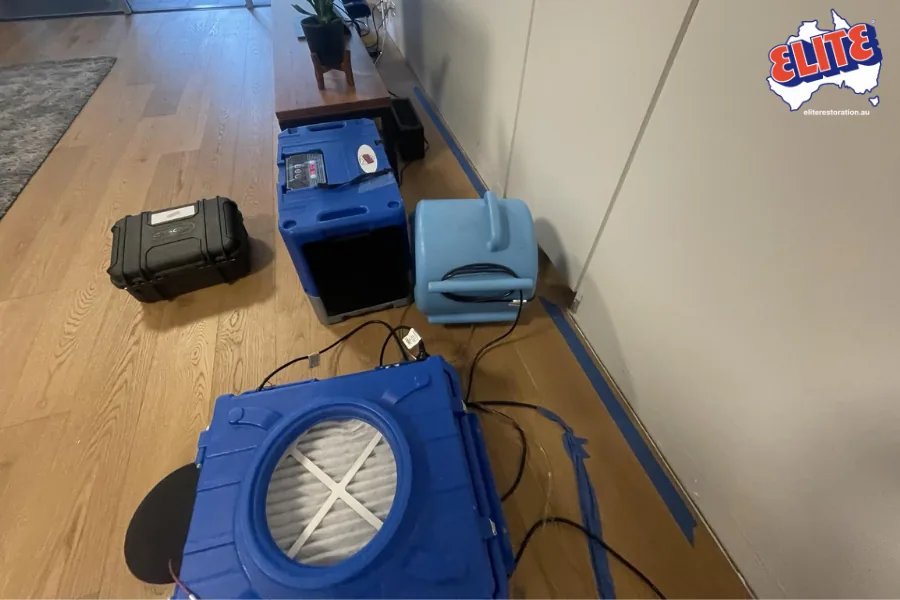
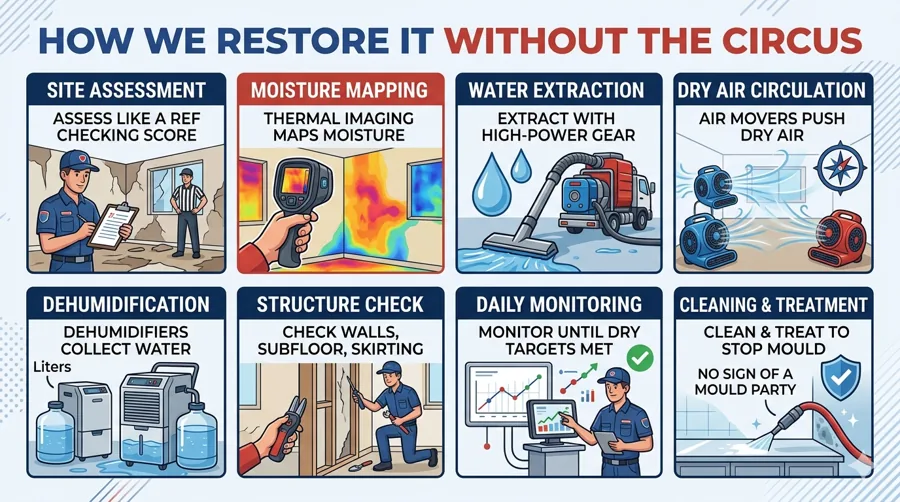
Mitigation works were carried out promptly, including the installation of drying equipment to control moisture and reduce the risk of mould growth.
After approximately three days of controlled drying, follow-up inspections confirmed moisture levels had returned to acceptable standards, and equipment was removed.
Affected materials include carpet, underlay, skirting boards, and surface contamination to the concrete subfloor, with recommendations to rectify the external source, replace porous materials, and proceed with reinstatement works upon approval.
Storm and Flood Tips for ACT Weather
Storm cells in Canberra change faster than a seagull mood.
- Clear gutters and downpipes before big rain.
- Store valuables above floor level.
- Know where your water stop tap lives.
- Keep a few towels and a rubber squeegee handy.
- Check sump pumps and drains for blockages.
Insurance Made Simple
Paperwork can feel like herding cats.
- We document with photos and readings.
- We write clear reports for claim assessors.
- We talk scope in plain English.
- You get updates that make sense and do not need a decoder ring.
When to Call a Pro
- Water touched walls or skirting or built-in joinery.
- You see cupping in timber or ripples in vinyl.
- There is a musty smell after 24 hours.
- The source was grey water or worse.
- You are not sure how far the water ran.
Early action saves floors and paint and sanity.
Think of it like sunscreen for your house.
FAQs
How fast should drying start
Within the first 24 hours is best.
Sooner is even better for carpets and timber.
Can I keep the air con running
Yes, if the system is safe and not wet.
Set it to dry and keep windows mostly closed while gear runs.
Will everything smell
Not if it is dried to target and cleaned right.
We remove the source, and the stink goes with it.
How long does drying take
Most jobs run two to four days.
Big floods or complex builds can take longer.
Do you work to standards
Yes.
We follow best practice and reference IICRC guidelines for water, mould, and cleaning, and operate with CM3-aligned compliance processes.
What if I rent
Tell the agent fast and keep records.
We can liaise with the agent or the owner once engaged.
What about my furniture
We block and pad items to keep legs dry.
We can move contents where safe and return once dry.
Ready When Canberra Needs Us
We are here for Canberra Central and the Inner North, all day and all night, as part of a national Australian network.
Click for a quick quote and fast help at our bookings and quotes page.
Want to talk to a human right now?
Tap to call at 1300 899 276.
Stay dry, Canberra.
Water damage restoration Canberra Central Inner North.