CASE STUDY: Washing Machine Overflow Causes Multi-Unit Water Damage
A washing machine overflow recently caused Category 2, Class 1 water damage, impacting both the source unit and the unit below.
Elite Restoration attended promptly, identifying widespread water migration affecting carpets, skirting boards, plaster walls, doors, and cabinetry.
Immediate mitigation works were carried out, including water extraction and antimicrobial treatment to prevent further deterioration and microbial growth.
Detailed inspection and moisture testing confirmed elevated moisture levels across multiple areas, with water spreading through flooring and leaking into the lower unit via the ceiling assembly.
Elite Restoration deployed drying equipment, including air movers and dehumidifiers, and used thermal imaging to track the full extent of the damage.
Ongoing monitoring allowed the team to adjust equipment placement and ensure targeted drying of the most affected areas.
Through consistent reassessment and adherence to IICRC S500 standards, Elite Restoration successfully restored both units to acceptable moisture levels.
Equipment was gradually reduced as areas dried, with final testing confirming complete moisture removal.
All equipment was then removed, and the property was left clean, safe, and ready for the next stage of restoration.
DIY or Call the Pros
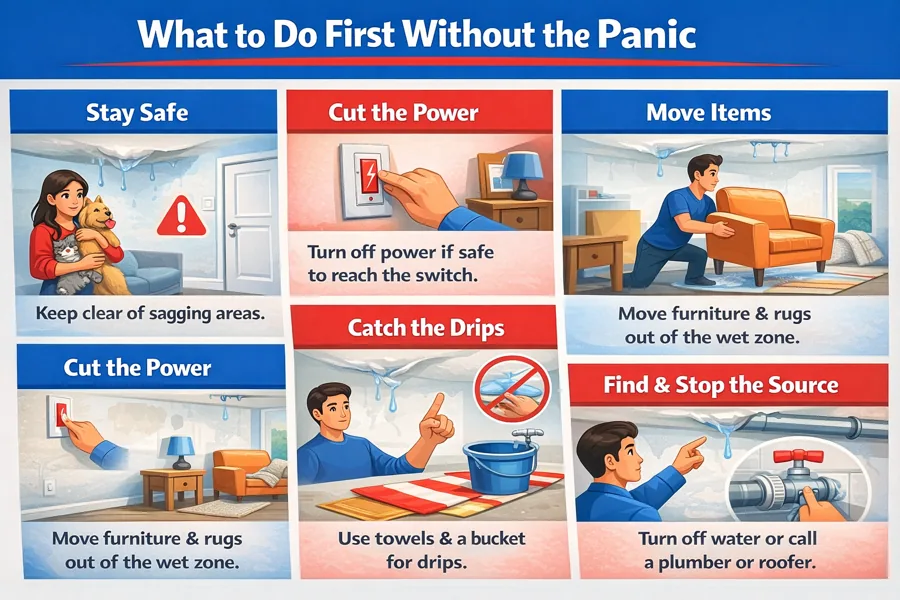
- You can catch drips, move belongings, and open some windows.
- You can clean small stains after it is fully dry.
- You should call pros when the stain keeps growing.
- You should call pros when the ceiling sags or feels soft.
- You should call pros when there is a roof leak or a burst pipe.
- You should call an electrician if water is near lights or wires.
Safety first beats a risky restore every time.
Hobart Tips That Save Time and Money
- Keep gutters and downpipes clear before the next big rain.
- Check the roof after wild wind and get cracked tiles sorted.
- Seal bathrooms like a pro and refresh grout when it looks tired.
- Insulate well so winter condensation does not camp on the ceiling.
- Know where your water shutoff valve lives and label it like a lunch box.
Insurance Made Simple
- Take clear photos of stains and any drips.
- Note times and dates and what you did to make it safe.
- Restore the source and keep receipts from tradies.
- Call your insurer and log the claim early.
- Ask about make-safe work and emergency drying.
- Ask for companies that follow IICRC standards so the restore is solid.
Frequently Asked Questions About Water Damage for Ceilings in Hobart
How fast can a ceiling go from stain to sag
It can be quick like a summer storm or slow like a Tassie drizzle.
Active drips speed it up, while hidden leaks take longer.
Either way, sooner action means less mess.
Will the stain go away on its own
Nope, the mark sticks around like a stubborn seagull.
Once dry, it needs stain block and fresh paint.
Can I clean mould on the ceiling myself
Small surface spots can be wiped with care.
If the area is larger than a dinner plate, get help from pros.
Hidden mould needs proper gear and a plan.
How long does drying take
Small leaks can dry in two to three days.
Bigger events may take a week or more.
Moisture checks confirm when it is done.
Do I need to replace all the plaster
Not always.
If the board is sound, it can often be dried and sealed.
If it is soft or crumbling, it needs replacement.
What about the smell
The musty whiff fades as the moisture drops.
Drying and air movement speed that up.
Odour control helps where needed.
Who restores the source of the leak
Roofers handle tiles and flashing.
Plumbers handle pipes and fittings.
We work with tradies so the restore sticks.
Ready for Help in Hobart
Need a fast quote and a friendly, certified crew from a national, compliance-first provider that works across Australia?
Book a visit or request a quote here.
Get a quote
Want to talk to a human right now?
Tap here to call.
Call now
We are ready to sort water damage for ceilings in Hobart.




.webp)